Attractions

Pingyao Ancient City

Pingyao Ancient City

Recommend 4.9 / 5

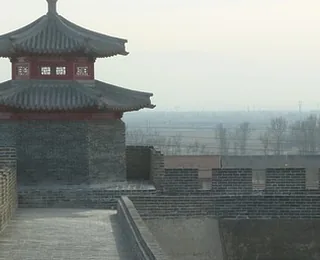
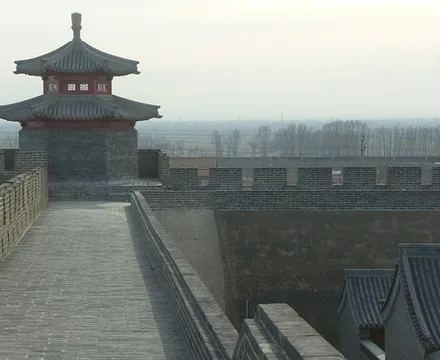
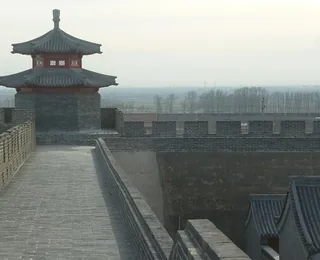
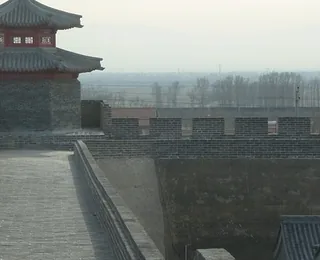
Pingyao Ancient City was first built in the Western Zhou; the city wall was rebuilt in 1370, the third year of the Hongwu era of the Ming dynasty, and the surviving wall has a circuit of about 6.2 kilometres, making this China's most completely preserved Ming-Qing county town. Inside the city, the Rishengchang Draft Bank was China's first draft bank, and the county office, Confucian temple, City God Temple, escort agencies and Ming-Qing streets are completely preserved; it was inscribed on the World Cultural Heritage list in 1997. A World Cultural Heritage site and China's most completely preserved Ming-Qing county town, where the city walls, the Rishengchang Draft Bank, the county office and Ming-Qing streets form a complete Shanxi merchant city. Highlights include the ancient city wall and the Pingyao county office. Tip: the combo ticket covers the main sights in the city and needs at least a full day; cycling is allowed on the city wall, and for accommodation inside the city choose somewhere near South Street. Practical info: located at Pingyao County, Jinzhong, Shanxi; the ticket is ¥125 (old-town combo ticket, including the city walls, draft bank, county office and more); opening hours are 08:00–18:00. Best season: April–October is best; autumn brings clear skies and crisp air. Pingyao Ancient City involves a lot of walking, so wear comfortable shoes. It is advisable to plan the length of stay sensibly according to opening hours and your energy.

Tip: The combo ticket covers the main sights in the city and needs at least a full day; cycling is allowed on the c…
  • Address: Pingyao County, Jinzhong, Shanxi
  • Ticket: ¥125 (old-town combo ticket, including the city walls, draft bank, county office and more)
  • Opening: 08:00–18:00
Pingyao Ancient City
Qiao Family Compound

Qiao Family Compound

Recommend 4.7 / 5

The Qiao Family Compound is in Dongguan Town, Qi County, and was the mansion of the family of the Qing dynasty Shanxi merchant Qiao Zhiyong; it was built during the Qianlong reign and expanded several times afterwards. The compound consists of 6 large courtyards, 20 small courtyards and 313 rooms, its plan forming the character for “double happiness”, with fine brick, wood and stone carvings and painted decoration; the film Raise the Red Lantern was shot here. The castle-like compound of the Qiao merchant family, with 6 large courtyards and 313 rooms; the brick and wood carvings and the furnishings of the “Zhongzhong Tang” hall represent Shanxi merchant culture. Highlights include the Qiao family fort. Tip: a hired car can cover it with Pingyao on the same day; hire a guide to see the details of the “three carvings”. Practical info: located at Dongguan Town, Qi County, Jinzhong, Shanxi; the ticket is ¥115 (subject to the scenic area's notices); opening hours are 08:00–18:00. Best season: April–October is best; autumn brings clear skies and crisp air. Pingyao Ancient City involves a lot of walking, so wear comfortable shoes. It can be combined with Pingyao Ancient City, Wang Family Compound and Shuanglin Temple in Jinzhong City for a half-day or one-day itinerary.

Tip: A hired car can cover it with Pingyao on the same day; hire a guide to see the details of the “three carvings”…

  • Address: Dongguan Town, Qi County, Jinzhong, Shanxi
  • Ticket: ¥115 (subject to the scenic area's notices)
  • Opening: 08:00–18:00
Qiao Family Compound
Wang Family Compound

Wang Family Compound

Recommend 4.7 / 5

The Wang Family Compound is in Jingsheng Town, Lingshi County, and is the residential complex of the Wang family in the Qing dynasty, made up of five lanes, six forts and one street, with 123 surviving courtyards and 1,118 rooms. The buildings rise along the mountain, and the brick, wood and stone carvings draw on a rich repertoire of subjects; it is hailed as “the finest residential mansion in China” and is the largest of the Shanxi merchant compounds. The Wang family compound in Jingsheng Town, Lingshi County, billed as “the finest residential mansion in China”, with five lanes, six forts and one street, and brick, wood and stone carvings on an astounding scale. Highlights include Gaojiaya, Hongmen Fort and the art of the three carvings. Tip: combining it with Pingyao and the Qiao compound on the same day is rushed, so allow a separate half day; hire a guide to see the three carvings. Practical info: located at Jingsheng Town, Lingshi County, Jinzhong, Shanxi; the ticket is ¥55 (subject to the scenic area's notices); opening hours are 08:00–18:00. Best season: April–October is best; autumn brings clear skies and crisp air. Pingyao Ancient City involves a lot of walking, so wear comfortable shoes. It can be combined with Pingyao Ancient City, Qiao Family Compound and Shuanglin Temple in Jinzhong City for a half-day or one-day itinerary.

Tip: Combining it with Pingyao and the Qiao compound on the same day is rushed, so allow a separate half day; hire…

  • Address: Jingsheng Town, Lingshi County, Jinzhong, Shanxi
  • Ticket: ¥55 (subject to the scenic area's notices)
  • Opening: 08:00–18:00
Wang Family Compound
Shuanglin Temple

Shuanglin Temple

Recommend 4.6 / 5

Shuanglin Temple stands in Qiaotou village about 6 km southwest of Pingyao Ancient City; tradition dates its foundation to the Northern Qi, and the surviving layout and halls are largely Ming and Qing structures. It was listed as a national key cultural relic protection unit in 1988 and joined the World Heritage List in 1997 as a component of Pingyao Ancient City. The temple is famous for its painted clay sculptures: more than 2,000 figures from the Song, Yuan, Ming and Qing survive in the halls, and the Hall of Heavenly Kings, Sakyamuni Hall, Arhat Hall, Martial Sage Hall, Ksitigarbha Hall, Thousand Buddha Hall and Bodhisattva Hall unfold in groups along the central axis and the side wings, laying out Buddhas, bodhisattvas, heavenly kings, guardians and donor figures as one narrative within a single temple. In the Thousand Buddha Hall the Skanda (Weituo) statue, about 1.6 metres tall, is caught mid-turn, and the treatment of its gaze and armour is regarded as a high point of Ming painted sculpture; the figures in the Arhat Hall each have a different expression, and a worldly flavour coexists with religious ritual. Highlights include the Ming dynasty Skanda statue in the Thousand Buddha Hall, the group of eighteen arhats in the Arhat Hall, the painted sculptures of the Hall of Heavenly Kings and the Sakyamuni Hall, and the courtyard layout with Ming-Qing murals. Tip: the interior is dimly lit and photography is prohibited in most halls; please do not touch the sculptures — hiring a guide or reviewing image material beforehand is far more rewarding than a hurried walk-through. Practical info: located at Qiaotou Village, Zhongdu Township, Pingyao County, Jinzhong, Shanxi; the ticket is ¥35; opening hours are 08:00–18:00.

Tip: The interior is dimly lit and photography is prohibited in most halls; please do not touch the sculptures, and…

  • Address: Qiaotou Village, Zhongdu Township, Pingyao County, Jinzhong, Shanxi
  • Ticket: ¥35
  • Opening: 08:00–18:00
Shuanglin Temple
Shuanglin Temple
Shuanglin Temple