Attractions

Sun Yat-sen Mausoleum

Sun Yat-sen Mausoleum

Recommend 4.8 / 5

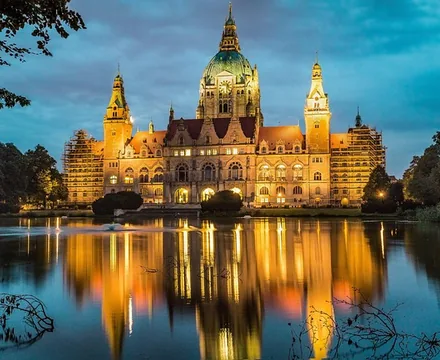
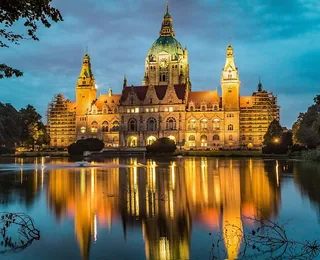
Sun Yat-sen Mausoleum is the tomb of Sun Yat-sen (1866–1925), pioneer of China's modern democratic revolution. After Sun died in Beijing in 1925, a worldwide design competition was held, and the first prize went to the architect Lu Yanzhi, then only in his thirties; construction began in March 1926, was largely complete by 1929, and the solemn interment ceremony was held on 1 June 1929. The whole tomb area rises step by step along an axis of about 700 meters from the Bo'ai Archway to the Memorial Hall, and the 392 steps symbolize the roughly 390 million compatriots of China at that time; from the platform, looking back, the forested slopes of Zhongshan and the outline of Nanjing fill the view. The Memorial Hall faces south and is built of granite and bluestone; inside stands a white marble seated statue of Sun Yat-sen, with the full text of the Outline of National Reconstruction carved on the four walls, and behind it is the circular burial chamber deep in the mountain. The open-air Music Stage in front of the mausoleum was built in the early 1930s; its semicircular seating and reflecting wall form a natural resonance, and pigeons still circle there. Highlights include the Bo'ai Archway and the "All under Heaven Is for All" gate, the 392 steps and the axis of the tomb path, the seated statue of Sun Yat-sen and the inscription of the Outline of National Reconstruction in the Memorial Hall, and the Sun Yat-sen Mausoleum Music Stage. Tip: admission is free but requires a real-name reservation, and the Memorial Hall is closed on Mondays. Practical info: located at 7 Shixiang Road, Xuanwu District, Nanjing, Jiangsu; admission free (reservation required); opening hours 08:30–17:00 (Memorial Hall closed on Mondays).

Tip: Admission is free but requires a real-name reservation, and the Memorial Hall is closed on Mondays.
  • Address: 7 Shixiang Road, Xuanwu District, Nanjing, Jiangsu
  • Ticket: Free (advance reservation required)
  • Opening: 08:30–17:00 (Memorial Hall closed on Mondays)
Sun Yat-sen Mausoleum
Nanjing Museum

Nanjing Museum

Recommend 4.8 / 5

The Nanjing Museum grew out of the National Central Museum proposed by Cai Yuanpei in 1933 and is one of China's three great museums, with more than 430,000 objects. The history galleries follow Jiangsu's archaeological finds, with the Western Han gold beast, the brick painting of the Seven Sages of the Bamboo Grove with Rong Qiqi, and a Ming underglaze-red plum vase among the treasures; the Republican-era gallery recreates old Nanjing street scenes, and the art and special exhibition galleries often host major shows. One of China's three great museums, it lays out 430,000 objects from prehistory to the Republic. The Han gold beast and Seven Sages brick painting in the history galleries and the reconstructed street in the Republican gallery are all photogenic, making it Nanjing's indoor sight most worth half a day. Highlights include the Republican-era street. Tip: after reserving, enter through the main gate, see the history galleries first, then go to the Republican gallery for photos; allow at least three hours. Practical info: located at 321 Zhongshan East Road, Xuanwu District, Nanjing; admission free (reservation required); opening hours 09:00–17:00 (closed Mondays, last entry 16:00).

Tip: After reserving, enter through the main gate, see the history galleries first, then go to the Republican galle…

  • Address: 321 Zhongshan East Road, Xuanwu District, Nanjing
  • Ticket: Free (reservation required)
  • Opening: 09:00–17:00 (closed Mondays; last entry 16:00)
Nanjing Museum
Nanjing Museum
Nanjing Museum
Memorial Hall of the Victims in Nanjing Massacre by Japanese Invaders

Memorial Hall of the Victims in Nanjing Massacre by Japanese Invaders

Recommend 4.9 / 5

The memorial opened in 1985 on the site of the Jiangdongmen mass killing and the remains of the "mass grave" of December 1937. After China legislated 13 December as the National Memorial Day for the Victims of the Nanjing Massacre in 2014, the grounds were expanded in stages to form three sections: the site, the historical archives and the memorial. After Nanjing fell on 13 December 1937, Japanese invaders killed more than 300,000 Chinese civilians and captured soldiers within a few weeks; this figure, established by the postwar trials and running through the memorial's presentation, forms the basic framework of the exhibition. The archives hall corroborates the record with documents, film, third-party accounts such as the diaries of John Rabe and Minnie Vautrin, and survivor testimony; the bone-relic room and the "mass grave" site preserve the archaeological scene. At the exit, the Peace Plaza, sculpture groups and the "Wailing Wall" inscribed with the names of identified victims close the narrative on the theme "remember history, cherish peace." Highlights include the "mass grave" site and bone-relic room, the archives hall and survivor testimony, the Wailing Wall inscribed with victims' names, and the Peace Plaza and sculpture groups. Tip: admission is free but requires advance real-name reservation, and it is closed Mondays; keep quiet inside, photography is prohibited in most galleries, and dress should be sober. Practical info: located at 418 Shuiximen Street, Jianye District, Nanjing, Jiangsu; admission free (real-name reservation required); opening hours 08:30–17:30 (closed Mondays).

Tip: Admission is free but requires advance real-name reservation, and it is closed Mondays; keep quiet inside, pho…

  • Address: 418 Shuiximen Street, Jianye District, Nanjing, Jiangsu
  • Ticket: Free (real-name reservation required)
  • Opening: 08:30–17:30 (closed Mondays)
Memorial Hall of the Victims in Nanjing Massacre by Japanese Invaders
Confucius Temple-Qinhuai River Scenic Area

Confucius Temple-Qinhuai River Scenic Area

Recommend 4.6 / 5

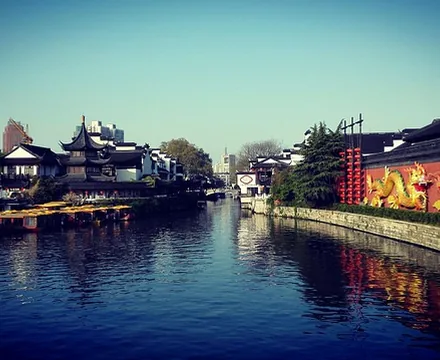
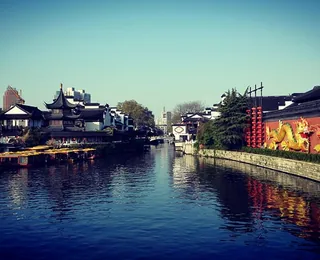
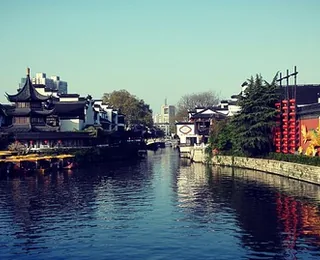
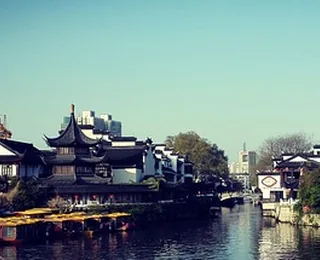
The literary tradition of Nanjing's Confucius Temple reaches back to the Eastern Jin academy; a Confucius temple was formally built here in the first year of the Song Jingyou era (1034), and the site became a major center of education and culture in the southeast. It was repeatedly destroyed and rebuilt through the wars of the Ming and Qing, and the present complex was reconstructed in the 1980s on the traditional layout. Radiating from the Hall of Great Achievement are Gongyuan Street, Wuyi Lane and the lanes on both banks of the Qinhuai; the "ten li of Qinhuai" combined bustling commerce with literary elegance from the Six Dynasties through the Ming and Qing. The Jiangnan Examination Hall by the river was first built in the fifth year of the Southern Song Qiandao era (1169), and at its Ming and Qing height had more than 20,000 examination cells, the largest imperial examination ground in the country; the China Imperial Examination Museum now stands on its site. The core experience of the scenic area comes after nightfall: from Wende Bridge you look down on the Pan Pond and painted boats, while lights on both banks and time-honoured snack shops spread out the old city's night. Highlights include the Hall of Great Achievement and Pan Pond, the Jiangnan Examination Hall site and China Imperial Examination Museum, Wuyi Lane and the memory of the old Qinhuai families, and the night view from Wende Bridge to the painted-boat pier. Tip: the streets are free, while the Confucius Temple and the examination museum charge separately. Practical info: located at Gongyuan Street, Qinhuai District, Nanjing, Jiangsu; admission free (some sights charge admission); open all day.

Tip: The streets are free, while the Confucius Temple and the examination museum charge separately.

  • Address: Gongyuan Street, Qinhuai District, Nanjing, Jiangsu
  • Ticket: Free (some sights charge admission)
  • Opening: Open all day
Confucius Temple-Qinhuai River Scenic Area
Ming Xiaoling Mausoleum

Ming Xiaoling Mausoleum

Recommend 4.7 / 5

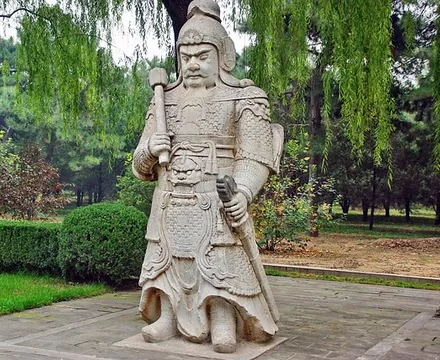
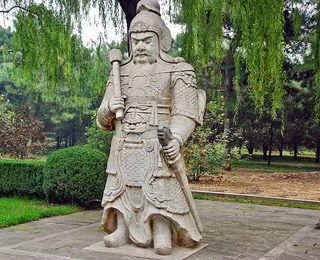
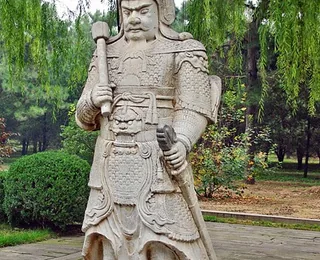
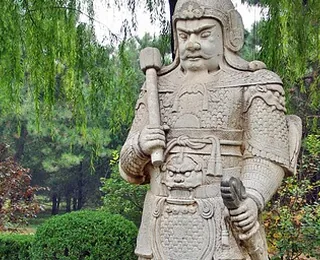
Ming Xiaoling is the joint tomb of Zhu Yuanzhang, founder of the Ming, and Empress Ma. Construction began in the fourteenth year of the Hongwu era (1381), and the main works continued into the Yongle era; it was one of the largest imperial tombs of the Ming and a pioneering model for the Ming and Qing imperial tomb system. Its Sacred Way does not follow a straight line but turns with the terrain: the first section, the Stone Elephant Path, is 615 meters long, with twelve pairs (24 pieces) of six kinds of stone beasts — lion, xiezhi, camel, elephant, qilin and horse — facing each other two by two; beyond it the Wengzhong Road has eight stone civil and military officials, the most complete and imposing group of spirit-way carvings among surviving imperial tombs. In the Square Pavilion stands the stele of meritorious deeds and sacred virtue composed by the Yongle Emperor Zhu Di for his father in the eleventh year of Yongle (1413); farther in are the Civil and Military Gate, the foundations of the offering hall and the Treasure City encircling the mountain. In July 2003 Ming Xiaoling was inscribed on the World Cultural Heritage List as an extension of the "Imperial Tombs of the Ming and Qing Dynasties." Highlights include the Stone Elephant Path (615 meters, six kinds of beasts in 12 pairs), the stone civil and military officials on Wengzhong Road, the Square Pavilion and the stele of meritorious deeds, and Plum Blossom Mountain and the Treasure City and Ming Tower. Tip: the site is large and the Sacred Way is some distance from the tomb palace, so allow half a day and follow one direction. Practical info: located at the southern foot of Purple Mountain, Xuanwu District, Nanjing, Jiangsu; ticket ¥70 (combo ticket includes Plum Blossom Mountain); opening hours 06:30–18:30.

Tip: The site is large and the Sacred Way is some distance from the tomb palace, so allow half a day and follow one…

  • Address: Southern Foot of Purple Mountain, Xuanwu District, Nanjing, Jiangsu
  • Ticket: ¥70 (combo ticket includes Plum Blossom Mountain)
  • Opening: 06:30–18:30
Ming Xiaoling Mausoleum
Presidential Palace

Presidential Palace

Recommend 4.5 / 5

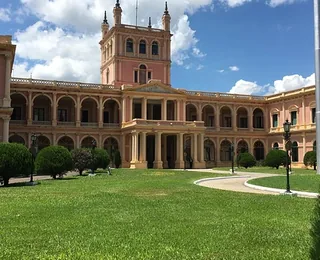
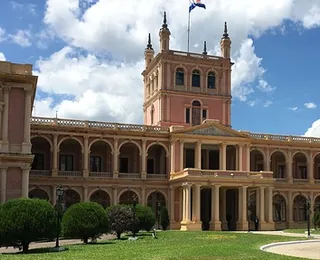
The site at 292 Changjiang Road repeatedly served as the center of power over more than six hundred years: the Liangjiang Governor-General's Office in the Qing, the Heavenly King Palace built after the Taiping Heavenly Kingdom made Tianjing its capital (1853–1864), the place where Sun Yat-sen took office as Provisional President of the Republic of China on 1 January 1912, and from 1927 the offices of the Nanjing Nationalist Government, until it changed hands on 23 April 1949. It is now the China Modern History Museum. On the central axis are the Western-style gate tower, the Great Hall, the Second Hall and the Zichao Building, named after Lin Sen (courtesy name Zichao), chairman of the Nationalist Government; the west section preserves the reconstructed office of Sun Yat-sen as Provisional President, while the east section displays the history of the Taiping Heavenly Kingdom. The garden area is Xuyuan (West Garden), a famous Jiangnan garden of the Ming and Qing; the stone boat "Buxizhou" (Untied Boat) and the white marble carvings on the broken wall recall that this was once a princely garden. Highlights include the government buildings on the central axis (the gate, Great Hall and Zichao Building), the reconstructed office of Sun Yat-sen as Provisional President, Xuyuan and the stone boat "Buxizhou," and the remains of the Taiping Heavenly Kingdom's Heavenly King Palace. Tip: closed Mondays, and reservations are required on public holidays. Practical info: located at 292 Changjiang Road, Xuanwu District, Nanjing, Jiangsu; ticket ¥35; opening hours 08:30–18:00 (last entry 1 hour before closing).

Tip: Closed Mondays, and reservations are required on public holidays.

  • Address: 292 Changjiang Road, Xuanwu District, Nanjing, Jiangsu
  • Ticket: ¥35
  • Opening: 08:30–18:00 (last entry 1 hour before closing)
Presidential Palace
Presidential Palace
Presidential Palace