Attractions

Chengdu Research Base of Giant Panda Breeding

Chengdu Research Base of Giant Panda Breeding

Recommend 4.8 / 5

The Chengdu Research Base of Giant Panda Breeding is a world-famous base for the ex-situ conservation, scientific breeding and educational tourism of giant pandas. It covers a large area and recreates the pandas' wild habitat, with the Sun Nursery, Moon Nursery and other facilities where visitors can observe their habits up close. Dense bamboo groves and shade make it an excellent place to learn about panda conservation and breeding. A world-renowned centre for panda research and public education, where you can watch endearing pandas up close, especially the delightful cubs. Highlights include the Giant Panda Villa and the Red Panda Enclosure. Tip: Go in the morning, when pandas are more active. Practical info: located at 1375 Panda Avenue, Chenghua District, Chengdu, Sichuan; admission ¥55; open 07:30–18:00 (last entry 17:00). Best season: spring (Mar–Jun) brings a profusion of flowers; autumn (Sep–Nov) is crisp and clear. Pleasant in every season.


  • Address: 1375 Panda Avenue, Chenghua District, Chengdu, Sichuan
  • Ticket: ¥55
  • Opening: 07:30–18:00 (last entry 17:00)
Chengdu Research Base of Giant Panda Breeding
Kuanzhai Alley

Kuanzhai Alley

Recommend 4.6 / 5

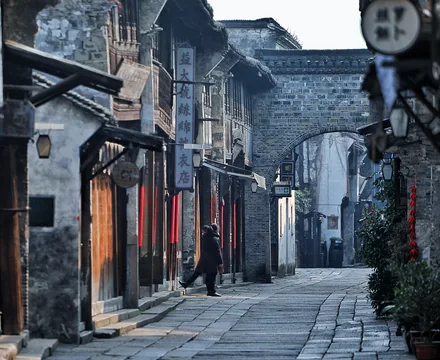
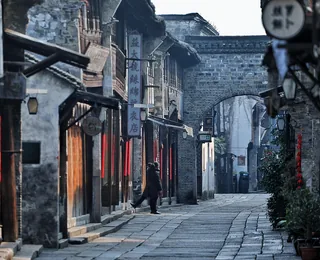
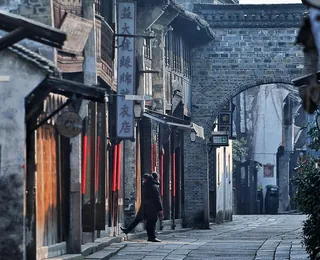
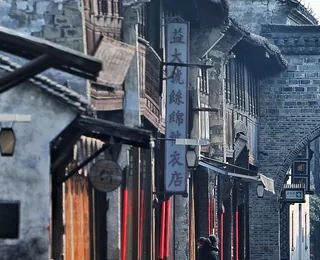
Kuanzhai Alley is a surviving Qing dynasty street in Chengdu, made up of Wide Alley, Narrow Alley and Jing Lane. It preserves old Chengdu's urban fabric and rhythm of life, with grey-brick, dark-tile courtyard houses and old gateways standing beside modern cafés and creative shops. Wide Alley focuses on history and culture, Narrow Alley on leisure, and Jing Lane on everyday local life — each with its own character. A Qing dynasty historic district made up of Wide Alley, Narrow Alley and Jing Lane, where western Sichuan houses stand alongside bars and teahouses — the essence of leisurely Chengdu. Highlights include the old buildings of Wide Alley, the creative shops of Narrow Alley, the old teahouses of Jing Lane and the brick archway. Tip: The courtyard lights are especially atmospheric at night; in an old teahouse you can try gaiwan tea and ear cleaning, part of Chengdu's slow life. Practical info: located at Jinhe Road Intersection, Qingyang District, Chengdu, Sichuan; admission free; open all day. Best season: spring (Mar–Jun) brings a profusion of flowers; autumn (Sep–Nov) is crisp and clear. Pleasant in every season.

Tip: The courtyard lighting is especially atmospheric at night — settle into an old teahouse for a gaiwan of tea an…

  • Address: Jinhe Road Intersection, Qingyang District, Chengdu, Sichuan
  • Ticket: Free
  • Opening: Open all day
Kuanzhai Alley
Kuanzhai Alley
Kuanzhai Alley
Wuhou Temple

Wuhou Temple

Recommend 4.7 / 5

Wuhou Temple is the only temple in China where ruler and ministers are worshipped together, made up of the shrine to Liu Bei and Zhuge Liang and the Hui Tomb. Ancient cypresses stand dense, and red walls and bamboo shadows set each other off; it is the essence of Three Kingdoms Shu Han culture. Jinli Ancient Street lies next to the temple, offering western Sichuan atmosphere and street life. Highlights include the Liu Bei Hall and the Zhuge Liang Hall. China's only temple where ruler and ministers are worshipped together, commemorating Zhuge Liang and the Shu Han court. Red walls and bamboo shadows make it a sacred site of Three Kingdoms culture. Tip: The red walls and bamboo shadows are the most popular photo spot; go early in the morning to avoid the crowds. Practical info: located at 231 Wuhou Shrine Street, Wuhou District, Chengdu, Sichuan; admission ¥50; open 08:00–21:00 (peak), 08:00–18:00 (off-peak). Best season: spring (Mar–Jun) brings a profusion of flowers; autumn (Sep–Nov) is crisp and clear. Pleasant in every season. Combine with the Chengdu Research Base of Giant Panda Breeding, Kuanzhai Alley and Jinli Ancient Street for a half-day or full-day itinerary.
  • Address: 231 Wuhou Shrine Street, Wuhou District, Chengdu, Sichuan
  • Ticket: ¥50
  • Opening: 08:00–21:00 (peak); 08:00–18:00 (off-peak)
Wuhou Temple
Wuhou Temple
Wuhou Temple
Jinli Ancient Street

Jinli Ancient Street

Recommend 4.5 / 5

Jinli Ancient Street is one of the oldest and most commercial streets in the history of western Shu. It runs 550 metres and is mainly in the western Sichuan residential style. The street gathers traditional snacks, handicrafts, teahouses and wine shops, along with folk performances such as shadow puppetry and clay-figure making. At night, red lanterns hang high and the old street has great atmosphere. Highlights include the Three Kingdoms Culture Wall, the Jinli snack street, the old stage and the red-lantern night view. A western Sichuan-style street beside Wuhou Temple, gathering snacks, crafts and folk performances — especially atmospheric under the red lanterns at night. Tip: Jinli is more atmospheric at night; try specialities such as Sandapao, Ye'er ba and Tangyou Guozi. Practical info: located at Annex 1, 231 Wuhou Shrine Street, Wuhou District, Chengdu, Sichuan; admission free; open all day. Best season: spring (Mar–Jun) brings a profusion of flowers; autumn (Sep–Nov) is crisp and clear. Pleasant in every season. Combine with the Chengdu Research Base of Giant Panda Breeding, Kuanzhai Alley and Wuhou Temple for a half-day or full-day itinerary.
Tip: Jinli is even more atmospheric at night. Try Sandapao, Ye'er ba, Tangyou Guozi and other local snacks.

  • Address: Annex 1, 231 Wuhou Shrine Street, Wuhou District, Chengdu, Sichuan
  • Ticket: Free
  • Opening: Open all day
Jinli Ancient Street
Du Fu Thatched Cottage

Du Fu Thatched Cottage

Recommend 4.6 / 5

The Du Fu Thatched Cottage lies beside Huanhua Creek on the western edge of Chengdu and was the home of the great Tang poet Du Fu during his years in Chengdu from 759 to 765. He lived here for nearly four years and wrote more than 240 poems, among them such famous pieces as 'Happy Rain on a Spring Night' and 'My Thatched Hut Was Torn Apart by the Autumn Wind'. Later generations turned the site into a garden in his memory, and it has been repaired and preserved to this day. Today the cottage is a classical garden combining memorial, museum and landscape functions, with the Main Hall, the Gongbu Shrine, the thatched cottage, the Flower Path and the Daya Hall. It is an important place for studying Du Fu's life and poetry and one of Chengdu's most culturally rich sites. Highlights include the Huanhua Creek gardens. Tip: The bamboo-lined paths inside are made for a slow stroll and photographs. Practical info: located at 28 Caotang Road, Qingyang District, Chengdu, Sichuan; admission ¥50; open 08:00–20:00 (peak, until 18:30 off-peak). Plan your stay according to opening hours and your energy.

Tip: The bamboo-lined paths are ideal for a slow stroll and photos.

  • Address: 28 Caotang Road, Qingyang District, Chengdu, Sichuan
  • Ticket: ¥50
  • Opening: 08:00–20:00 (peak; until 18:30 off-peak)
Du Fu Thatched Cottage
Dujiangyan Irrigation System

Dujiangyan Irrigation System

Recommend 4.7 / 5

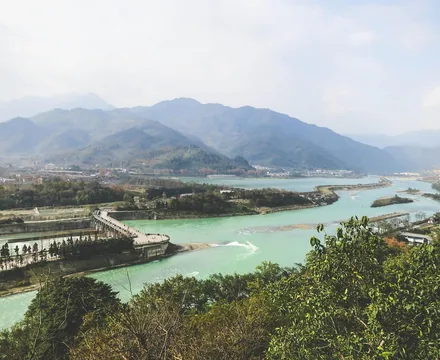
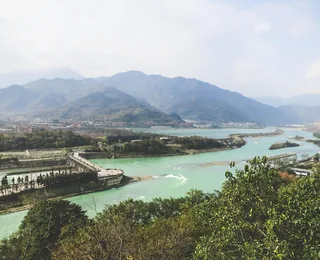
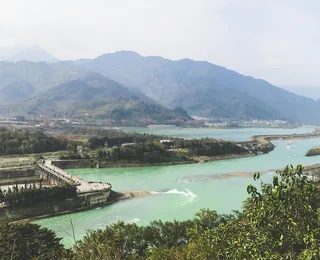
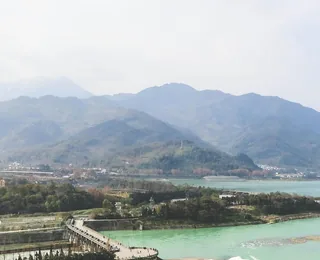
The Dujiangyan Irrigation System stands on the Min River in Dujiangyan City, about 50 km northwest of Chengdu. It was built around 256 BC under Li Bing, governor of the Qin commandery of Shu, and his son. A 'dam-free' diversion project, it consists of three main parts — the Fish Mouth levee that divides the Min River in two, the Flying Sand Weir spillway and the Bottle-Neck Channel intake. It controls floods and supplies irrigation, turning the Chengdu Plain into the 'Land of Abundance' where 'water and drought follow people's will and famine is unknown.' Dujiangyan is the oldest surviving dam-free diversion project in the world still in use. In 2000 it was inscribed on the World Heritage List together with Mount Qingcheng, and the two are commonly visited together. Note: Dujiangyan lies in the county-level city of Dujiangyan administered by Chengdu, about 50 km from the city centre. An intercity train (Chengdu–Dujiangyan, about 30 minutes) or a self-drive trip works best; allow a full day. Highlights include the Erwang Temple. Tip: Enter from the south gate, take the escalator up to the Fish Mouth viewpoint, then return along the Anlan Suspension Bridge. Practical info: located at Minjiang Road, Dujiangyan City, Chengdu, Sichuan (about 50 km from central Chengdu); admission ¥80; open 08:00–18:00. It can be combined with Chengdu Research Base of Giant Panda Breeding, Kuanzhai Alley, Wuhou Temple in Chengdu for a half- or full-day itinerary.

  • Address: Minjiang Road, Dujiangyan City, Chengdu, Sichuan (about 50 km from central Chengdu)
  • Ticket: ¥80
  • Opening: 08:00–18:00
Dujiangyan Irrigation System
Mount Qingcheng

Mount Qingcheng

Recommend 4.8 / 5

Mount Qingcheng lies southwest of Dujiangyan City; its main peak, Laojun Pavilion, rises to 1,260 metres. It is one of the birthplaces of Chinese Daoism, and Zhang Daoling is said to have founded the Way of the Five Pecks of Rice here. The front mountain centres on Tianshi Cave, Shangqing Palace, Laojun Pavilion and Jianfu Palace, with ancient trees and temples among the greenery; the back mountain is known for Wulong Valley, Youyi Village, Cuiying Lake and waterfalls, and the hiking is more demanding. In 2000 Mount Qingcheng was inscribed with Dujiangyan as a UNESCO World Heritage Site. One of the birthplaces of Chinese Daoism, famed for its secluded green valleys. The front mountain has Tianshi Cave, Shangqing Palace and Laojun Pavilion; the back mountain has Wulong Valley, Youyi Village and waterfalls. On the same route as Dujiangyan, it makes Chengdu's classic day trip. Tip: Half a day for the front mountain, a full day for the back. On the same route as Dujiangyan, visit Qingcheng first and Dujiangyan afterwards, or split them over two days. Practical info: located at Qingchengshan Town, Dujiangyan City, Chengdu; front mountain ¥80 / back mountain ¥20 (cable car and ferry extra); open 08:00–17:00 (may be extended in peak season).

  • Address: Qingchengshan Town, Dujiangyan City, Chengdu
  • Ticket: Front mountain ¥80 / back mountain ¥20 (cable car and ferry extra)
  • Opening: 08:00–17:00 (may be extended in peak season)
Mount Qingcheng
Mount Qingcheng
Mount Qingcheng