Attractions

Dali Old Town

Dali Old Town

Recommend 4.5 / 5

Dali Old Town was first built during the Hongwu era of the Ming dynasty. It faces Erhai to the east and Cangshan to the west, and its streets, which criss-cross the town, preserve the chessboard layout of the Ming and Qing. The Five Flower Tower is the town's landmark; from the top you can look over the whole old town. Bai houses inside the town are distinctive for their 'three rooms and a screen wall, four courtyards and five patios' style. Cobbled streets, old shops and artistic cafés mingle to create a relaxed atmosphere. The former capital of Nanzhao and the Dali Kingdom, with lanes running beneath the Five Flower Tower, Bai houses scattered through the streets and a bustling Foreigner Street — a place to feel the legacy of a thousand-year royal city and its slow pace of life. Highlights include the Five Flower Tower, Foreigner Street and Renmin Road. Tip: The old town is brightly lit at night and good for a stroll. Practical info: located in Dali City, Dali Bai Autonomous Prefecture, Yunnan; admission free; open all day. Best season: spring (Mar–May) brings mountain flowers in bloom; autumn (Sep–Nov) has clear skies and pleasant temperatures. Combine with Cangshan, Erhai and the Three Pagodas of Chongsheng Temple for a half-day or full-day itinerary.

  • Address: Dali City, Dali Bai Autonomous Prefecture, Yunnan
  • Ticket: Free
  • Opening: Open all day
Dali Old Town
Dali Old Town
Dali Old Town
Cangshan

Cangshan

Recommend 4.5 / 5

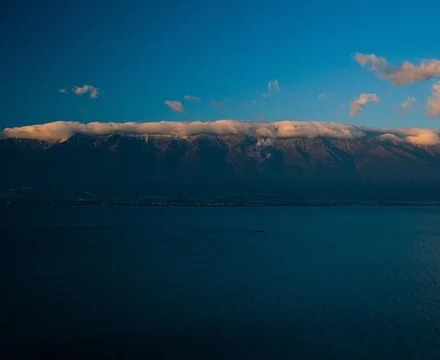
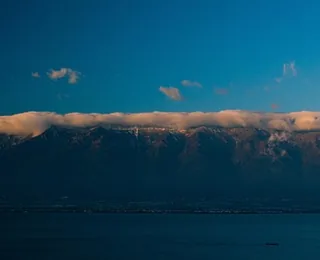
Cangshan is the main range at the southern end of the Yunling Mountains, made up of nineteen peaks; the highest, Malong Peak, reaches 4,122 metres. Cangshan and Erhai stand together, and 'Cangshan snow' is one of Dali's four scenes of wind, flower, snow and moon. The eighteen streams of Cangshan pour down from the mountains into Erhai. The forests are dense, with rhododendron woods and alpine meadows, and old temples such as Gantong Temple and Zhonghe Temple are set among them. Nineteen peaks with eighteen streams between them, snow-capped all year and densely forested. The Gantong cable car gives a panorama of Erhai, while clear streams and temples add to the quiet. Highlights include the Ximatan cable car, Cangshan Geological Park and Gantong Temple. Tip: It is colder on the mountain, so bring a jacket. Practical info: located in Cangshan Scenic Area, Dali City, Dali Bai Autonomous Prefecture, Yunnan; admission ¥40 (cable car extra); open 08:30–16:30. Best season: spring (Mar–May) brings mountain flowers in bloom; autumn (Sep–Nov) has clear skies and pleasant temperatures. Combine with Dali Old Town, Erhai and the Three Pagodas of Chongsheng Temple for a half-day or full-day itinerary.

  • Address: Cangshan Scenic Area, Dali City, Dali Bai Autonomous Prefecture, Yunnan
  • Ticket: ¥40 (cable car extra)
  • Opening: 08:30–16:30
Cangshan
Cangshan
Cangshan
Erhai Lake

Erhai Lake

Recommend 4.5 / 5

Erhai is named for its ear-like shape. It is Yunnan's second-largest freshwater lake and the 'mother lake' of the Bai people. The lake surface lies at about 1,972 metres, running roughly 42 kilometres north to south and up to 9 kilometres east to west, with water so clear that the bottom is visible. The loop around Erhai is about 130 kilometres; along the way you can enjoy sunrise on the eastern shore, the Bai houses of Shuanglang and the farmland of Xizhou. In winter large numbers of black-headed gulls fly in to spend the season, adding a sense of life. Yunnan's second-largest freshwater lake, with clear water and a winding shore. Cycling around it or taking a boat trip reveals the Cangshan-Erhai scenery — Dali's most romantic emblem. Highlights include cycling the East Ring Road, Shuanglang Old Town and the Haitong Ecological Park. Tip: Rent an electric bike or bicycle for the loop, which takes about a full day. Sunrise is in the east, sunset towards Shuanglang. Practical info: located at the Erhai Ecological Corridor, Dali City, Dali Bai Autonomous Prefecture, Yunnan; admission free; open all day. Best season: spring (Mar–May) brings mountain flowers in bloom; autumn (Sep–Nov) has clear skies and pleasant temperatures.

  • Address: Erhai Ecological Corridor, Dali City, Dali Bai Autonomous Prefecture, Yunnan
  • Ticket: Free
  • Opening: Open all day
Erhai Lake
Erhai Lake
Erhai Lake
Three Pagodas of Chongsheng Temple

Three Pagodas of Chongsheng Temple

Recommend 4.6 / 5

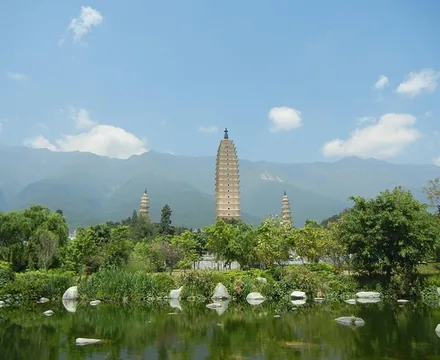
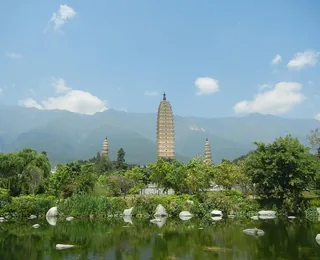
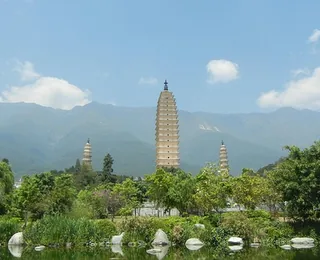
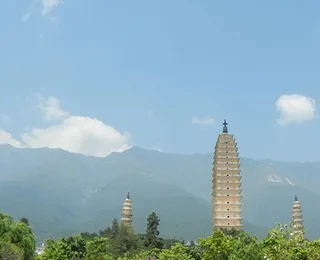
The Three Pagodas of Chongsheng Temple consist of one large and two small pagodas. The main Qianxun Pagoda was built in the Nanzhao period (about the 9th century); a square, multi-eaved brick structure about 69 metres tall, it resembles Xi'an's Small Wild Goose Pagoda, while the two flanking pagodas are octagonal brick towers. Standing as a tripod at the foot of Cangshan, they are the remains of the Dali Kingdom's royal temple, one of China's oldest surviving pagoda groups, a national key cultural relic and a candidate for the World Heritage List. The Three Pagodas stand northwest of Dali Old Town at the foot of Yingle Peak in Cangshan, the site of the royal temple of the Nanzhao and Dali kingdoms and Dali's most representative landmark. The main Qianxun Pagoda is a square, multi-eaved brick tower about 69 metres high; with the two octagonal pagodas to north and south it forms a tripod that has stood for a thousand years, reflected in the round pool before it — a classic note in the Cangshan-Erhai landscape. Highlights include the north and south small pagodas, the reflection in Juying Pool and the rebuilt Chongsheng Temple complex. Tip: Light is best at dawn or dusk, and the reflection pool is the classic spot to frame all three pagodas. Practical info: located northwest of Dali Old Town, Dali City, Dali Bai Autonomous Prefecture, Yunnan; admission about ¥75; open 07:00–18:30.

  • Address: Northwest of Dali Old Town, Dali City, Dali Bai Autonomous Prefecture, Yunnan
  • Ticket: About ¥75
  • Opening: 07:00–18:30
Three Pagodas of Chongsheng Temple