Attractions

Yungang Grottoes

Yungang Grottoes

Recommend 4.8 / 5

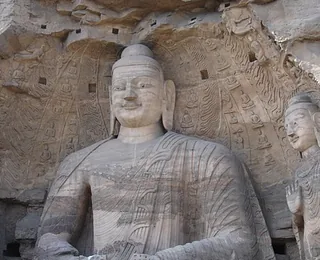
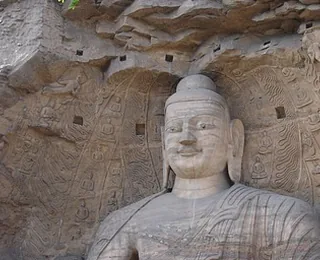
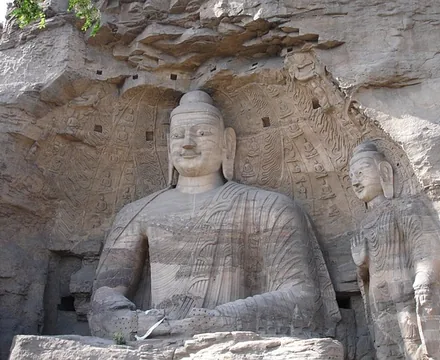
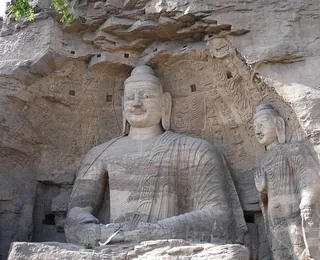
The Yungang Grottoes lie at the southern foot of Wuzhou Mountain in the western suburbs of Datong. Construction began during the reign of Emperor Wencheng of the Northern Wei (460 AD), and the site is one of China's largest ancient grotto complexes. The caves were cut into the mountain and stretch about 1 km from east to west; 45 main caves survive, with more than 51,000 statues large and small. It was inscribed on the World Cultural Heritage list in 2001. Highlights include the Tanyao Five Caves, the giant Buddha of Cave 5, the central pillar of Cave 6 and the panorama of the grottoes. Tip: allow 3–4 hours for the visit; morning light is better for photography, and shuttle buses run within the scenic area. Practical info: located at Yungang Town, Yungang District, Datong, Shanxi; admission ¥120; opening hours 08:30–17:30. Best season: summer (June–August) is cool and pleasant, good for escaping the heat; autumn (September–October) offers pleasant scenery. Pair it with Hengshan, the Hanging Temple and Huayan Temple for a half- or full-day itinerary.

Tip: Allow 3–4 hours for the visit. Morning light is better for photography.
  • Address: Yungang Town, Yungang District, Datong, Shanxi
  • Ticket: ¥120
  • Opening: 08:30–17:30
Yungang Grottoes
Yungang Grottoes
Yungang Grottoes
Hengshan

Hengshan

Recommend 4.7 / 5

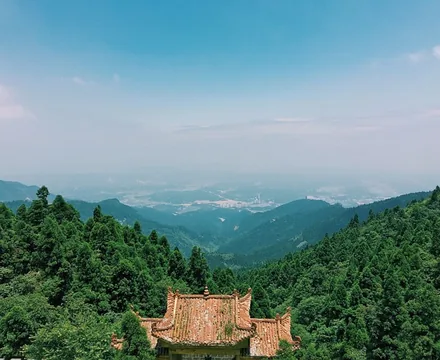
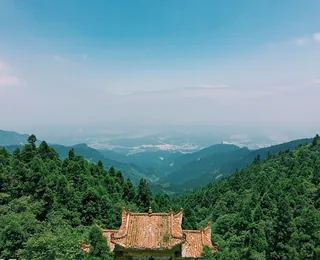
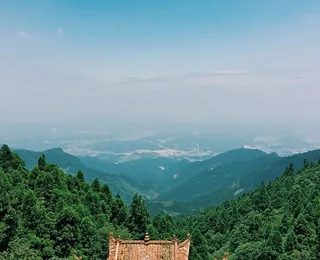
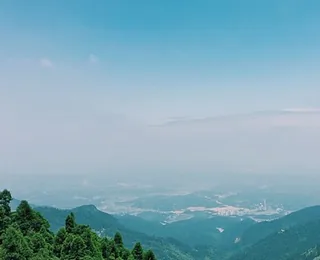
Hengshan is the Northern Peak of China's Five Sacred Mountains. Its main peak, Tianfeng Peak, rises 2,016.1 metres and is towering and precipitous. Many Taoist temples and monasteries are spread through the mountain, the most famous being the Hanging Temple. Hengshan has been a Taoist holy site since ancient times and was also a contested strategic point. Highlights include the Hengshan temple complex and Tiger's Mouth Pass. The Northern Peak of the Five Sacred Mountains, with the towering and precipitous Tianfeng Peak and Taoist temples scattered through the mountains, it is a place where nature and culture complement each other. Tianfeng Peak can be reached by cable car or on foot, and the summit has wide views. Tip: visit together with the Hanging Temple. Practical info: located on Hengshan South Road, Hunyuan County, Datong, Shanxi; admission ¥45; opening hours 07:00–18:00. Best season: summer (June–August) is cool and pleasant, good for escaping the heat; autumn (September–October) offers pleasant scenery. Pair it with the Yungang Grottoes, the Hanging Temple and Huayan Temple for a half- or full-day itinerary. Confirm same-day opening and reservation policies before you go and allow ample time.

Tip: Visit together with the Hanging Temple. Wear comfortable sports shoes for the climb.

  • Address: Hengshan South Road, Hunyuan County, Datong, Shanxi
  • Ticket: ¥45
  • Opening: 07:00–18:00
Hengshan
Hengshan
Hengshan
Hanging Temple

Hanging Temple

Recommend 4.7 / 5

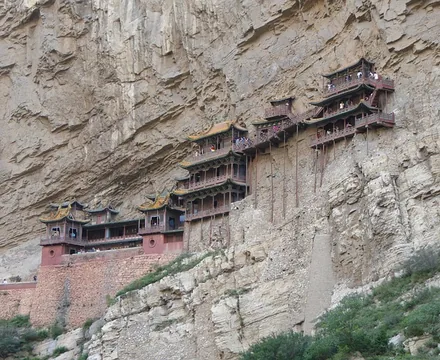
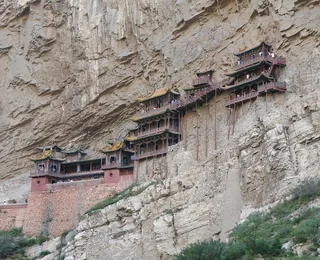
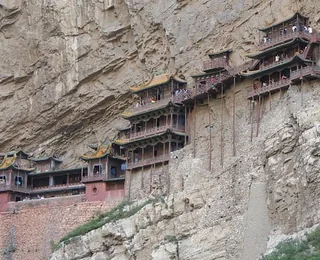
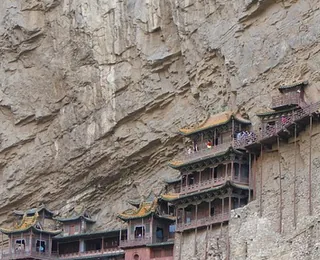
The Hanging Temple stands among the cliffs of Cuiping Peak on Hengshan. It was first built in the late Northern Wei period and has a history of more than 1,500 years. The temple is based on flying beams half-inserted into the rock and cleverly supported by hidden rock ledges; its structure is ingenious, and it combines Buddhism, Taoism and Confucianism in one, making it the only surviving temple in China that unites the three teachings. Highlights include the Hall of Three Teachings, the engineering marvel, the cliffside walkways and the union of Buddhism, Taoism and Confucianism. A wooden building on the cliffs of Hengshan, famous for its daring and ingenious construction and for combining Confucianism, Buddhism and Taoism, it is an architectural marvel. The walkways inside are narrow, and climbing up requires a separate ticket and entry in batches. Tip: not recommended for those afraid of heights. Practical info: located at the foot of Hengshan, Hunyuan County, Datong, Shanxi; admission ¥15 + ¥100 for climbing access (about ¥115 total; subject to official notices); opening hours 08:00–18:00. Best season: summer (June–August) is cool and pleasant, good for escaping the heat; autumn (September–October) offers pleasant scenery. Plan your stay according to opening hours and your energy.

Tip: Not recommended for those afraid of heights. Book tickets in advance; queues are long in peak season.

  • Address: At the foot of Hengshan, Hunyuan County, Datong, Shanxi
  • Ticket: ¥15 admission + ¥100 climbing access (about ¥115 total; subject to official notices)
  • Opening: 08:00–18:00
Hanging Temple
Hanging Temple
Hanging Temple
Huayan Temple

Huayan Temple

Recommend 4.6 / 5

Huayan Temple stands in central Datong and was first built in the Liao dynasty. It is one of the largest and best-preserved Liao-Jin monastery complexes surviving in China. The Mahavira Hall is the largest surviving Liao-Jin Buddha hall, and the Liao painted sculptures and wall sutra cabinets in the Bhagavat Sutra Library are treasures of ancient Chinese architectural art. Highlights include the Mahavira Hall, the Bhagavat Sutra Library, the Liao painted sculptures and the wall sutra cabinets. It is a great Buddhist monastery of the Liao and Jin periods, with the broad hip-and-gable roof of the Mahavira Hall and the exquisite painted sculptures and wall sutra cabinets of the Bhagavat Sutra Library. Tip: visit together with Shanhua Temple. Practical info: located at 459 Xiasi Slope Street, Pingcheng District, Datong, Shanxi; admission ¥50; opening hours 08:00–18:00. Best season: summer (June–August) is cool and pleasant, good for escaping the heat; autumn (September–October) offers pleasant scenery. Pair it with the Yungang Grottoes, Hengshan and the Hanging Temple for a half- or full-day itinerary. Confirm same-day opening and reservation policies before you go and allow ample time. In peak season or on holidays, book ahead and travel off-peak, and allow time for queues and security checks.

Tip: Visit together with Shanhua Temple.

  • Address: 459 Xiasi Slope Street, Pingcheng District, Datong, Shanxi
  • Ticket: ¥50
  • Opening: 08:00–18:00
Huayan Temple
Huayan Temple
Huayan Temple
Nine-Dragon Wall

Nine-Dragon Wall

Recommend 4.5 / 5

The Nine-Dragon Wall was built in 1392, the twenty-fifth year of the Ming Hongwu reign, as the screen wall in front of the residence of Zhu Gui, thirteenth son of the Ming founder and Prince of Dai. The wall is 45.5 metres long, 8 metres high and 2.02 metres thick, standing on a Sumeru base and topped by an imitation-timber glazed-tile eave. The face is set with nine coiling dragons in yellow, green, blue, purple and black glaze; the central dragon lowers its head while the others leap among clouds and waves, a masterpiece of Ming glazed-tile craft. The Prince of Dai's residence is long gone, leaving only this wall facing the lane; it was listed as a national key cultural relics protection unit in 2001. Highlights include the nine glazed coiling dragons, the screen wall of the Prince of Dai, the imitation-timber glazed eave and the Sumeru base. Tip: it is in Datong's old town together with Huayan Temple and Shanhua Temple, so you can walk or take the old-town sightseeing cart to link them into a half-day historic-architecture route. Practical info: located at No. 18 Dadong Street, Pingcheng District, Datong, Shanxi (inside the old town); admission ¥10 (subject to official notices); opening hours 08:30–18:00 (hours may be shortened off-season; subject to official notices).

Tip: It is in Datong's old town together with Huayan Temple and Shanhua Temple, so you can walk or take the old-tow…

  • Address: No. 18 Dadong Street, Pingcheng District, Datong, Shanxi (inside the old town)
  • Ticket: ¥10 (subject to official notices)
  • Opening: 08:30–18:00 (hours may be shortened off-season; subject to official notices)
Nine-Dragon Wall
Nine-Dragon Wall
Nine-Dragon Wall
Shanhua Temple

Shanhua Temple

Recommend 4.6 / 5

Shanhua Temple was first built during the reign of Emperor Xuanzong of the Tang and was originally called Kaiyuan Temple; in the Later Jin of the Five Dynasties it was known as Puen Temple, and at the end of the Liao it was destroyed in war. The halls were rebuilt between the sixth year of Tianhui and the third year of Huangtong of the Jin (1128–1143), and the temple took its present name in the tenth year of the Ming Zhengtong reign (1445). The monastery faces south, with the mountain gate (Hall of the Heavenly Kings), Hall of the Three Saints and Mahavira Hall arranged in sequence along the central axis, and the Samantabhadra Pavilion and east and west side halls symmetrically placed; four Liao-Jin timber structures survive in one temple. In the Mahavira Hall, five Liao-dynasty Dhyani Buddhas and twenty-four Jin-dynasty devas share one hall, while the Hall of the Three Saints uses the reduced-column method to leave only four interior columns, making the space especially open. Highlights include the Jin-dynasty mountain gate (Hall of the Heavenly Kings), the reduced-column Hall of the Three Saints and the twenty-four devas of the Mahavira Hall. Tip: admission is free, though registration on site may be required in peak season; allow 1.5–2 hours along the central axis. Practical info: located at No. 6 Nansi Street, Pingcheng District, Datong, Shanxi (inside the old town); admission free (subject to venue notices); opening hours 08:00–17:30 (hours may vary off-season or with temporary closures; subject to venue notices).

Tip: Admission is free, though registration on site may be required in peak season; allow 1.

  • Address: No. 6 Nansi Street, Pingcheng District, Datong, Shanxi (inside the old town)
  • Ticket: Free admission (subject to venue notices)
  • Opening: 08:00–17:30 (hours may vary off-season or with temporary closures; subject to venue notices)
Shanhua Temple
Shanhua Temple
Shanhua Temple