City Intro

History & Culture: Datong was the capital of the Northern Wei, a secondary capital of the Liao and Jin, and a key town of the Ming and Qing, long known as "the capital of three dynasties and a strategic town of two." The Northern Wei carved the Yungang Grottoes at Pingcheng, the Liao and Jin built Huayan Temple and Shanhua Temple, and the Ming constructed the Datong city wall. Datong has a deep cultural heritage and has long been known as "the capital of three dynasties and a strategic town of two." The Yungang Grottoes are a World Cultural Heritage site and represent the highest achievement of Chinese Buddhist cave art in the 5th century AD. The Hengshan temple fair carries on Taoist culture and attracts many believers every year. The Datong Ancient Capital Lantern Festival is held during Spring Festival, with brilliant lantern displays. As a famous historical and cultural city, Datong also preserves many Ming-Qing city walls and traditional dwellings. Liao-Jin buildings such as Huayan Temple and Shanhua Temple bear witness to Datong's glorious history as a Liao-Jin secondary capital. Datong's copper hotpot culture is also distinctive and is an important representative of northern hotpot culture.

Geography: Located in northern Shanxi on the northeastern edge of the Loess Plateau, commanding the routes between Shanxi, Hebei and Inner Mongolia, with the Hengshan Mountains stretching across the south and rich coal resources; it has been a strategic location since ancient times. Datong lies in Shanxi Province, where landforms, rivers and climate together shape the city's spatial pattern. Summer (June–August) is cool and pleasant, good for escaping the heat; autumn (September–October) offers pleasant scenery. Natural and cultural sites are relatively concentrated, so a one- or two-day itinerary by area works well. Light, vegetation and water levels change the look of the landscape with the seasons; check the weather and scenic-area notices before setting out. Roads and railways are the main connections, and major sights can be linked from the city or county town.

Highlights: Explore the Yungang Grottoes World Heritage Site, climb Hengshan and the Hanging Temple, and visit Huayan Temple, Shanhua Temple and the Nine-Dragon Wall to experience the cultural depth of a thousand-year-old capital. Core sights include the Yungang Grottoes, Hengshan, the Hanging Temple and Huayan Temple. They cover history, nature and city life, and can be combined freely. Pair the main sights with nearby streets, museums or food streets for a half- or full-day route. If time allows, slow down and leave room for walking and rest. First-time visitors can start with the most representative sights, then add museums, old streets or nature as time allows. Local food is part of the itinerary — save a meal for a time-honoured shop or a local market.

Food Culture: Datong knife-cut noodles have thick centres and thin edges, smooth outside and chewy inside; copper hotpot mutton has a rich, savory broth; Hunyuan liangfen is springy, smooth and refreshing; and yellow cake is soft, sticky and filling.

Attractions

More >
Yungang Grottoes

Yungang Grottoes

Recommend 4.8 / 5

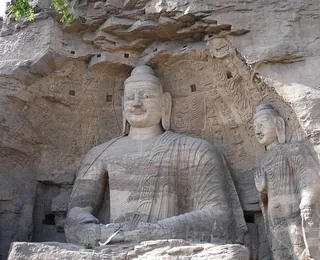
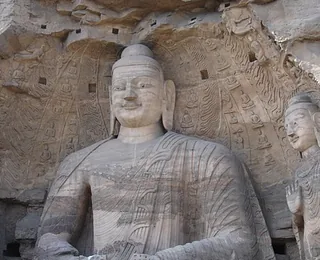
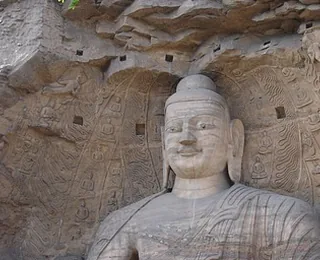
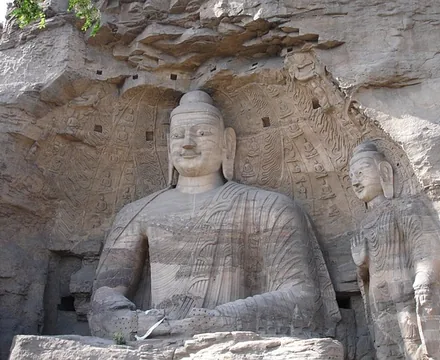
The Yungang Grottoes lie at the southern foot of Wuzhou Mountain in the western suburbs of Datong. Construction began during the reign of Emperor Wencheng of the Northern Wei (460 AD), and the site is one of China's largest ancient grotto complexes. The caves were cut into the mountain and stretch about 1 km from east to west; 45 main caves survive, with more than 51,000 statues large and small. It was inscribed on the World Cultural Heritage list in 2001. Highlights include the Tanyao Five Caves, the giant Buddha of Cave 5, the central pillar of Cave 6 and the panorama of the grottoes. Tip: allow 3–4 hours for the visit; morning light is better for photography, and shuttle buses run within the scenic area. Practical info: located at Yungang Town, Yungang District, Datong, Shanxi; admission ¥120; opening hours 08:30–17:30. Best season: summer (June–August) is cool and pleasant, good for escaping the heat; autumn (September–October) offers pleasant scenery. Pair it with Hengshan, the Hanging Temple and Huayan Temple for a half- or full-day itinerary.

Tip: Allow 3–4 hours for the visit. Morning light is better for photography.

  • Address: Yungang Town, Yungang District, Datong, Shanxi
  • Ticket: ¥120
  • Opening: 08:30–17:30
Yungang Grottoes
Yungang Grottoes
Yungang Grottoes
Hengshan

Hengshan

Recommend 4.7 / 5

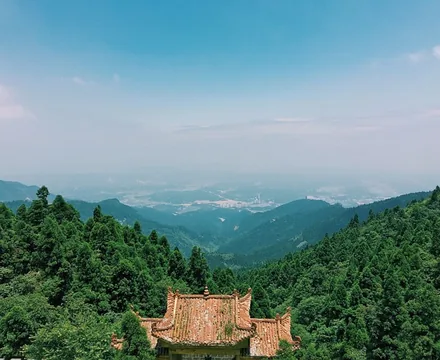
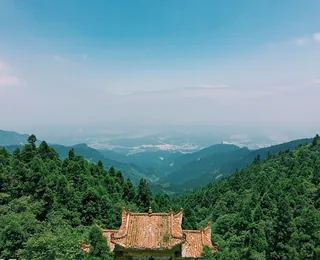
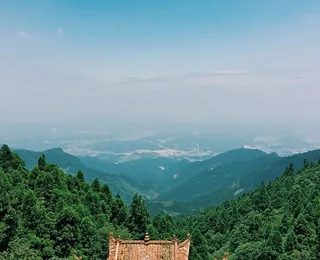
Hengshan is the Northern Peak of China's Five Sacred Mountains. Its main peak, Tianfeng Peak, rises 2,016.1 metres and is towering and precipitous. Many Taoist temples and monasteries are spread through the mountain, the most famous being the Hanging Temple. Hengshan has been a Taoist holy site since ancient times and was also a contested strategic point. Highlights include the Hengshan temple complex and Tiger's Mouth Pass. The Northern Peak of the Five Sacred Mountains, with the towering and precipitous Tianfeng Peak and Taoist temples scattered through the mountains, it is a place where nature and culture complement each other. Tianfeng Peak can be reached by cable car or on foot, and the summit has wide views. Tip: visit together with the Hanging Temple. Practical info: located on Hengshan South Road, Hunyuan County, Datong, Shanxi; admission ¥45; opening hours 07:00–18:00. Best season: summer (June–August) is cool and pleasant, good for escaping the heat; autumn (September–October) offers pleasant scenery. Pair it with the Yungang Grottoes, the Hanging Temple and Huayan Temple for a half- or full-day itinerary. Confirm same-day opening and reservation policies before you go and allow ample time.

Tip: Visit together with the Hanging Temple. Wear comfortable sports shoes for the climb.

  • Address: Hengshan South Road, Hunyuan County, Datong, Shanxi
  • Ticket: ¥45
  • Opening: 07:00–18:00
Hengshan
Hengshan
Hengshan
Hanging Temple

Hanging Temple

Recommend 4.7 / 5

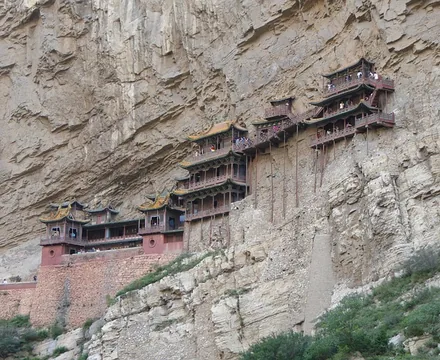
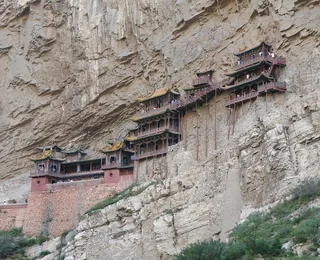
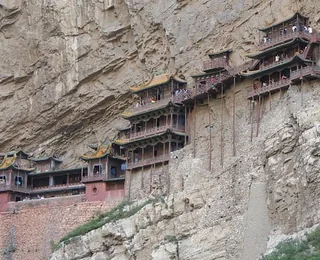
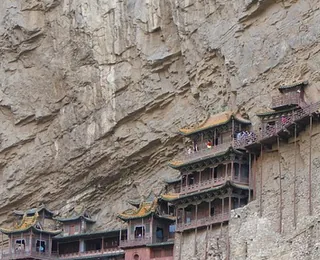
The Hanging Temple stands among the cliffs of Cuiping Peak on Hengshan. It was first built in the late Northern Wei period and has a history of more than 1,500 years. The temple is based on flying beams half-inserted into the rock and cleverly supported by hidden rock ledges; its structure is ingenious, and it combines Buddhism, Taoism and Confucianism in one, making it the only surviving temple in China that unites the three teachings. Highlights include the Hall of Three Teachings, the engineering marvel, the cliffside walkways and the union of Buddhism, Taoism and Confucianism. A wooden building on the cliffs of Hengshan, famous for its daring and ingenious construction and for combining Confucianism, Buddhism and Taoism, it is an architectural marvel. The walkways inside are narrow, and climbing up requires a separate ticket and entry in batches. Tip: not recommended for those afraid of heights. Practical info: located at the foot of Hengshan, Hunyuan County, Datong, Shanxi; admission ¥15 + ¥100 for climbing access (about ¥115 total; subject to official notices); opening hours 08:00–18:00. Best season: summer (June–August) is cool and pleasant, good for escaping the heat; autumn (September–October) offers pleasant scenery. Plan your stay according to opening hours and your energy.

Tip: Not recommended for those afraid of heights. Book tickets in advance; queues are long in peak season.

  • Address: At the foot of Hengshan, Hunyuan County, Datong, Shanxi
  • Ticket: ¥15 admission + ¥100 climbing access (about ¥115 total; subject to official notices)
  • Opening: 08:00–18:00
Hanging Temple
Hanging Temple
Hanging Temple

Local Food

Datong Knife-Cut Noodles
¥15–25/person
The representative Shanxi noodle: thick in the middle and thin at the edges, smooth on entry and chewy inside, served with a rich and well-seasoned gravy.
★ 4.7
Datong Copper Hotpot
¥60–100/person
A brass charcoal hotpot for cooking mutton, meatballs and pickled cabbage; the broth is fresh and full-flavoured, the first choice for gathering around the fire in winter.
★ 4.5
Hunyuan Liangfen
Hunyuan Liangfen
¥10–15/person
A Hunyuan specialty: springy, smooth potato-starch jelly with fragrant chilli oil — cooling in midsummer and appetising.
★ 4.4
Yellow Cake
Yellow Cake
¥10–20/person
Steamed from broomcorn millet flour and eaten dipped in meat broth or with stewed dishes — soft, sticky and filling, an everyday staple of the Yanbei region.
★ 4.4

Culture

Datong has a deep cultural heritage and has long been known as "the capital of three dynasties and a strategic town of two." The Yungang Grottoes are a World Cultural Heritage site and represent the highest achievement of Chinese Buddhist cave art in the 5th century AD. The Hengshan temple fair carries on Taoist culture and attracts many believers every year. The Datong Ancient Capital Lantern Festival is held during Spring Festival, with brilliant lantern displays. As a famous historical and cultural city, Datong also preserves many Ming-Qing city walls and traditional dwellings. Liao-Jin buildings such as Huayan Temple and Shanhua Temple bear witness to Datong's glorious history as a Liao-Jin secondary capital. Datong's copper hotpot culture is also distinctive and is an important representative of northern hotpot culture.