City Intro

History & Culture: Jining is the home town of Confucius and Mencius and the capital of the Grand Canal; the Qufu Three Confucian Sites, Nishan Holy Land and Weishan Lake together make a destination of Confucian culture, the canal and lake delicacies. Jining is the birthplace of Confucian culture, where both Confucius and Mencius were born; the Grand Canal runs through the city, leaving wharves, guild halls and Taibai Tower, and forming a dual cultural foundation of “Confucius and Mencius + canal”. Jining City lies in Shandong Province and has formed a distinct urban memory through regional history and cultural exchange. From ancient settlements to the modern city, city walls, lanes, temples and guild halls record historical layers from different periods. Today, museums, historic districts and local festivals still make the city's historical thread legible.

Geography: Jining lies in southwestern Shandong, where the Si River, the Grand Canal and the Nansi Lakes interweave; Qufu is in the east and Weishan Lake in the south. Jining City lies in Shandong Province, where landforms, rivers and climate together shape the city's spatial pattern. March–May and September–November are best; Weishan Lake's lotus is most beautiful in summer, and Qufu is comfortable in spring and autumn. Natural and cultural landscapes within the city are fairly concentrated, making one- or two-day itineraries by area practical. Light, vegetation and water levels change the look of the landscape with the seasons; check the weather and scenic-area notices before setting out. Transport within the city is mainly by road and rail, and the main sights can be linked from the city or county towns. In mountain areas, watch altitude and changing weather; in river valleys and lake areas, watch water levels and flood season.

Highlights: Pay homage at the Qufu Three Confucian Sites, see Nishan Holy Land, tour the lotus of Weishan Lake, and then eat a meal of Confucius Mansion cuisine. Core sights include the Qufu Three Confucian Sites, Nishan Holy Land, Weishan Lake and Taibai Tower. These sights cover different facets such as history, nature and city life, and can be combined freely according to interest. It is worth linking the core sights with nearby streets, museums or food streets into a half-day or full-day itinerary. If time allows, slow the pace and leave room for walking and rest for a fuller experience. First-time visitors can start with the most representative core sights, then add museums, old streets or natural scenery as time allows. Local food is part of the itinerary too, so save mealtimes for long-established restaurants or local markets.

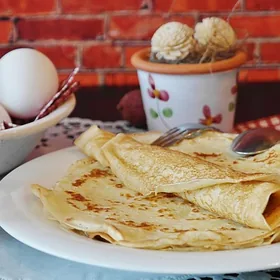
Food Culture: Confucius Mansion cuisine, smoked tofu, Qufu pancakes and lamb porridge: Confucian banquet dishes and southwestern Shandong home cooking coexist.

Attractions

More >
Qufu Three Confucian Sites

Qufu Three Confucian Sites

Recommend 4.9 / 5

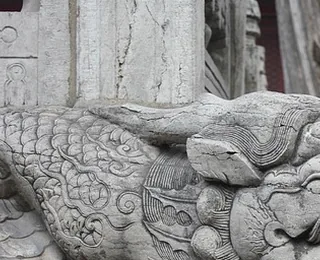
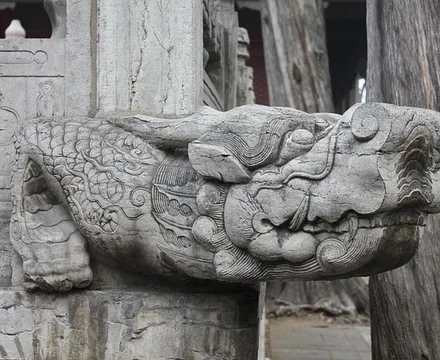
The Qufu Three Confucian Sites are the Temple of Confucius, the Confucius Mansion and the Confucius Cemetery. The temple was first built in 478 BC, the seventeenth year of Duke Ai of Lu, and the surviving buildings follow the Ming-Qing layout; its Dacheng Hall is ranked with the Taihe Hall of the Forbidden City and the Tiankuang Hall of Dai Temple as one of the three great halls of the East. The mansion was the office and residence of Confucius's direct descendants, and the cemetery is the family burial ground of Confucius and his descendants, with ancient trees reaching the sky. It was inscribed on the World Cultural Heritage list in 1994. The Temple of Confucius, the Confucius Mansion and the Confucius Cemetery are together called the “Three Confucian Sites”; they are the symbol of successive Chinese dynasties' commemoration of Confucius and promotion of Confucianism, and a World Cultural Heritage site. Highlights include the Dacheng Hall of the Temple of Confucius and Confucian culture. Tip: the three sites can be covered on foot or by electric cart; hire a guide to understand the ritual system and the steles, and allow at least half a day. Practical info: located at Qufu City, Jining, Shandong; the ticket is ¥140 (combo ticket for the three sites); opening hours are 08:00–17:30. Best season: March–May and September–November are best; Weishan Lake's lotus is most beautiful in summer, and Qufu is comfortable in spring and autumn. It can be combined with Nishan Holy Land, Weishan Lake and Taibai Tower in Jining City for a half-day or one-day itinerary.

Tip: The three sites can be covered on foot or by electric cart; hire a guide to understand the ritual system and t…
  • Address: Qufu City, Jining, Shandong
  • Ticket: ¥140 (combo ticket for the three sites)
  • Opening: 08:00–17:30
Qufu Three Confucian Sites
Nishan Holy Land

Nishan Holy Land

Recommend 4.5 / 5

Nishan's five peaks stand side by side at 340 metres above sea level, about thirty kilometres southeast of Qufu. Tradition says Confucius's parents prayed at Niqiu and had a son, and in 551 BC Confucius was born at Zou, the settlement below the mountain; at the foot of the mountain stands the Nishan Confucius Temple, which had already been established for worship no later than the Northern Song, and during the Zhiyuan era of the Yuan dynasty (1337) the Nishan Academy was set up here for teaching, so worship and scholarship have continued without a break since the Song and Ming. The scenic area has opened in phases since 2018. Its main feature is a 72-metre-tall bronze statue of Confucius; the Great Hall has a floor area of more than 60,000 square metres, containing the Hall of Assembled Worthies, the Gallery of the Seventy-Two Worthies and the five halls of Benevolence, Righteousness, Propriety, Wisdom and Trustworthiness. After dark there are the ritual music performance “Jinsheng Yuzhen” and a light show, and the park gates stay open until 21:00. The Nishan Forum on World Civilisations, founded in 2010, is also held here regularly. Tip: it is recommended to go in the afternoon so that you can watch the evening ritual music performance. Practical info: located at Nishan Town, Qufu City, Jining, Shandong; the ticket is ¥100; opening hours are 09:30–21:00.

Tip: It is recommended to go in the afternoon so that you can watch the evening ritual music performance.

  • Address: Nishan Town, Qufu City, Jining, Shandong
  • Ticket: ¥100
  • Opening: 09:30–21:00
Nishan Holy Land
Nishan Holy Land
Nishan Holy Land
Weishan Lake

Weishan Lake

Recommend 4.7 / 5

Weishan Lake is in Weishan County, Jining City, and is part of the Nansi Lakes and one of the largest freshwater lakes in northern China. In summer the lotus grows in continuous sheets, and the reed marshes and fishermen's houseboats form the wetland landscape; during the War of Resistance the Railway Guerrillas operated here, and revolutionary culture coexists with lake delicacies. One of the largest freshwater lakes in northern China, where lotus, reeds and fishermen's houseboats form a canal wetland landscape; it is also the setting of the Railway Guerrillas story. Tip: the lotus is most beautiful in summer, and the boat trip takes about 2 hours; it is far from Qufu for the same day, so it is better to plan them separately. Practical info: located at Weishan County, Jining, Shandong; the ticket is about ¥100 (includes boat ticket, subject to the scenic area's notices); opening hours are 08:00–17:30. Best season: March–May and September–November are best; Weishan Lake's lotus is most beautiful in summer, and Qufu is comfortable in spring and autumn. It can be combined with the Qufu Three Confucian Sites, Nishan Holy Land and Taibai Tower in Jining City for a half-day or one-day itinerary. It is advisable to confirm the day's opening and reservation policy before setting out and to allow sufficient visiting time.

Tip: The lotus is most beautiful in summer, and the boat trip takes about 2 hours; it is far from Qufu for the same…

  • Address: Weishan County, Jining, Shandong
  • Ticket: About ¥100 (includes boat ticket; subject to the scenic area's notices)
  • Opening: 08:00–17:30
Weishan Lake
Weishan Lake
Weishan Lake

Local Food

Confucius Mansion cuisine
¥80–120/person
Official banquet cuisine that stresses etiquette and historical allusions; Poetic Ginkgo and First-Rank Tofu are refined and elegant.
★ 4.7
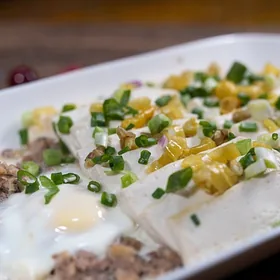
Confucius Mansion smoked tofu
¥15–25/person
Smoked over fruit wood, brown outside and white inside, firm, fragrant and well seasoned; it can be served cold or stewed — a Qufu specialty.
★ 4.4
Qufu pancake
Qufu pancake
¥5–10/person
Thin, crisp pancakes made from mixed grains, good for wrapping vegetables or sauce — a staple of southwestern Shandong and travel food.
★ 4.4
Lamb porridge
Lamb porridge
¥10–15/person
A Qufu breakfast: rice porridge with lamb and spices, savoury and warm, a bowl to warm the body in the early morning.
★ 4.4

Culture

Jining is the birthplace of Confucian culture, where both Confucius and Mencius were born; the Grand Canal runs through the city, leaving wharves, guild halls and Taibai Tower, and forming a dual cultural foundation of “Confucius and Mencius + canal”.