City Intro

History & Culture: Tai'an takes its name from Mount Tai: 'when Mount Tai is at peace, all within the four seas are at peace', meaning national prosperity and popular well-being. Lying between the old states of Qi and Lu, it has been a thoroughfare since ancient times, and the tradition of fengshan sacrifices on Mount Tai stretches back thousands of years. Tai'an's culture centres on Mount Tai, with a fengshan tradition spanning millennia. The annual Mount Tai International Mountaineering Festival, the Dongyue Temple Fair and the live-action fengshan ceremony give this city, named after the mountain, a distinctive cultural vitality. Tai'an lies in Shandong, where regional history and cultural exchange have shaped a distinct urban memory. From ancient settlements to the modern city, walls, lanes, temples and guild halls record layers of history from different periods. Museums, historic districts and local festivals still make that history legible today.

Geography: Tai'an lies at the southern foot of Mount Tai in central Shandong, at the transition between the central Shandong mountains and the plains, with the Dawen River winding through. Mount Tai, foremost of the Five Sacred Mountains and a World Natural and Cultural Heritage Site, is Tai'an's core tourism resource and spiritual symbol. Tai'an is in Shandong, where landforms, rivers and climate together shape the city's layout. Spring (April–May) brings blooming mountain flowers; autumn (September–October) is crisp and clear, the best season for climbing Mount Tai. Natural and cultural sights are fairly concentrated, so a one- or two-day itinerary by area works well. Light, vegetation and water levels change with the seasons; check the weather and official notices before setting out.

Highlights: Climb Mount Tai on foot from the Red Gate or take the cable car, and see sunrise over the sea of clouds, cliff inscriptions and the Southern Heavenly Gate. The Dai Temple is the principal shrine of Mount Tai, with towering ancient cypresses and rows of steles. Core sights include Mount Tai, the Dai Temple, Taishan Caishixi and the Taishan Underground Rift. They cover history, nature and city life and can be combined freely. Pair the main sights with nearby streets, museums or food streets for a half- or full-day route. If time allows, slow down and leave room for walking and rest. First-time visitors can start with the most representative sights, then add museums, old streets or natural areas as time allows.

Food Culture: Tai'an food is represented by the Three Beauties of Mount Tai — cabbage, tofu and water — and by pancakes, with a plain, rustic mountain flavour.

Attractions

More >
Mount Tai

Mount Tai

Recommend 4.8 / 5

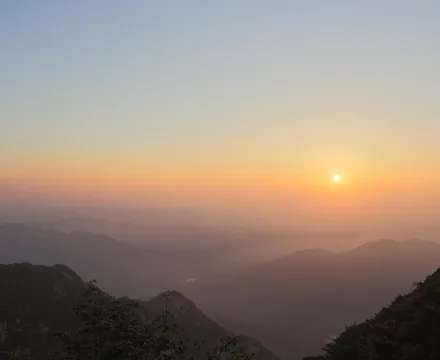
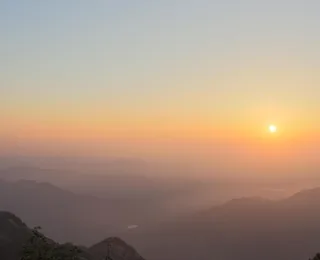
Mount Tai stretches north of Tai'an. Its main peak, the Jade Emperor Summit, stands at 1,532.7 metres, the figure published by the national surveying authority in 2007, while the summit stone still bears the older number 1,545 metres. The classic Red Gate route starts at the Daizong Arch and passes the Red Gate Palace, the Tower of Myriad Immortals, the Doumu Palace and the Mid-Heaven Gate before climbing the Eighteen Bends, about 9.5 kilometres in all with more than 7,000 stone steps, following the very axis of the imperial fengshan road. Mount Tai was inscribed on the World Heritage List in 1987 as one of China's first mixed cultural and natural World Heritage sites. At its foot, the Dai Temple was the starting point and lodging place for the fengshan sacrifices, and more than 2,000 steles and cliff inscriptions from successive dynasties survive on the mountain. The summit is celebrated for sunrise, sunset glow and the 'jade plate' of cloud sea, and in summer and autumn, when the weather is half clear and half misty, the 'Mount Tai Buddha's halo' occasionally appears. Highlights include Sunrise Viewing Peak. Tip: climb at night to watch the sunrise, and bring warm clothing. Practical info: the site is on Hongmen Road, Taishan District, Tai'an, Shandong; ticket ¥115 (peak season); open all day.
Tip: Climb at night to watch the sunrise, and bring warm clothing.
  • Address: Hongmen Road, Taishan District, Tai'an, Shandong
  • Ticket: ¥115 (peak season)
  • Opening: All day
Mount Tai
Mount Tai
Mount Tai
Dai Temple

Dai Temple

Recommend 4.6 / 5

The Dai Temple reaches back to the Qin and Han: a Western Han text already notes that 'the Qin had laid out the sacrificial fields, and the Han too raised halls', and later dynasties destroyed and rebuilt it time and again. Its surviving layout runs along a north–south axis with eastern, central and western branches behind a wall circuit of about three li pierced by eight gates — 96,000 square metres of ground and 186 halls and chambers where emperors lodged and officiated before climbing the mountain. The Tiankuang Hall, the main structure, was built in 1009, the second year of the Song reign era Daxiangfu, and named for the 'talisman sent down by heaven' staged by Emperor Zhenzong. Nine bays wide under a double-eaved hip roof, it carries a Song mural showing the deity of Mount Tai setting out and returning, more than 3 metres high and 62 metres long. In the Han Cypress Courtyard, five ancient cypresses are said to date from the Han, the temple keeps 184 steles and 48 Han pictorial stones, and the ten surviving characters of the Qin stone credited to the minister Li Si were moved down from the summit during the Qing. Listed as a national key cultural relics protection unit in 1988, the compound now serves as the Tai'an Municipal Museum. Highlights include the Tang locust tree and the forest of steles. Tip: a combined ticket with Mount Tai is available; visit the Dai Temple before climbing the mountain. Practical info: the temple is at 191 Dongyue Street, Taishan District, Tai'an, Shandong; ticket ¥20 (peak season); opening hours 07:30–17:30.

Tip: A combined ticket with Mount Tai is available; visit the Dai Temple before climbing the mountain.

  • Address: 191 Dongyue Street, Taishan District, Tai'an, Shandong
  • Ticket: ¥20 (peak season)
  • Opening: 07:30–17:30
Dai Temple
Dai Temple
Dai Temple
Taishan Caishixi (Coloured Stone Stream)

Taishan Caishixi (Coloured Stone Stream)

Recommend 4.6 / 5

Caishixi lies in the Taohuayu scenic area of Mount Tai and is part of the Mount Tai Global Geopark. Metamorphic rocks of the Archean Taishan group are exposed along the valley, eroded by water into coloured banded streambeds, which gives the stream its name. Black Dragon Pool, Caishixi and Taohuayu are the stops along the way; spring flowers and autumn woods are the best seasons, and the walk is easier than the main summit route. A valley route in Mount Tai's Taohuayu area, its streambed is banded red, yellow and green by 2.5-billion-year-old metamorphic rock. Spring blossoms and autumn water both photograph well, and it is quieter than the Red Gate–Mid-Heaven Gate route, good for those who want an easy valley walk away from the crowds. Highlights include the coloured streambed and the Mount Tai geological section. Tip: water flow is best in spring; enter from the Taohuayu visitor centre, the round trip on foot takes about 3–4 hours, and wear non-slip shoes. Practical info: the site is at Taohuayu, Daiyue District, Tai'an; the ticket is included in the Mount Tai ticket (Taohuayu cable car and shuttle extra, subject to official notice); opening hours 07:00–17:00.

Tip: Water flow is best in spring; enter from the Taohuayu visitor centre, the round trip on foot takes about 3–4 h…

  • Address: Taohuayu, Daiyue District, Tai'an
  • Ticket: Included in the Mount Tai ticket (Taohuayu cable car and shuttle extra; subject to official notice)
  • Opening: 07:00–17:00
Taishan Caishixi (Coloured Stone Stream)

Local Food

Mount Tai Pancake
Mount Tai Pancake
¥10–20/person
Made from millet and mixed grains, thin, crisp and chewy, wrapped with scallion and sweet bean paste — a classic staple of the Qi-Lu highlands.
★ 4.7
Three Beauties of Mount Tai
¥30–50/person
Cabbage, tofu and Mount Tai spring water cooked together, fresh, clean and smooth, letting the ingredients' own flavours speak — renowned since ancient times.
★ 4.4
Mount Tai Red-Scale Fish
¥60–80/person
A prized small fish of Mount Tai streams, delicate and free of any fishy taste, good either stewed plainly or deep-fried; wild red-scale fish are protected, so what is served is mostly farmed.
★ 4.4
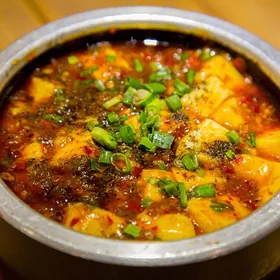
Tai'an Tofu Feast
Tai'an Tofu Feast
¥40–60/person
A series of dishes built around tofu, varied in form, light and healthful — the representative of Mount Tai vegetarian cooking.
★ 4.4

Culture

Tai'an's culture centres on Mount Tai, with a fengshan tradition spanning thousands of years. The annual Mount Tai International Mountaineering Festival, the Dongyue Temple Fair and the live-action fengshan ceremony give this city, named after the mountain, a distinctive cultural vitality.