Attractions

Humble Administrator's Garden

Humble Administrator's Garden

Recommend 4.7 / 5

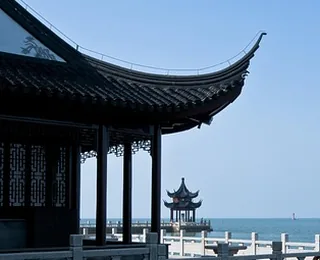
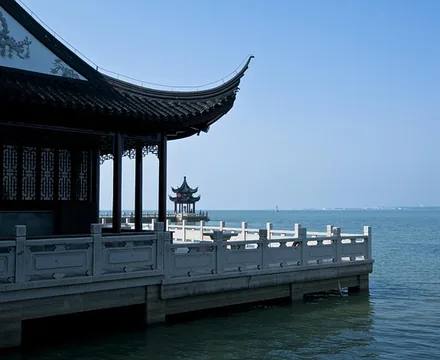
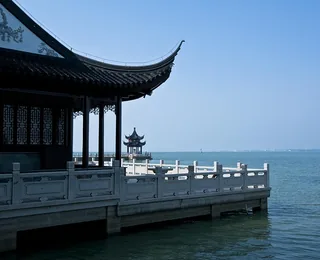
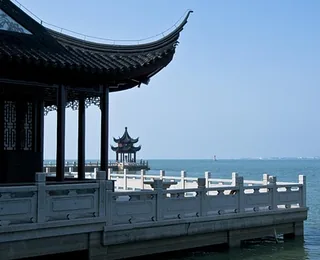
The Humble Administrator's Garden is one of China's four great gardens. First built during the Ming Zhengde reign, it covers 5.2 hectares. Water is the centre of the whole garden, with hills and streams winding through, exquisite halls and pavilions, and lush flowers and trees. Highlights include the Hall of Distant Fragrance, the Little Flying Rainbow bridge, the Thirty-Six Mandarin Ducks Hall and the Listening to the Rain Pavilion. One of China's four great gardens and a World Heritage Site, it arranges its pavilions around water in a spacious, natural way and is a model of Jiangnan garden design. Tip: go when the garden opens in the morning for fewer people and finer views. Practical info: the garden is at 178 Dongbei Street, Gusu District, Suzhou, Jiangsu; ticket ¥80 in peak season and ¥70 off-peak; opening hours 07:30–17:30 (peak) and 07:30–17:00 (off-peak). Best season: spring (March–May) brings flowers to the gardens; autumn (September–November) is crisp and clear. Combine with Tiger Hill, Pingjiang Road Historic District and Suzhou Museum for a half- or full-day route. Confirm the day's opening and reservation policy before you go and allow ample time.
Tip: Go when the garden opens in the morning for fewer people and finer views.
  • Address: 178 Dongbei Street, Gusu District, Suzhou, Jiangsu
  • Ticket: Peak season ¥80 / off-peak ¥70
  • Opening: 07:30–17:30 (peak season); 07:30–17:00 (off-peak)
Humble Administrator's Garden
Tiger Hill

Tiger Hill

Recommend 4.6 / 5

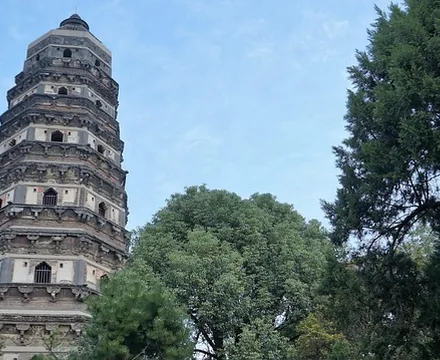
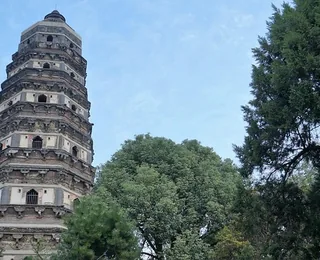
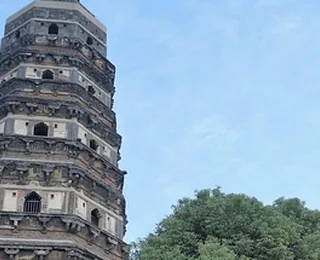
Tiger Hill is Suzhou's landmark sight, with more than 2,500 years of history. The Yunyan Temple Pagoda was begun in 959, the sixth year of the Later Zhou Xiande era, and completed in 961, the second year of the Northern Song Jianlong era; from the Ming dynasty its top leaned to the northwest, and modern reinforcement has kept it standing despite the tilt, earning it the name Leaning Tower of Pisa of the East. Highlights include the Sword Pool, the Thousand-Person Rock and the Sword-Testing Stone. Known as the finest sight in Wu, it has a pagoda that has leaned for a thousand years, called the Leaning Tower of Pisa of the East, and the legends of the Sword Pool are captivating. Tip: enter by the south gate and follow the central axis. Practical info: the site is at 8 inside Tiger Hill Gate, Gusu District, Suzhou, Jiangsu; ticket ¥70 in peak season and ¥60 off-peak; opening hours 07:30–17:30. Best season: spring (March–May) brings flowers to the gardens; autumn (September–November) is crisp and clear. Combine with the Humble Administrator's Garden, Pingjiang Road Historic District and Suzhou Museum for a half- or full-day route. Plan your stay according to opening hours and your energy.

Tip: Enter by the south gate and follow the central axis. The Sword Pool is the most mysterious spot on Tiger Hill.

  • Address: 8 inside Tiger Hill Gate, Gusu District, Suzhou, Jiangsu
  • Ticket: Peak season ¥70 / off-peak ¥60
  • Opening: 07:30–17:30
Tiger Hill
Tiger Hill
Tiger Hill
Pingjiang Road Historic District

Pingjiang Road Historic District

Recommend 4.5 / 5

Pingjiang Road is Suzhou's best-preserved old street, 1,606 metres long and built along the Pingjiang River, retaining the water-town pattern of land and water running side by side with the canal next to the street. Highlights include the Kunqu Opera Museum, the Pingtan Museum, the Couple's Retreat Garden and the cluster of old bridges. A well-preserved old water lane with canal and street in parallel and old bridges and houses in succession, it offers the authentic slow life of old Suzhou and the flavour of Wu. Tip: go in the afternoon, when you can hear snatches of pingtan and experience Suzhou's slow pace. Practical info: the district is on Pingjiang Road, Gusu District, Suzhou, Jiangsu; admission free; open all day. Best season: spring (March–May) brings flowers to the gardens; autumn (September–November) is crisp and clear. Combine with the Humble Administrator's Garden, Tiger Hill and Suzhou Museum for a half- or full-day route. Confirm the day's opening and reservation policy before you go and allow ample time. In peak season or on holidays, book in advance, travel off-peak and allow time for queues and security checks.

Tip: Go in the afternoon, when you can hear snatches of pingtan and experience Suzhou's slow pace.

  • Address: Pingjiang Road, Gusu District, Suzhou, Jiangsu
  • Ticket: Free
  • Opening: Open all day
Pingjiang Road Historic District
Suzhou Museum

Suzhou Museum

Recommend 4.8 / 5

Suzhou Museum was designed by I. M. Pei and opened in 2006. Guided by the idea of 'new within the Chinese, new within the Suzhou', it combines the white walls, grey tiles and lattice windows of Jiangnan houses with geometric volumes. Its collection of more than 30,000 objects includes paintings by the four masters of Wu, a Five Dynasties Yue mise porcelain lotus bowl, the Zhenzhu relic pagoda (shown as a replica) and the wisteria planted by Wen Zhengming. The building's own light and courtyards are worth taking time over. I. M. Pei's final museum, it weaves white walls, grey tiles, rockeries, water and geometric lines into an exhibit in itself. The Wu-school paintings, the mise porcelain lotus bowl and Wen Zhengming's wisteria draw the most attention, and it stands next door to the Humble Administrator's Garden. Highlights include Pei's architecture. Tip: after booking, go in and see the building and courtyards first, then the excavated objects; it is on the same route as the Humble Administrator's Garden and Lion Grove, so allow at least two hours. Practical info: the museum is at 204 Dongbei Street, Gusu District, Suzhou; admission free (booking required); opening hours 09:00–17:00 (closed Mondays, last entry 16:00).

Tip: After booking, go in and see the building and courtyards first, then the excavated objects; it is on the same…

  • Address: 204 Dongbei Street, Gusu District, Suzhou
  • Ticket: Free (booking required)
  • Opening: 09:00–17:00 (closed Mondays, last entry 16:00)
Suzhou Museum
Suzhou Museum
Suzhou Museum
Hanshan Temple

Hanshan Temple

Recommend 4.5 / 5

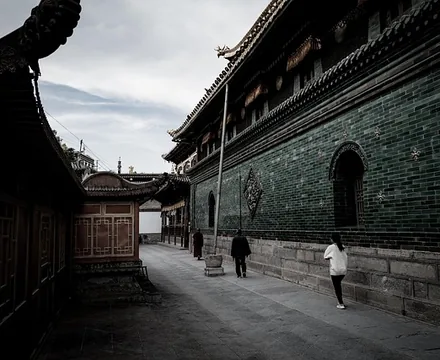
Hanshan Temple was first built in the Liang dynasty of the Southern Dynasties and became famous throughout the world through the Tang poet Zhang Ji's poem A Night Mooring at Maple Bridge. The annual New Year's Eve bell-ringing at Hanshan Temple is Suzhou's most distinctive folk event. Highlights include the Mahavira Hall, the Bell Tower and the Stele Corridor. Famous for Zhang Ji's line 'at midnight the bell reaches the traveller's boat', the ancient temple's bells ring far and wide, and it is a noted Jiangnan temple for praying and hearing the bell. Tip: the New Year's Eve bell-ringing needs advance booking. Practical info: the temple is at 24 Hanshan Temple Lane, Gusu District, Suzhou, Jiangsu; ticket ¥20; opening hours 07:30–17:00. Best season: spring (March–May) brings flowers to the gardens; autumn (September–November) is crisp and clear. Combine with the Humble Administrator's Garden, Tiger Hill and Pingjiang Road Historic District for a half- or full-day route. Confirm the day's opening and reservation policy before you go and allow ample time. In peak season or on holidays, book in advance, travel off-peak and allow time for queues and security checks.

Tip: The New Year's Eve bell-ringing needs advance booking.

  • Address: 24 Hanshan Temple Lane, Gusu District, Suzhou, Jiangsu
  • Ticket: ¥20
  • Opening: 07:30–17:00
Hanshan Temple
Hanshan Temple
Hanshan Temple
Lingering Garden

Lingering Garden

Recommend 4.6 / 5

The Lingering Garden was first built in 1593, the twenty-first year of the Ming Wanli era, as the East Garden of Xu Taishi, then Vice Minister of the Court of the Imperial Stud. In 1798, the third year of the Qing Jiaqing era, Liu Shu rebuilt it on the site and called it Cold Jade and Fresh Waves Villa, popularly Liu Garden. Sheng Kang bought it in 1873, the twelfth year of the Tongzhi era, and after restoration was completed in 1876, the second year of the Guangxu era, it took its present name, Lingering Garden, a pun on Liu's name. The garden covers 23,300 square metres and is divided by cloud walls and winding galleries into central, eastern, northern and western sections. The eastern Hall of Five Peaks, a nanmu hall, and the 6.5-metre Guanyun Peak are the most celebrated, the latter said to be a relic of the Song dynasty Flower and Stone Convoy. It was listed in 1961 among the first batch of National Key Cultural Relics Protection Units and in December 1997 was inscribed on the World Heritage List as a typical example of the Classical Gardens of Suzhou. Highlights include the Hall of Venerable Elders among Groves and Springs and more than 700 metres of winding gallery. Tip: like the Humble Administrator's Garden it uses real-name timed booking, so book online in peak season; the paths turn frequently, and a guide makes the handling of space easier to understand. Practical info: the garden is at 338 Liuyuan Road, Gusu District, Suzhou, Jiangsu; ticket ¥55 in peak season and ¥45 off-peak (real-name timed booking); opening hours 07:30–17:30 (peak) and 07:30–17:00 (off-peak).

Tip: Like the Humble Administrator's Garden it uses real-name timed booking, so book online in peak season; the pat…

  • Address: 338 Liuyuan Road, Gusu District, Suzhou, Jiangsu
  • Ticket: Peak season ¥55 / off-peak ¥45 (real-name timed reservation)
  • Opening: 07:30–17:30 (peak season); 07:30–17:00 (off-peak)
Lingering Garden
Lingering Garden
Lingering Garden