Attractions

Flaming Mountains

Flaming Mountains

Recommend 4.5 / 5

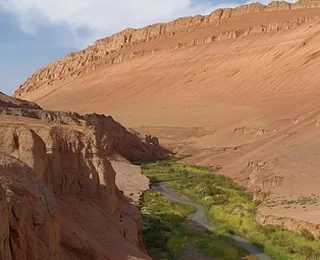
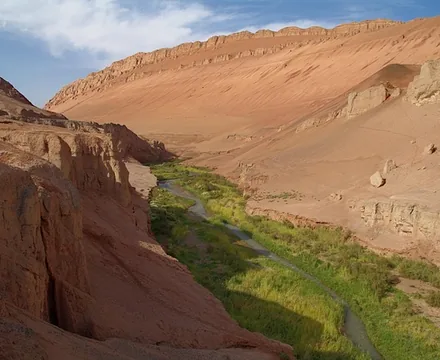
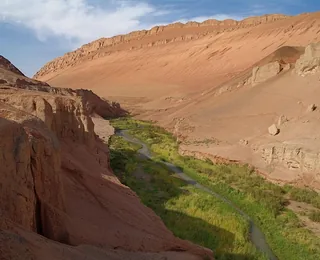
The Flaming Mountains are one of Turpan's most famous sights. Their red sandstone ridges ripple like flames under the blazing sun, and the story of Sun Wukong borrowing the Plantain Fan three times in Journey to the West made them known throughout the world. Ground temperatures can exceed 70°C in summer, and a giant thermometer shows the surface temperature in real time. The mountain is cut by ravines, forming a distinctive canyon landscape. At sunrise and sunset the ridges take on different shades of red, a spectacular sight. Highlights include the red sandstone canyon, Journey to the West culture, and sunrise and sunset. Tip: summer ground temperatures are extremely high; go in the early morning or late afternoon and take thorough heat and sun protection. Practical info: located beside National Highway 312, Gaochang District, Turpan, Xinjiang Uygur Autonomous Region; ticket ¥40; opening hours 08:30–20:00. Best season: summer and autumn (Jun–Oct) bring ripe melons and fruit, but the heat is severe and requires precautions; spring (Apr–May) is more pleasant. Pair with Turpan's Grape Valley, Jiaohe Ruins and Karez Well Park for a half- or full-day itinerary. It can be combined with Grape Valley, Jiaohe Ruins, Karez Well Park in Turpan for a half- or full-day itinerary.

Tip: Summer ground temperatures are extremely high; go in the early morning or late afternoon and take thorough hea…
  • Address: Beside National Highway 312, Gaochang District, Turpan, Xinjiang Uygur Autonomous Region
  • Ticket: ¥40
  • Opening: 08:30–20:00
Flaming Mountains
Flaming Mountains
Flaming Mountains
Grape Valley

Grape Valley

Recommend 4.6 / 5

Grape Valley is a green canyon in the Flaming Mountains, with flowing streams and grape trellises forming shade, in sharp contrast to the surrounding desert. This is Turpan's main grape-producing area, and the seedless white grapes are sweet as honey. Visitors can taste fresh grapes, visit drying houses to learn how raisins are made, and experience Uygur farm life. Uygur houses in the valley are open to visitors, and local specialities can be tasted. Highlights include the grape-trellis corridor and the drying houses. Tip: August–September is grape season, when the grapes are at their freshest. Practical info: located in Grape Valley Town, Gaochang District, Turpan, Xinjiang Uygur Autonomous Region; ticket ¥60; opening hours 08:30–20:00. Best season: summer and autumn (Jun–Oct) bring ripe melons and fruit, but the heat is severe and requires precautions; spring (Apr–May) is more pleasant. Pair with Turpan's Flaming Mountains, Jiaohe Ruins and Karez Well Park for a half- or full-day itinerary. Check the day's opening and reservation policy before setting out, and allow enough time. It can be combined with Flaming Mountains, Jiaohe Ruins, Karez Well Park in Turpan for a half- or full-day itinerary.

  • Address: Grape Valley Town, Gaochang District, Turpan, Xinjiang Uygur Autonomous Region
  • Ticket: ¥60
  • Opening: 08:30–20:00
Grape Valley
Grape Valley
Grape Valley
Jiaohe Ruins

Jiaohe Ruins

Recommend 4.6 / 5

Jiaohe Ruins are the world's largest and oldest earthen city ruin, built on a willow-leaf-shaped terrace where two rivers meet to form a natural barrier. The site is well preserved, and the remains of streets, temples and government offices are clearly legible. Founded in the 2nd century BC, the city was once the capital of the Anterior Jushi kingdom and later the seat of the Tang dynasty's Anxi Protectorate. It was inscribed on the World Heritage List in 2014. Highlights include the willow-leaf terrace, Tang dynasty temple ruins and the government office complex. Tip: go in the early morning or late afternoon to avoid the midday heat. Practical info: located in Jiaohe Village, Ya'er Township, Turpan, Xinjiang Uygur Autonomous Region; ticket ¥70; opening hours 09:00–18:00. Best season: summer and autumn (Jun–Oct) bring ripe melons and fruit, but the heat is severe and requires precautions; spring (Apr–May) is more pleasant. Pair with Turpan's Flaming Mountains, Grape Valley and Karez Well Park for a half- or full-day itinerary. It can be combined with Flaming Mountains, Grape Valley, Karez Well Park in Turpan for a half- or full-day itinerary.

Tip: Go in the early morning or late afternoon to avoid the midday heat.

  • Address: Jiaohe Village, Ya'er Township, Turpan, Xinjiang Uygur Autonomous Region
  • Ticket: ¥70
  • Opening: 09:00–18:00
Jiaohe Ruins
Jiaohe Ruins
Jiaohe Ruins
Karez Well Park

Karez Well Park

Recommend 4.4 / 5

Karez Well Park displays the karez irrigation system known as Xinjiang's 'underground Great Wall'. Visitors can walk into the underground channel and learn how the ancients brought Tianshan snowmelt into the oasis. The karez, the Great Wall and the Beijing–Hangzhou Grand Canal are called China's three great ancient engineering works. The park has vineyards and folk performances, where visitors can taste grapes and watch Uygur song and dance. The underground channel is cool and pleasant, a good place to escape the heat. Highlights include the underground channel and the karez engineering works. Tip: the underground channel is cooler; bring a light jacket. Practical info: located in Ya'er Township, Gaochang District, Turpan, Xinjiang Uygur Autonomous Region; ticket ¥40; opening hours 08:30–19:00. Best season: summer and autumn (Jun–Oct) bring ripe melons and fruit, but the heat is severe and requires precautions; spring (Apr–May) is more pleasant.

  • Address: Ya'er Township, Gaochang District, Turpan, Xinjiang Uygur Autonomous Region
  • Ticket: ¥40
  • Opening: 08:30–19:00
Karez Well Park
Karez Well Park
Karez Well Park
Gaochang Ruins

Gaochang Ruins

Recommend 4.6 / 5

The Gaochang Ruins are a relatively well-preserved ancient city site in the Turpan Basin. The rectangular city is formed of nested outer, inner and palace cities; it originally had nine gates, of which the north-west gate is the best preserved. The site continued for more than two thousand years from the Han dynasty, when garrison troops farmed and built fortifications. It was the capital of the Qu family's Kingdom of Gaochang (499–640) and became the Tang prefecture of Xizhou. In 866 a branch of the Uyghurs migrating west founded the Gaochang Uyghur kingdom, still with Gaochang as its royal seat; Buddhist temples, stupas, sutras and murals flourished until the royal house moved east to Yongchang in Gansu at the end of the 13th century, after which the city declined and was abandoned. In 2014 the Gaochang Ruins were inscribed on the World Heritage List as part of 'Silk Roads: the Routes Network of Chang'an–Tianshan Corridor'. Highlights include the triple-walled layout, the temple and stupa foundations, and the Silk Road World Heritage status. Tip: the site is open and offers almost no shade; go early and allow 2–3 hours. Practical info: located at 003 Township Road, Sanbao Township, Gaochang District, Turpan, Xinjiang Uygur Autonomous Region; ticket about ¥75 (subject to the site's posted price); opening hours 09:30–19:00 (year-round).

Tip: The site is open and offers almost no shade — go early and allow 2–3 hours.

  • Address: 003 Township Road, Sanbao Township, Gaochang District, Turpan, Xinjiang Uygur Autonomous Region
  • Ticket: About ¥75 (subject to the site's posted price)
  • Opening: 09:30–19:00 (year-round)
Gaochang Ruins
Gaochang Ruins
Gaochang Ruins
Sugong Pagoda (Emin Minaret)

Sugong Pagoda (Emin Minaret)

Recommend 4.4 / 5

Sugong Pagoda, also called the 'Emin Minaret', was built by the Qing dynasty Turpan prince Emin Khoja to express loyalty to the Qing court and reverence for God. He spent 7,000 taels of silver of his own and had his son Sulaiman supervise the construction; it was completed in 1777 (the year after Emin Khoja's death). It is Xinjiang's largest surviving Islamic tower, the only Islamic-style tower among China's hundred famous pagodas, and now a national key cultural relic protection unit. The complex has two parts, the tower and a mosque. The shaft is built entirely of grey-yellow brick and uses almost no timber except the windows at the top: the base is 10 m in diameter, the top 2.8 m, and the tower is 37 m high, with 14 openings for ventilation and light around it. Inside, a spiral brick central column winds up 72 steps to a platform of about 10 square metres at the top. The brick surface lays out 15 geometric patterns — waves, lozenges and rosettes — in repeating cycles. Highlights include the 15 brick geometric patterns, the 72-step spiral climb, the largest surviving Islamic tower in Xinjiang, and the story of the prince and his son with the Qing court. Tip: the stair inside is steep and narrow with dim light; climb slowly in order and keep your bags secure; the tower yard and the mosque share the site, so keep quiet during prayer. Practical info: located in Muna'er Village, about 2 km east of Turpan city, Xinjiang Uygur Autonomous Region; tickets sold on site at the posted price; opening hours subject to the site's posted notice.

Tip: The stair inside is steep and narrow with dim light; climb slowly in order and keep your bags secure.

  • Address: Muna'er Village, about 2 km east of Turpan city, Xinjiang Uygur Autonomous Region
  • Ticket: Sold on site; subject to the site's posted price
  • Opening: Opening hours subject to the site's posted notice
Sugong Pagoda (Emin Minaret)