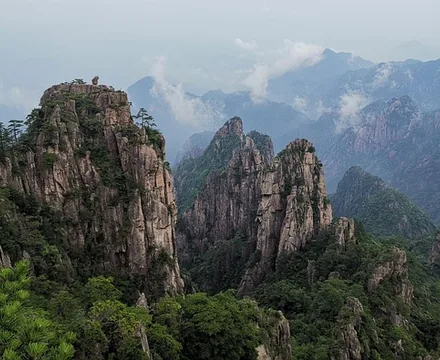
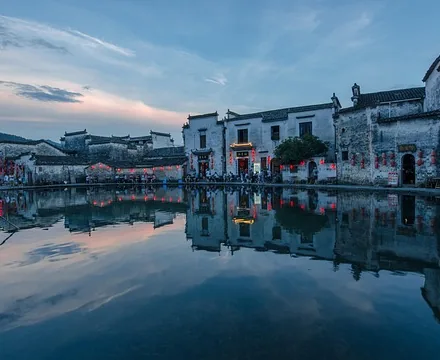
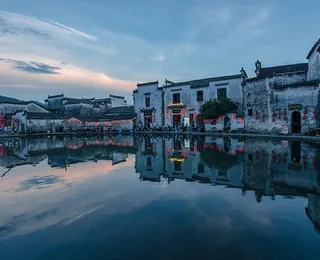
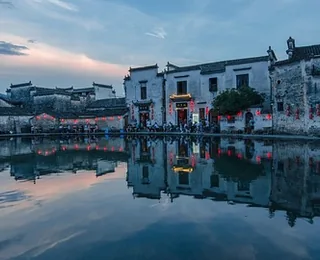
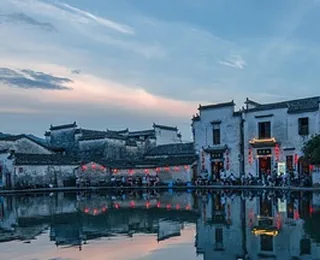
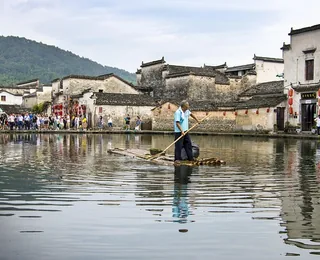
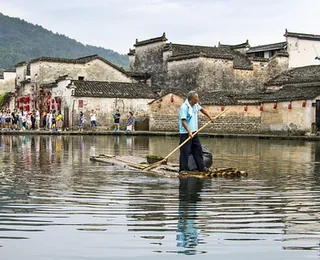
History & Culture: Huangshan is famed for its five wonders — odd pines, grotesque rocks, sea of clouds, hot springs and winter snow — and for the saying 'No need to look at other mountains after the Five Sacred Mountains; no need to look at the Five Sacred Mountains after Huangshan.' The ancient Huizhou villages of Hongcun and Xidi at its foot are World Cultural Heritage sites, their white walls, dark tiles and stepped horse-head walls earning the name 'villages in a Chinese painting'. Huizhou culture has deep roots: the Xin'an Painting School, Hui-style architecture, Hui cuisine, Hui ink and She inkstones all originate here. Hui-style architecture is distinguished by white walls, dark tiles and horse-head walls, with exquisite brick, wood and stone carvings. The Xin'an Painting School stands apart, and Hui ink and She inkstones are famed throughout the world. Hui cuisine is one of China's eight great cuisines, emphasising generous oil, rich colour and strong heat. Huizhou people value scholarship and education, with a strong clan culture; ancestral halls and memorial archways are scattered across the countryside. The annual Huangshan International Mountaineering Festival draws many climbing enthusiasts, and intangible heritage such as Huizhou folk performances and fish-lantern dances is still passed down today.
Geography: Located in southern Anhui, in the mountainous south of the province, it is a World Cultural and Natural Heritage site and a Global Geopark. The main peak, Lotus Peak, rises 1,864 metres, with peaks competing in beauty and the Welcoming Pine known throughout the world. It combines the grandeur of Mount Tai, the steepness of Mount Hua, the mist of Mount Heng and the waterfalls of Mount Lu. Huangshan City lies in Anhui, where landforms, rivers and climate together shape the city's layout. Spring (Mar–May) offers a high chance of seeing the sea of clouds, autumn (Sep–Nov) turns the forests red and gold, and winter (Dec–Feb) brings rime ice and snow. Natural and cultural sites are fairly concentrated, so a one- or two-day itinerary by area works well. Light, vegetation and water levels change with the seasons; check the weather and scenic-area notices before setting out.
Highlights: Climb Huangshan for the sea of clouds and sunrise, admire the Welcoming Pine and explore the West Sea Grand Canyon; wander Hongcun and Xidi for the old Huizhou atmosphere; and taste stinky mandarin fish and hairy tofu for the true flavours of Hui cuisine. Core sights include Huangshan Scenic Area, Hongcun, Huizhou Ancient City and Xidi. They cover history, nature and city life, and can be combined freely to suit your interests. Pair the main sights with nearby streets, museums or food streets for a half- or full-day route. If time allows, slow down and leave room for walking and rest. First-time visitors can start with the most representative sights, then add museums, old streets or natural areas as time permits. Local food is part of the trip too — save a meal for a time-honoured shop or a local market.
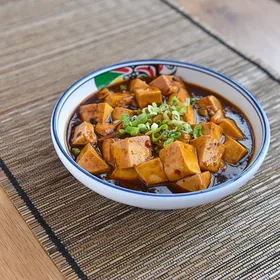
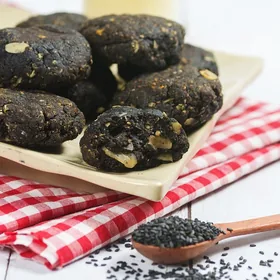
Food Culture: Hui cuisine is one of China's eight great cuisines, known for generous oil, rich colour and strong heat. Stinky mandarin fish smells pungent but tastes fragrant; hairy tofu is crisp outside and tender within; Huangshan sesame cakes are flaky and layered; and yipin guo simmers meat and vegetables together, showing the plain, hearty character of Huizhou cooking.