City Intro

History & Culture: Jiaxing is a Jiangnan water town and an important canal city; Wuzhen, Xitang and South Lake together form the water-town network of the Hangjiahu plain, and the Wuzhen Theatre Festival and the World Internet Conference have brought it to the world. Wuzhen is the hometown of Mao Dun and the home of Mu Xin; its water pavilions, Bridge-over-Bridge, Xiuzhen Temple and incense market make up a complete Jiangnan market-town life, and the annual theatre festival puts ancient stages and modern drama side by side. Jiaxing is located in Zhejiang Province and has formed a distinctive urban memory through regional history and cultural exchange. From ancient settlements to the modern city, walls, lanes, temples and guild halls from different periods remain as historical layers. Today museums, historic districts and local festivals still make the city's historical thread legible.

Geography: It lies on the Hangjiahu plain, where rivers and canals run in every direction, and Wuzhen is divided by a cross-shaped inner river into East, West, South and North quarters. Jiaxing is located in Zhejiang Province, where landforms, rivers and climate together shape the city's spatial pattern. Best March–May and September–November; Wuzhen has more water-town atmosphere in the rain, but the stone-slab lanes become slippery. Natural and cultural sights are fairly concentrated, so a one- or two-day itinerary can be arranged by area. Light, vegetation and water levels change with the seasons; check the weather and official scenic-area notices before setting out. Roads and railways are the main connections, and the main sights can be linked from the city or county town. In mountain areas watch altitude and weather changes; in river valleys and lake areas watch water levels and the flood season.

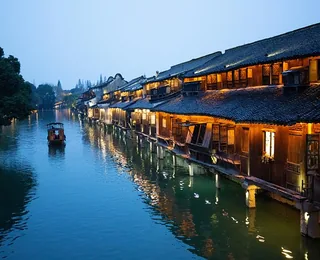
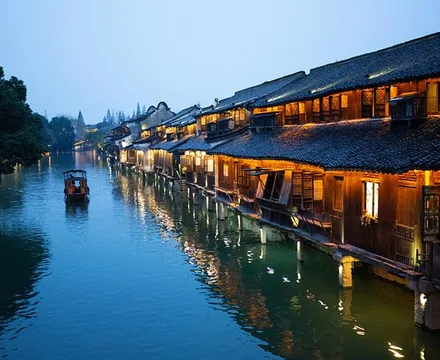
Highlights: Stay in the West Scenic Zone to see the night view, browse the East Scenic Zone for folk customs, visit the Mu Xin Art Museum, then take a wooden rowing boat. Core sights include Wuzhen West Scenic Zone, Wuzhen East Scenic Zone, the Mu Xin Art Museum and Wucun. These sights cover different sides of history, nature and city life and can be combined freely according to interest. It is worth linking the core sights with nearby streets, museums or food streets for a half-day or full-day itinerary. If time allows, slow down and leave room for walking and rest for a fuller experience. First-time visitors can start with the most representative core sights, then add museums, old streets or natural areas as time allows. Local food is part of the itinerary too — save mealtime for a time-honoured shop or a local market.

Food Culture: Wuzhen braised duck, dingsheng cakes, sanbaijiu rice wine and braised lamb are the sweet and savoury tastes of the water town.

Attractions

More >
Wuzhen West Scenic Zone

Wuzhen West Scenic Zone

Recommend 4.8 / 5

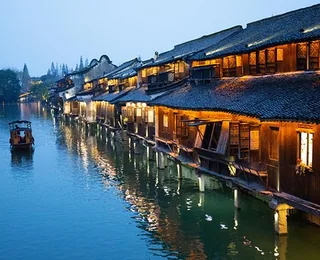
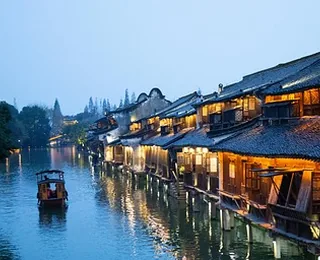
Wuzhen's most complete water-town scenic area, where water pavilions, stone bridges, dye works, a post office and the night view form a classic Jiangnan picture; stay one night to see both early morning and night. Highlights include Bridge-over-Bridge, the herb dye works and the West Scenic Zone night view. Tip: Enter in the afternoon and stay in the West Scenic Zone to see the night view and the early morning; it is crowded on holidays, so book a room in advance. Practical info: located at Wuzhen West Scenic Zone, Tongxiang, Jiaxing, Zhejiang; ticket ¥150 (West Scenic Zone only; combo ticket ¥190); opening hours 09:00–22:00 (night visits until 22:00). Best season: March–May and September–November; Wuzhen has more water-town atmosphere in the rain, but the stone-slab lanes become slippery. It can be combined with Wuzhen East Scenic Zone, the Mu Xin Art Museum and Wucun in Jiaxing for a half-day or full-day itinerary. Check the day's opening and booking policy before setting out, and allow plenty of time for the visit. In peak season or on holidays, book ahead, travel off-peak and allow time for queues and security checks. Plan your length of stay around the opening hours and your energy.

  • Address: Wuzhen West Scenic Zone, Tongxiang, Jiaxing, Zhejiang
  • Ticket: ¥150 (West Scenic Zone only; combo ticket ¥190)
  • Opening: 09:00–22:00 (night visits until 22:00)
Wuzhen West Scenic Zone
Wuzhen East Scenic Zone

Wuzhen East Scenic Zone

Recommend 4.6 / 5

The original residents' living quarter of Wuzhen, where Mao Dun's former residence, Xiuzhen Temple, the old stage and the incense market are more folk-oriented; see daily life by day, and it is quieter at night. Tip: The East Scenic Zone is good for folk customs in the morning, while the West Scenic Zone is good from afternoon to night; the combo ticket is better value. Practical info: located at Wuzhen East Scenic Zone, Tongxiang, Jiaxing, Zhejiang; ticket ¥110 (East Scenic Zone only; combo ticket ¥190); opening hours 07:00–18:00. Best season: March–May and September–November; Wuzhen has more water-town atmosphere in the rain, but the stone-slab lanes become slippery. It can be combined with Wuzhen West Scenic Zone, the Mu Xin Art Museum and Wucun in Jiaxing for a half-day or full-day itinerary. Check the day's opening and booking policy before setting out, and allow plenty of time for the visit. In peak season or on holidays, book ahead, travel off-peak and allow time for queues and security checks. Plan your length of stay around the opening hours and your energy. If carrying luggage or travelling with children, allow extra time for security checks and walking.

  • Address: Wuzhen East Scenic Zone, Tongxiang, Jiaxing, Zhejiang
  • Ticket: ¥110 (East Scenic Zone only; combo ticket ¥190)
  • Opening: 07:00–18:00
Wuzhen East Scenic Zone
Mu Xin Art Museum

Mu Xin Art Museum

Recommend 4.5 / 5

Designed by a disciple of I. M. Pei, the museum holds Mu Xin's paintings, literary manuscripts and prison notes — the quietest place in Wuzhen. Highlights include Mu Xin's manuscripts, the painting galleries and the waterside building. Tip: Closed on Mondays; no loud noise in the galleries, and it is worth taking half a day to look slowly. Practical info: located at Wuzhen West Scenic Zone, Tongxiang, Jiaxing, Zhejiang; ticket ¥20 (subject to the museum's notice); opening hours 09:00–17:00 (closed Mondays). Best season: March–May and September–November; Wuzhen has more water-town atmosphere in the rain, but the stone-slab lanes become slippery. It can be combined with Wuzhen West Scenic Zone, Wuzhen East Scenic Zone and Wucun in Jiaxing for a half-day or full-day itinerary. Check the day's opening and booking policy before setting out, and allow plenty of time for the visit. In peak season or on holidays, book ahead, travel off-peak and allow time for queues and security checks. Plan your length of stay around the opening hours and your energy. If carrying luggage or travelling with children, allow extra time for security checks and walking.

  • Address: Wuzhen West Scenic Zone, Tongxiang, Jiaxing, Zhejiang
  • Ticket: ¥20 (subject to the museum's notice)
  • Opening: 09:00–17:00 (closed Mondays)
Mu Xin Art Museum
Mu Xin Art Museum
Mu Xin Art Museum

Local Food

Wuzhen braised duck
Wuzhen braised duck
¥30–50/person
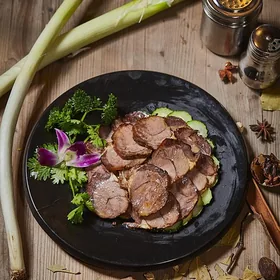
Wuzhen's traditional soy-braised duck, with a rich sauce aroma and firm meat — good served cold or steamed hot.
★ 4.6
Dingsheng cake
Dingsheng cake
¥5–10/person
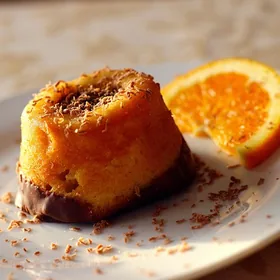
A sweet cake steamed from rice flour, filled with bean paste and shaped like a silver ingot — common on Wuzhen's streets.
★ 4.5
Sanbaijiu
Sanbaijiu
¥10–20/person
Wuzhen's traditional rice wine, brewed from white rice, white starter and white water — sweet and lightly warming, just right with braised duck.
★ 4.4
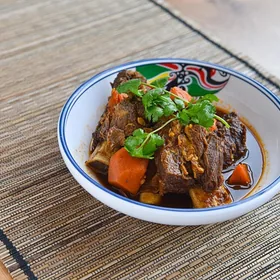
Braised lamb
Braised lamb
¥40–60/person
A winter dish of the Hangjiahu water country: lamb cooked until tender in a sweet-savoury sauce, served with rice or noodles.
★ 4.5

Culture

Wuzhen is the hometown of Mao Dun and the home of Mu Xin; its water pavilions, Bridge-over-Bridge, Xiuzhen Temple and incense market make up a complete Jiangnan market-town life, and the annual theatre festival puts ancient stages and modern drama side by side.