City Intro

History & Culture: Ningbo lies on the eastern coast of Zhejiang at the mouth of the Yong River. It is a city with separate planning status, a national historical and cultural city, and an important port on the Maritime Silk Road and the Porcelain Road. Ningbo is one of the important starting points of the Maritime Silk Road, and the seven-thousand-year Hemudu culture illuminates the source of civilization. Tianyi Pavilion's book-collecting culture is profound and is a symbol of China's book-collecting tradition. The European buildings of the Old Bund witness Ningbo's treaty-port history. Ningbo's merchant, fishing-port and Buddhist cultures blend; Xikou Xuedou Mountain is a Maitreya sanctuary, and Buddhist culture around Dongqian Lake runs deep. Ningbo's "three stinks" food culture is unique, and foods such as tangyuan and rice cakes reflect the culinary wisdom of eastern Zhejiang. Ningbo is in Zhejiang and has formed a distinct urban memory through regional history and cultural exchange.

Geography: Here seven thousand years of Hemudu culture illuminate the source of civilization, and Tianyi Pavilion is China's oldest surviving private library. The Three Rivers estuary is a busy commercial port, and the European buildings of the Old Bund witness the treaty-port history. Ningbo is in Zhejiang, where landforms, rivers and climate shape the city's spatial pattern. Spring (March–May) and autumn (September–November) are pleasant for enjoying lake and mountain scenery and tasting seafood. Natural and cultural sites are fairly concentrated, making one- or two-day itineraries by area practical. Light, vegetation and water levels change with the seasons; check the weather and scenic-area notices before departure. Roads and railways are the main connections, and the main sights can be linked from the city or county town.

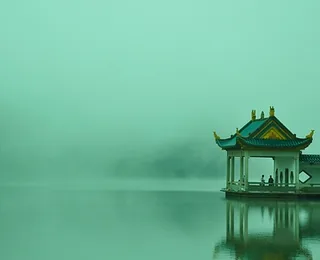
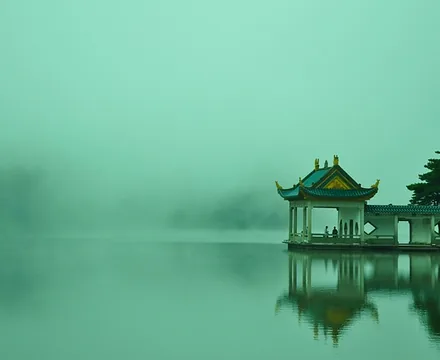
Highlights: Tianyi Pavilion's book-collecting culture is profound, the European buildings of the Old Bund are enchanting at night, Xikou Xuedou Mountain is the Chiang family hometown and a Maitreya sanctuary, and Dongqian Lake stretches vast and misty. Core sights include Tianyi Pavilion and Moon Lake, the Old Bund, Xikou and Xuedou Mountain, and Dongqian Lake. They cover history, nature and city life and can be combined freely. Pair the main sights with nearby streets, museums or food streets for a half- or full-day route. If time allows, slow down and leave room for walking and rest. First-time visitors can start with the most representative sights, then add museums, old streets or nature as time allows.

Food Culture: Ningbo cuisine is mainly seafood: tangyuan are soft, glutinous and sweet, red-roe cured crab is salty-fresh and served cold, seaweed rice cakes mix savory and sweet, and stinky winter melon smells pungent but tastes delicious.

Attractions

More >
Tianyi Pavilion and Moon Lake

Tianyi Pavilion and Moon Lake

Recommend 4.6 / 5

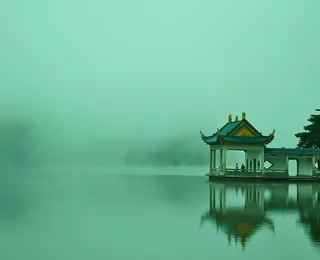
Tianyi Pavilion was built from the fortieth year of the Ming Jiajing era (1561) by Fan Qin (1506–1585), Vice Minister of War, and took about five years to complete. Its name comes from the Book of Changes: "Heaven gives birth to water, and earth completes it with six," meaning that water should master fire. The building answers this idea everywhere: a two-storey hall with a hard-ridge roof, its lower floor divided into six rooms and its upper floor left as one continuous space, with the Tianyi Pool dug in front to draw water around it and rockery and bamboo planted behind — library and garden forming a single design. Fan Qin laid down the family rule that "the books shall not be divided between generations, and the books shall not leave the pavilion." At its height the library held more than 70,000 juan, valued above all for Ming local gazetteers, examination records, veritable records and official documents, many of them unique copies. In the twelfth year of the Qing Kangxi era (1673), Huang Zongxi climbed the pavilion to read, setting a precedent for great scholars to use a private collection; Wan Sitong, Quan Zuwang and others followed. When the Qianlong court opened the Siku Quanshu office to collect books, Fan Maozhu, a descendant of the Fan family, presented 638 titles, and the Qing court ordered that the imperial and Jiangsu-Zhejiang library pavilions be built on its model — which is why Tianyi Pavilion is regarded as the mother of Chinese library architecture. Besides the library building, the grounds now include the East Garden, South Garden, Zunjing Pavilion, the Republican-era Qin family ancestral hall, known for its vermilion-and-gold woodcarving and theatre ceiling, and the Mingzhou Stele Forest of Song, Yuan, Ming and Qing inscriptions. Together with Moon Lake across the street they form the national 5A scenic area "Tianyi Pavilion and Moon Lake." Moon Lake took shape with the building of the Tang-dynasty Mingzhou prefectural city and was famed for its "Ten Islets" in the Southern Song — the other half of Ningbo's motto "books holding past and present."

Tip: Hiring a guide will give a better understanding of the library culture.
  • Address: 10 Tianyi Street, Haishu District, Ningbo, Zhejiang
  • Ticket: ¥30
  • Opening: 08:30–17:30
Tianyi Pavilion and Moon Lake
Old Bund

Old Bund

Recommend 4.5 / 5

After the Treaty of Nanjing in 1842, Ningbo was designated one of the five treaty ports and formally opened in 1844. British, French and other consuls and foreign firms then chose the north bank of the Three Rivers confluence, where the Yao and Fenghua rivers join the Yong, as their settlement, making the Old Bund one of the earliest modern waterfronts in China. The north bank once held consulates, the customs house, churches, foreign firms, steamship wharves and warehouses; most of what survives are brick-and-timber Western buildings of the late 19th and early 20th centuries, with arcades, verandas and pitched roofs running along the street, where the layout of the old trading houses can still be made out. The Zhejiang Customs, established at Ningbo as early as the Kangxi reign, was one of the four great customs of the Qing and bears witness to the port's long involvement in East Asian shipping and the maritime porcelain trade. Since the 2000s this stretch of riverfront has been restored as a district of restaurants, bars, galleries and boutique hotels; the Ningbo Art Museum by the river was converted from an old wharf, and at night the lights fall on the Yong River, making this the liveliest nightlife area downtown. Not far behind the street stands the Qing'an Guild Hall, a Tianhou temple built by Qing shipping merchants and known for its vermilion-and-gold woodcarving, brick reliefs and stone carvings; together with the guild halls of local medicine and banking trades, it records where local merchants came from. The "Ningbo gang" that set out from the Three Rivers confluence later became one of the most influential merchant groups in modern China, best known to the world through Bao Yugang and Run Run Shaw.

Tip: Go at dusk to enjoy different day and night views. There are street performances at weekends.

  • Address: Waima Road, Jiangbei District, Ningbo, Zhejiang
  • Ticket: Free
  • Opening: Open all day
Old Bund
Old Bund
Old Bund
Xikou and Xuedou Mountain

Xikou and Xuedou Mountain

Recommend 4.6 / 5

The scenic area consists of two parts, Xikou old town and Xuedou Mountain, one carrying Republican history and the other Buddhist history. Xikou is the hometown of Chiang Kai-shek and Chiang Ching-kuo: the Wuling Gate at the entrance is a gate-tower, and inside it the Fenghao House is the old Chiang family residence, its name taken from the Zhou capitals Feng and Hao to express a wish for the family's revival; the Yutai Salt Shop was run by Chiang's ancestors, and Chiang Kai-shek was born in 1887 (the thirteenth year of the Qing Guangxu era) in the rear room of the shop; the Wenchang Pavilion, rebuilt in the 1920s as a two-storey brick-and-timber building, became the Xikou residence of Chiang Kai-shek and Soong Mei-ling, while the Miaogao Terrace villa on the ridge was destroyed in 1949 and later rebuilt to its original appearance. Xuedou Temple is said to have been founded in the Jin, flourished in the Tang and prospered in the Song; in the Song it was listed among the "Five Mountains and Ten Monasteries" of Chan Buddhism, and Emperor Lizong, who dreamed of wandering on this mountain, wrote "Famous Mountain of a Fulfilled Dream" for it. In 1934 Master Taixu proposed that Xuedou Mountain be the fundamental Maitreya sanctuary, and in 1987 Zhao Puchu agreed; the newly built open-air seated Maitreya bronze before the temple is the symbol of that idea. Among the mountain's water and rock scenery, the Qianzhangyan and Xufuyan waterfalls and Miaogao Terrace are the finest; Miaogao Terrace stands directly above the Qianzhangyan falls, and from it you look down on the white stream plunging into the deep gorge. The town and mountain are about ten kilometers apart, so most visitors tour the Chiang family residences in the morning and go into the mountains for waterfalls and temples in the afternoon, all in one day.

Tip: Buy the combo ticket to visit more sights. Temperatures are lower on the mountain, so bring a jacket.

  • Address: Xikou Town, Fenghua District, Ningbo, Zhejiang
  • Ticket: ¥230 (combo ticket)
  • Opening: 08:00–17:00
Xikou and Xuedou Mountain

Local Food

Ningbo Tangyuan
Ningbo Tangyuan
¥8–15/person
Water-milled glutinous rice wrapped around a black sesame and lard filling — soft, glutinous and sweet, a traditional Lantern Festival and everyday classic.
★ 4.7
Red-Roe Cured Crab
Red-Roe Cured Crab
¥50–80/person
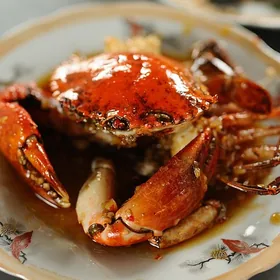
Swimming crab cured raw with salt and rice wine — red roe, tender meat, salty-fresh and served cold, a signature Ningbo seafood cold dish.
★ 4.7
Seaweed Rice Cakes
Seaweed Rice Cakes
¥15–25/person
Rice cakes stir-fried with seaweed — savory and sweet, soft, chewy and fragrant, an essential traditional dish at Ningbo New Year.
★ 4.4
Stinky Winter Melon
Stinky Winter Melon
¥10–20/person
One of Ningbo's "three stinks," made from fermented winter melon — pungent in smell but delicious in taste, appetizing with rice and a true eastern Zhejiang flavor.
★ 4.3

Culture

Ningbo is one of the important starting points of the Maritime Silk Road, and the seven-thousand-year Hemudu culture illuminates the source of civilization. Tianyi Pavilion's book-collecting culture is profound and is a symbol of China's book-collecting tradition. The European buildings of the Old Bund witness Ningbo's treaty-port history. Ningbo's merchant, fishing-port and Buddhist cultures blend; Xikou Xuedou Mountain is a Maitreya sanctuary, and Buddhist culture around Dongqian Lake runs deep. Ningbo's "three stinks" food culture is unique, and foods such as tangyuan and rice cakes reflect the culinary wisdom of eastern Zhejiang.