Mogao Caves
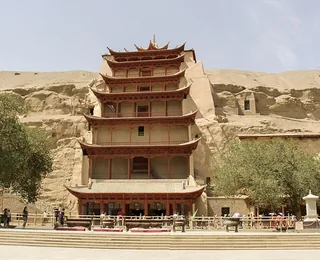
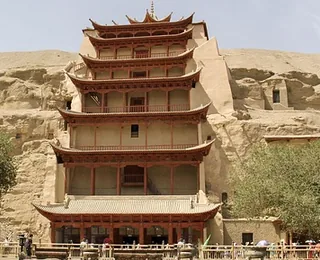
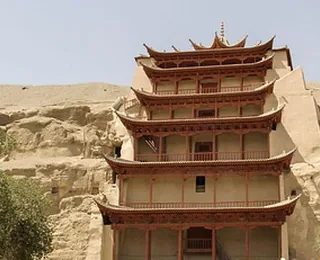
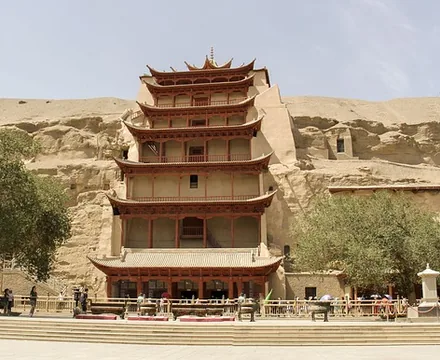
The Mogao Caves were begun in 366 AD, the second year of the Jianyuan era of the Former Qin, and were built over the Sixteen Kingdoms, Northern Dynasties, Sui, Tang, Five Dynasties, Western Xia and Yuan. Today 735 caves survive, with 45,000 square metres of murals and more than 2,000 painted sculptures — the world's largest and richest surviving Buddhist art site. Cave 96's nine-storey facade, Cave 17 (the Library Cave), the Western Wei murals of Cave 285 and the early Tang music-and-dance scene of Cave 220 are must-sees. Visits begin with a digital film, then a shuttle bus to the caves, where a guide leads groups of eight caves. A UNESCO World Heritage Site and one of China's four great grottoes, with 735 caves preserving 45,000 square metres of murals and more than 2,000 painted sculptures — a Buddhist art treasury on the Silk Road. Highlights include the Nine-storey Facade, Library Cave, Cave 285 and Cave 220. Tip: Book Type A tickets on the official mini-program in advance; tickets are tight in peak season; photography is forbidden inside; follow the guide and do not touch the murals. Practical info: located at Mogaozhen, Dunhuang, Jiuquan, Gansu; ticket peak ¥238 (Type A, includes digital show + 8 caves, reservation required); opening hours 08:00–18:00 (timed entry, book ahead in peak season).