City Intro

History & Culture: Lanzhou was an important town on the ancient Silk Road. A Jincheng commandery was established here in the Han dynasty, and the name comes from 'a city of metal walls and boiling moats'. With the Yellow River running through the city, it has been a transport and trade hub in the northwest for more than two thousand years. Lanzhou is an important bearer of Yellow River culture: the Yellow River iron bridge and sheepskin rafts have witnessed the mother river's millennial flow. Lanzhou's Taiping drumming is powerful, the drummers leaping and spinning — the northwest's most representative folk drum dance. The Silk Road Culture Festival recreates the bustle of trade on the ancient route, and the brilliance of Dunhuang art is carried on in Lanzhou. A bowl of beef noodles in the morning is not only a pleasure of taste but the passing on of a way of life. The high, impassioned tones of Qinqiang opera echo in teahouses and theatres; when lilies bloom, Lanzhou is rich with fruit, and the everyday warmth and forthright character on both banks of the Yellow River make up the city's distinctive temperament.

Geography: Lanzhou sits in a river valley basin where the Yellow River runs through the city, flanked by mountains to north and south, long and narrow from east to west. It has a temperate semi-arid climate with abundant sunshine and a large day-night temperature difference. Lanzhou lies in Gansu, where landforms, rivers and climate together shape the city's layout. Summer (Jun–Aug) brings fruit in abundance; autumn (Sep–Oct) has clear, crisp skies and the best of the Yellow River scenery. Natural and cultural sites are fairly concentrated, so a one- or two-day itinerary by area works well. Light, vegetation and water levels change with the seasons; check the weather and scenic-area notices before setting out. Roads and railways are the main transport, and major sights can be linked from the city or county town.

Highlights: Taste authentic beef noodles, walk Zhongshan Bridge for the Yellow River night view, climb Baita Mountain for the city panorama and visit the Gansu Provincial Museum to see the Flying Horse. In summer and autumn you can also take a boat across Liujiaxia Reservoir at Yongjing to visit the Bingling Temple Caves. Core sights include Zhongshan Bridge, Gansu Provincial Museum, Baita Mountain Park and Wuquan Mountain Park. They cover history, nature and city life, and can be combined freely to suit your interests. Pair the main sights with nearby streets, museums or food streets for a half- or full-day route. If time allows, slow down and leave room for walking and rest. First-time visitors can start with the most representative sights, then add museums, old streets or natural areas as time permits.

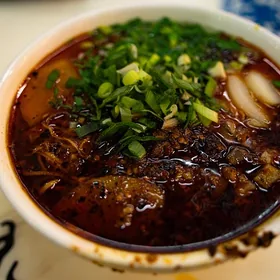
Food Culture: Lanzhou is famed for beef noodles — 'one clear, two white, three red, four green, five yellow', with savoury broth and springy noodles. Huidouzi is sweet, soft and warm, niangpizi is chewy and hot-and-sour, and lilies and Bailan melons are local specialities.

Attractions

More >
Zhongshan Bridge

Zhongshan Bridge

Recommend 4.5 / 5

Zhongshan Bridge spans the Yellow River. First built in the 33rd year of Guangxu of the Qing (1907) by the German firm Telge & Schroeter, it was the first modern bridge over the Yellow River. The steel-truss structure is 233.5 metres long and took two years to complete. Zhongshan Bridge has witnessed a century of change in Lanzhou and is now a pedestrian bridge; when the lights come on at night, the iron bridge, Baita Mountain and the Yellow River reflect one another, making one of Lanzhou's most beautiful night views. As the first iron bridge over the Yellow River, built in 1907 and known as 'the first bridge over the Yellow River under heaven', it has brilliant night illuminations and is a Lanzhou landmark and the heart of the Yellow River scenery route. Highlights include the century-old iron bridge, the Yellow River night view and the bridgehead sculptures. Tip: the lighting is best at night, so go towards evening. Practical info: located at Zhongshan Bridge, Chengguan District, Lanzhou, Gansu; free entry; open all day. Best season: summer (Jun–Aug) brings fruit in abundance; autumn (Sep–Oct) has clear, crisp skies and the best of the Yellow River scenery. Plan your time according to opening hours and your energy.

Tip: The lighting is best at night, so go towards evening. Baita Mountain can be visited on the way.

  • Address: Zhongshan Bridge, Chengguan District, Lanzhou, Gansu
  • Ticket: Free
  • Opening: Open all day
Zhongshan Bridge
Zhongshan Bridge
Zhongshan Bridge
Gansu Provincial Museum

Gansu Provincial Museum

Recommend 4.7 / 5

Gansu Provincial Museum is a national first-class museum, its collection covering the essence of Gansu's history and culture from earliest times to the modern era, with especially systematic holdings of painted pottery, Silk Road relics and natural specimens. Its greatest treasure, the Flying Horse (Bronze Galloping Horse), is a bronze masterpiece of the Eastern Han, vigorous and beautifully modelled, and has been adopted as the symbol of Chinese tourism. The Silk Road Civilisation exhibition is the museum's core display, showing precious relics from along the route from Chang'an to Rome. The painted pottery gallery displays prehistoric masterpieces of Yangshao and Majiayao culture. With a rich collection and the Flying Horse (Bronze Galloping Horse) as its greatest treasure, the museum systematically presents Silk Road civilisation, painted pottery and Dunhuang art, and is a hall for understanding northwest history. Highlights include Majiayao painted pottery. Tip: booking a guided tour is recommended; the displays are rich and need at least 2 hours. Practical info: located at 3 Xijin West Road, Qilihe District, Lanzhou, Gansu; free entry (reservation required); opening hours 09:00–17:00 (closed Mondays).

Tip: Booking a guided tour is recommended; the displays are rich and need at least 2 hours. Closed Mondays.

  • Address: 3 Xijin West Road, Qilihe District, Lanzhou, Gansu
  • Ticket: Free (reservation required)
  • Opening: 09:00–17:00 (closed Mondays)
Gansu Provincial Museum
Baita Mountain Park

Baita Mountain Park

Recommend 4.5 / 5

Baita Mountain takes its name from the white pagoda at its summit and rises more than 1,700 metres. The pagoda was first built in the Yuan dynasty and is said to commemorate a Tibetan Buddhist leader. Halls rise in tiers on the mountain, with pavilions and towers set at different levels, and the old building complex is well preserved. Climbing the steps from the foot of the mountain, you can enjoy the sight of the Yellow River surging past and the iron bridge lying across it. From the summit, the whole city of Lanzhou spreads out below, with the Yellow River winding through like a silver ribbon. On the north bank of the Yellow River, with the white pagoda standing tall, it offers a view from the summit over the river running through the city and over Lanzhou, with old buildings set among trees. Highlights include Baita Temple, the Santai Hall and the summit viewing platform. Tip: the climb takes about 30 minutes; go in the afternoon to enjoy both sunset and the night view. Practical info: located at Baita Mountain Park, Chengguan District, Lanzhou, Gansu; free entry; opening hours 07:00–20:00. Best season: summer (Jun–Aug) brings fruit in abundance; autumn (Sep–Oct) has clear, crisp skies and the best of the Yellow River scenery.

Tip: The climb takes about 30 minutes; go in the afternoon to enjoy both sunset and the night view.

  • Address: Baita Mountain Park, Chengguan District, Lanzhou, Gansu
  • Ticket: Free
  • Opening: 07:00–20:00
Baita Mountain Park
Baita Mountain Park
Baita Mountain Park

Local Food

Lanzhou Beef Noodles
¥10–15/person
'One clear, two white, three red, four green, five yellow' — savoury broth and springy noodles, the soul of a Lanzhou breakfast.
★ 4.8
Niangpizi
Niangpizi
¥8–12/person
A northwest cold noodle, chewy and hot-and-sour — a snack to cool down and satisfy a craving.
★ 4.5
Huidouzi
Huidouzi
¥5–8/person
A Lanzhou sweet: peas and red dates boiled with peng-cao ash, soft, sweet and warm.
★ 4.5
Hand-grabbed Lamb
Hand-grabbed Lamb
¥60–100/person
Lamb boiled in plain water until tender, dipped in pepper salt or garlic paste — pure flavour, and Lanzhou people always eat it with raw garlic.
★ 4.8

Culture

Lanzhou is an important bearer of Yellow River culture: the Yellow River iron bridge and sheepskin rafts have witnessed the mother river's millennial flow. Lanzhou's Taiping drumming is powerful, the drummers leaping and spinning — the northwest's most representative folk drum dance. The Silk Road Culture Festival recreates the bustle of trade on the ancient route, and the brilliance of Dunhuang art is carried on in Lanzhou. A bowl of beef noodles in the morning is not only a pleasure of taste but the passing on of a way of life. The high, impassioned tones of Qinqiang opera echo in teahouses and theatres; when lilies bloom, Lanzhou is rich with fruit, and the everyday warmth and forthright character on both banks of the Yellow River make up the city's distinctive temperament.