Potala Palace
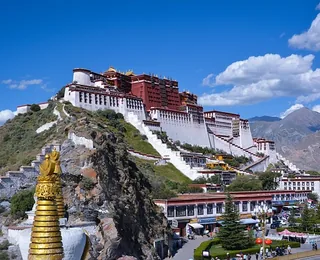
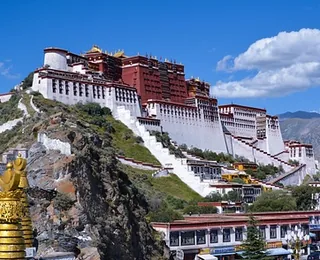
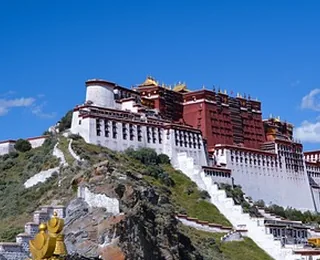
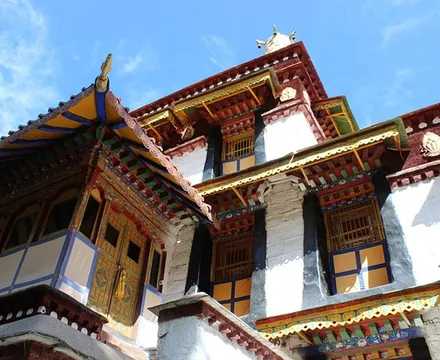
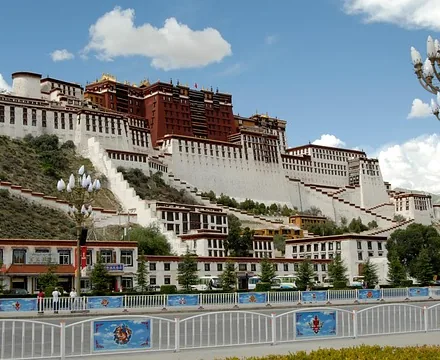
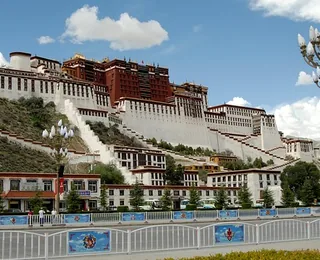
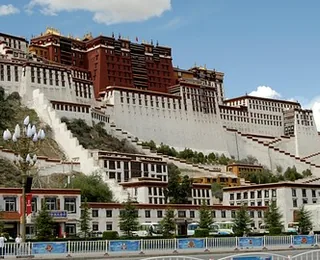
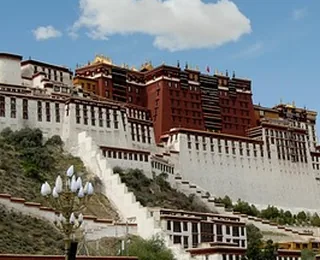
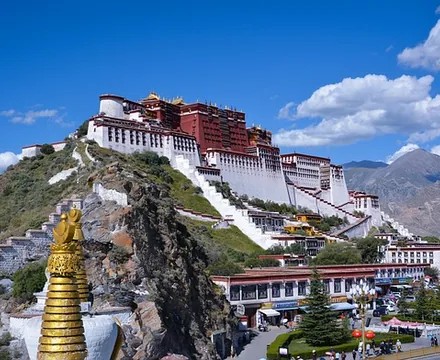
The Potala Palace is built against Red Mountain (Marpo Ri), the palace and mountain forming one whole. The surviving main structure is the White Palace and Red Palace rebuilt in the 17th century: the White Palace consists mainly of the living quarters and government halls of successive Dalai Lamas, with whitewashed walls; the Red Palace concentrates the Buddhist halls and the reliquary-stupa halls of successive Dalai Lamas, among which the Fifth Dalai Lama's stupa, covered in gold leaf and inlaid with pearls and precious stones, is the grandest. The palace also preserves many thangkas, Buddha statues, palm-leaf scriptures and Ming and Qing seals and edicts. The visit route climbs from the mountain gate and passes one way through the halls; photography is not allowed inside. The Deyangshar terrace at the top overlooks the Lhasa River valley, and Zongjiao Lukang Park (Dragon King Pool) behind the palace is the classic spot for photographing the Potala's reflection. The Potala Palace was inscribed on the World Heritage List in 1994; Jokhang Temple and Norbulingka were later added to the same "Historic Ensemble of the Potala Palace" as extensions in 2000 and 2001. Highlights include the mural corridor. Tip: tickets must be reserved one day in advance, and peak-season places are limited. Practical info: located at Beijing Middle Road, Chengguan District, Lhasa; peak-season ticket ¥200 (reservation required); opening hours 09:00–15:30.
Tickets must be reserved one day in advance — peak season slots fill fast.