City Intro

History & Culture: Lhasa is the sacred city of the plateau; its Tibetan name means 'Holy Land.' After the Tubo king Songtsen Gampo unified Tibet, he moved the capital here and built the Potala Palace and Jokhang Temple, making Lhasa the centre of Tibetan Buddhism. After the peaceful liberation in 1951, Lhasa kept its traditions while gaining modern vitality; after the Tibet Autonomous Region was established in 1965, the city, as its capital, continued to develop transport, education and public facilities. The Potala Palace, Jokhang Temple and Norbulingka remain living witnesses to the city's history and religious life, while Barkhor Street and the old lanes preserve its traditional trading and residential fabric; the thousand-year holy city thus began a new chapter of faith and development.

Geography: At about 3,650 meters above sea level, in the Lhasa River valley, a tributary of the Yarlung Tsangpo, surrounded by mountains. The highland mountain climate has abundant sunshine, with more than 3,000 hours of sunshine a year, earning it the name "City of Sunshine." The day-night temperature difference is large, the air is clean, and the blue sky is startlingly clear. Lhasa is in Tibet, where landforms, rivers and climate together shape the city's spatial pattern. Summer (June–August) has ample oxygen and brilliant sunshine; spring and autumn are also good, while winter brings warm sunshine but cold temperatures. Natural and cultural sites are relatively concentrated, so a one- or two-day itinerary by area works well. Light, vegetation and water levels change the look of the landscape with the seasons; check the weather and scenic-area notices before setting out.

Highlights: Make a pilgrimage to the Potala Palace, turn the prayer wheels on Barkhor Street, visit the Jokhang Temple's Shakyamuni statue, watch the afternoon debates at Sera Monastery, and explore the sacred lake Namtso — touching the power of faith closest to the sky. Core sights include the Potala Palace, Jokhang Temple, Barkhor Street and Namtso. They cover history, nature and city life and can be combined freely. Pair the main sights with nearby streets, museums or food streets for a half- or full-day route. If time allows, slow down and leave room for walking and rest. First-time visitors can start with the most representative sights, then add museums, old streets or nature as time allows.

Food Culture: Tibetan food is based on yak meat, tsampa, butter tea and dairy products — bold highland flavors. Sweet tea houses are warm social spaces for Lhasa people; a bowl of sweet tea and a few pieces of Tibetan noodles are everyday happiness.

Attractions

More >
Potala Palace

Potala Palace

Recommend 4.9 / 5

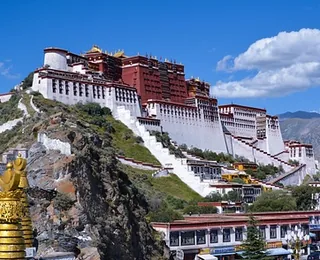
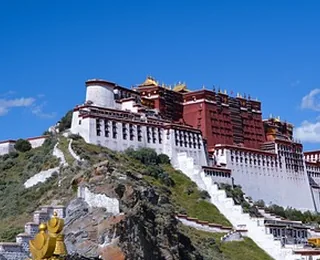
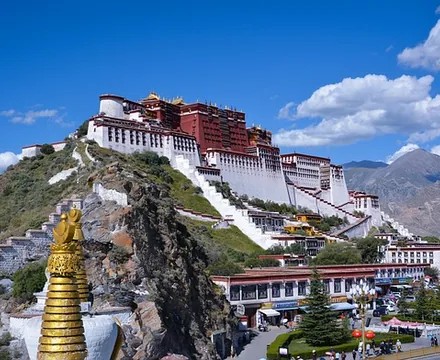
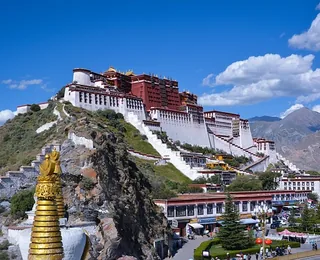
The Potala Palace is built against Red Mountain (Marpo Ri), the palace and mountain forming one whole. The surviving main structure is the White Palace and Red Palace rebuilt in the 17th century: the White Palace consists mainly of the living quarters and government halls of successive Dalai Lamas, with whitewashed walls; the Red Palace concentrates the Buddhist halls and the reliquary-stupa halls of successive Dalai Lamas, among which the Fifth Dalai Lama's stupa, covered in gold leaf and inlaid with pearls and precious stones, is the grandest. The palace also preserves many thangkas, Buddha statues, palm-leaf scriptures and Ming and Qing seals and edicts. The visit route climbs from the mountain gate and passes one way through the halls; photography is not allowed inside. The Deyangshar terrace at the top overlooks the Lhasa River valley, and Zongjiao Lukang Park (Dragon King Pool) behind the palace is the classic spot for photographing the Potala's reflection. The Potala Palace was inscribed on the World Heritage List in 1994; Jokhang Temple and Norbulingka were later added to the same "Historic Ensemble of the Potala Palace" as extensions in 2000 and 2001. Highlights include the mural corridor. Tip: tickets must be reserved one day in advance, and peak-season places are limited. Practical info: located at Beijing Middle Road, Chengguan District, Lhasa; peak-season ticket ¥200 (reservation required); opening hours 09:00–15:30.

Tip: Tickets must be reserved one day in advance — peak season slots fill fast.
  • Address: Beijing Middle Road, Chengguan District, Lhasa
  • Ticket: Peak season ¥200 (reservation required)
  • Opening: 09:00–15:30
Potala Palace
Potala Palace
Potala Palace
Jokhang Temple

Jokhang Temple

Recommend 4.8 / 5

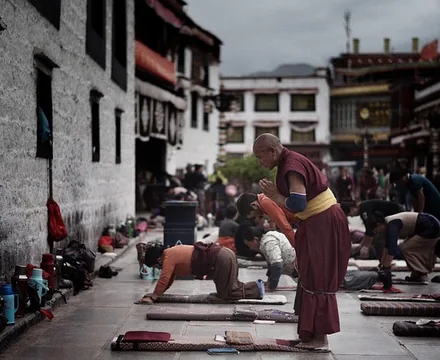
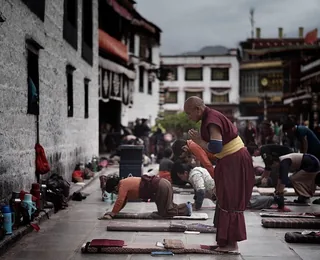
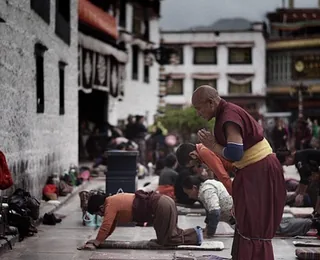
Jokhang Temple faces west, and its main hall is a multi-storey stone-and-timber structure. Gilded roofs, victory banners and dharma wheels were added successively from the Ming dynasty onward, so that a single temple blends Tang, Tibetan, Nepalese and Indian architectural styles. Besides the hall housing the 12-year-old Shakyamuni statue (the Jowo), there are halls for Songtsen Gampo, Princess Wencheng and Princess Bhrikuti, as well as halls dedicated to Avalokiteshvara and Hayagriva, with murals, niches and gilded ornament layered one upon another. Tradition says the statue was originally kept at Ramoche Temple and was moved to Jokhang during the Tubo period, after which it became the center of Tibetan faith. In front of the temple gate stand the Tang-Tibet Alliance Stele, erected in the third year of the Tang Changqing reign (823 AD), and the "Princess Willow," physical witnesses to Han-Tibetan relations; the circumambulation corridor around the Jowo hall is the inner "Nangkor" circle of Barkhor. Before the doors open in the early morning, queues form in the square and juniper smoke rises — the time of day when believers are most concentrated. Highlights include the hall of ever-burning butter lamps. Tip: in the early morning you can see believers queuing to enter, prostrating and burning juniper; to watch monks debate, go to Sera Monastery, usually around 3 pm. Practical info: located at Barkhor Street, Chengguan District, Lhasa; ticket ¥85; opening hours 08:00–18:30.

Tip: In the early morning you can see believers queuing to enter, prostrating and burning juniper; to watch monks d…

  • Address: Barkhor Street, Chengguan District, Lhasa
  • Ticket: ¥85
  • Opening: 08:00–18:30
Jokhang Temple
Jokhang Temple
Jokhang Temple
Barkhor Street

Barkhor Street

Recommend 4.6 / 5

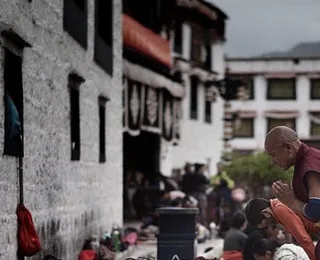
The Barkhor circuit is called "Palkhor" in Tibetan; it runs in a ring around the main hall of Jokhang and, together with the "Nangkor" inner circuit hugging the Jokhang shrine and the "Linkhor" outer circuit around the old city, forms Lhasa's three-level circumambulation system; the middle circuit is about one kilometre long. The street is only a few metres wide but is densely packed with hundreds of old Tibetan houses and shops: thangka studios, Tibetan incense and medicine shops, Nepalese silverware and Tibetan knife stores, and the sweet tea houses that are busiest when people are not circumambulating. The Chongsaikang area in the northern part of the block was once the site of the Qing resident minister's yamen and is a good place to see Tibetan courtyard architecture. Pilgrims are numerous in the early morning, most shops open around 10:00, and the afternoon and evening are for tea and shopping. Commerce and faith run side by side here; when choosing goods, take care not to block the clockwise flow of pilgrims. Highlights include the handmade Tibetan incense shops. Tip: walk clockwise, in the same direction as the pilgrims. Practical info: located in Chengguan District, Lhasa; admission free; open all day.

Tip: Walk clockwise, in the same direction as the pilgrims. Respect worshippers and do not block their path.

  • Address: Chengguan District, Lhasa
  • Ticket: Free
  • Opening: All day
Barkhor Street
Barkhor Street
Barkhor Street

Local Food

Tibetan Noodles
Tibetan Noodles
¥10–18/person
Hand-rolled noodles in yak bone broth — light and warming.
★ 4.4
Tsampa
Tsampa
¥8–15/person
Roasted highland barley ground into flour and mixed with butter tea, then pressed by hand — the highland staple.
★ 4.3
Butter Tea
Butter Tea
¥5–10/person
Butter churned with strong tea — salty, fragrant and warming against the cold.
★ 4.5
Tibetan Sweet Tea
Tibetan Sweet Tea
¥5–10/person
Black tea boiled with milk and sugar — sweet, warm and comforting; sweet tea houses are where Lhasa people sunbathe and chat.
★ 4.6

Culture

Lhasa is the centre of Tibetan Buddhist culture. Kora circuits and prostration, thangka painting, Tibetan opera and Gesar epic singing, the Shoton Festival's thangka unveiling, and the pilgrim crowds and butter lamps of Barkhor Street shape the old city's daily life.