City Intro

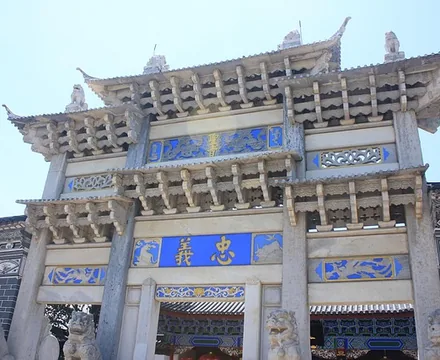
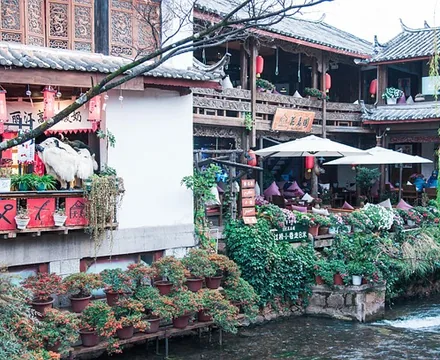
History & Culture: Lijiang lies in northwestern Yunnan, deep in the Hengduan Mountains, and is a World Heritage Site and the birthplace of Naxi Dongba culture. Lijiang is the birthplace of Naxi Dongba culture; Dongba pictographs are praised as "living pictographs." Intangible heritage such as Naxi ancient music and Dongba dance is passed down here. The old town's small bridges and flowing water, timber houses and grey tiles reflect Naxi architectural wisdom. The Mosuo people's walking-marriage custom and matrilineal culture are unique, and the area is called the "Kingdom of Women." The Sanduo Festival is the most important Naxi festival, commemorating the Naxi guardian deity Sanduo. Lijiang is in Yunnan and has formed a distinct urban memory through regional history and cultural exchange. From ancient settlements to the modern city, walls, lanes, temples and guild halls record historical layers from different periods.

Geography: The old town nestles against hills and water and is known for its five-flower stone streets, small bridges and streams, and Naxi houses; it has no city wall and blends into nature. Lijiang is in Yunnan, where landforms, rivers and climate shape the city's spatial pattern. Spring (March–May) and autumn (September–November) are pleasant for visiting the old town and the snow mountains. Natural and cultural sites are fairly concentrated, making one- or two-day itineraries by area practical. Light, vegetation and water levels change with the seasons; check the weather and scenic-area notices before departure. Roads and railways are the main connections, and the main sights can be linked from the city or county town. Natural and cultural sights around the city can usually be linked by road or rail, suitable for half-day or one-day trips.

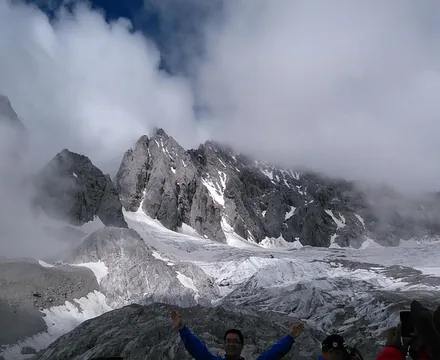
Highlights: Jade Dragon Snow Mountain is snow-covered year-round and majestic, the sacred mountain of the Naxi. Lugu Lake's water is clear and blue, and the Mosuo preserve their "walking marriage" matrilineal culture. Core sights include Jade Dragon Snow Mountain, Mufu, Lijiang Old Town and Lugu Lake. They cover history, nature and city life and can be combined freely. Pair the main sights with nearby streets, museums or food streets for a half- or full-day route. If time allows, slow down and leave room for walking and rest. First-time visitors can start with the most representative sights, then add museums, old streets or nature as time allows. Local food is part of the trip — save a meal for a time-honoured shop or a local market.

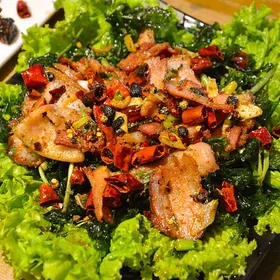
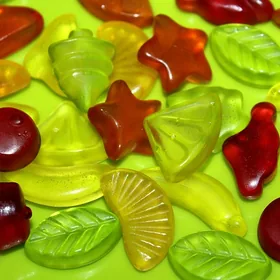
Food Culture: Naxi cuisine is distinctive: Lijiang baba is crisp outside and soft inside, cured-rib hotpot is richly savory, and chickpea jelly is smooth and appetizing.

Attractions

More >
Jade Dragon Snow Mountain

Jade Dragon Snow Mountain

Recommend 4.7 / 5

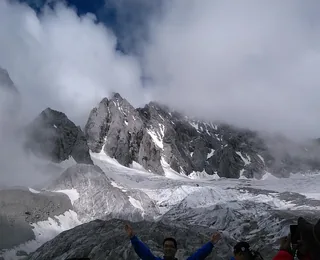
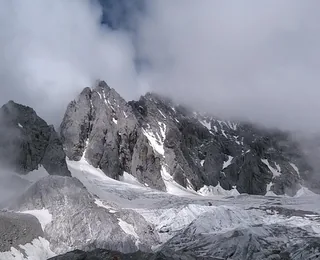
Jade Dragon Snow Mountain stands across the northern end of the Lijiang basin, about 15 kilometres from the old town, a spur of the Yunling range in the Hengduan Mountains. Its main peak, Shanzidou, rises to 5,596 metres and is revered by the Naxi as the incarnation of their guardian deity Sanduo; on the eighth day of the second lunar month the whole community makes offerings to the mountain at the Sanduo Festival, and the summit has never been open to climbing. Modern maritime glaciers are developed on the mountain, and the Baishui No. 1 Glacier is one of the southernmost modern glaciers in the Northern Hemisphere; the Glacier Park cableway carries visitors to its upper station at 4,506 metres, from which boardwalks climb to a viewpoint at 4,680 metres. At the foot of the mountain, Ganhaizi is an alpine meadow at about 3,000 metres, once a pasture and now the spot for photographing all thirteen peaks; Zhang Yimou's open-air production Impression Lijiang uses the snow mountain as its backdrop and is performed by local farmers of various ethnic groups. Snowmelt forms the White Water River, named for the white gravel covering its bed, and along its course the four lakes Yuye, Jingtan, Lanyue and Tingtao are linked together, their water indigo blue — the area visitors call Blue Moon Valley. Tip: buy cable-car tickets in advance, as queues are likely in peak season. Practical info: located at Jade Dragon Snow Mountain Scenic Area, Yulong Naxi Autonomous County, Lijiang, Yunnan; ticket ¥100 (cable car separate); opening hours 07:30–17:30.
Tip: Buy cable-car tickets in advance, as queues are likely in peak season.
  • Address: Jade Dragon Snow Mountain Scenic Area, Yulong Naxi Autonomous County, Lijiang, Yunnan
  • Ticket: ¥100 (cable car separate)
  • Opening: 07:30–17:30
Jade Dragon Snow Mountain
Mufu

Mufu

Recommend 4.7 / 5

Mufu was the residence of the Naxi Mu chieftains of Lijiang, first built in the Ming dynasty and covering more than 100 mu at its height. The present buildings were reconstructed in the 1990s on the original layout; along the central axis are the Council Hall, Wanjuan Library, Dharma Hall, Guangbi Tower and Sanqing Hall, combining Central Plains official architecture with Naxi vernacular features. The Mu chieftains governed Lijiang for several hundred years from the Yuan and Ming dynasties, and Xu Xiake visited at the invitation of Mu Zeng and left a record. From the rear of the residence it is a direct climb to Wangu Tower on Lion Hill. The residence of the Naxi Mu chieftains is celebrated as "the Forbidden City in the north, Mufu in the south." The Council Hall, Wanjuan Library and Dharma Hall on the central axis are built against the hill, and climbing the rear hill gives a panorama of Lijiang Old Town — the best entry point for understanding Naxi history. Tip: hire a guide to understand the chieftains' history; combine with the old town and climb Lion Hill in the afternoon for the panorama. Practical info: located at 49 Guanyuan Lane, Guangyi Street, Gucheng District, Lijiang; ticket ¥40; opening hours 08:30–17:30. Best season: spring (March–May) and autumn (September–November) are pleasant for visiting the old town and the snow mountains.

Tip: Hire a guide to understand the chieftains' history; combine with the old town and climb Lion Hill in the after…

  • Address: 49 Guanyuan Lane, Guangyi Street, Gucheng District, Lijiang
  • Ticket: ¥40
  • Opening: 08:30–17:30
Mufu
Mufu
Mufu
Lijiang Old Town

Lijiang Old Town

Recommend 4.5 / 5

Lijiang Old Town took shape at the turn of the Song and Yuan dynasties. After the magnitude-7.0 earthquake of 3 February 1996, its lanes and courtyards were restored to their original appearance, and the following year it was inscribed on the World Heritage List. The town has no walls: tradition says that because the hereditary chieftains bore the surname Mu ("wood"), a wall enclosing Mu would form the character kun, meaning "trapped," so Lion Hill and the Elephant Hill of Black Dragon Pool served as its natural screen. The Jade River, rising at Elephant Hill in Black Dragon Pool, divides into east, middle and west channels as soon as it enters the town and then breaks into countless channels threading the streets and houses: follow the water downstream to enter and upstream to find the way out. The "three-eye wells" — upper pool for drinking, middle for washing vegetables, lower for laundry — are still in use. Houses are mostly timber courtyards of the "three wings and a screen wall" and "four-sided courtyard with five skylights" types, and the lanes are paved with local five-flower stone (breccia) that does not become slippery in rain. The old town, with Sifang Street as its market, was once a major town on the Yunnan–Tibet Tea Horse Road, while the Mu Residence on successive terraces was the seat of the Mu chieftains, who received office under the Yuan and held it hereditarily until the abolition of native chieftainships in the first year of the Yongzheng reign (1723) — nearly five hundred years. Highlights include the Great Water Wheel. Tip: go at dusk to enjoy both the daytime quiet and the evening bustle. Practical info: located at Lijiang Old Town Scenic Area, Gucheng District, Lijiang, Yunnan; admission free (¥50 old-town maintenance fee); open all day.

Tip: Go at dusk to enjoy both the daytime quiet and the evening bustle.

  • Address: Lijiang Old Town Scenic Area, Gucheng District, Lijiang, Yunnan
  • Ticket: Free (¥50 old-town maintenance fee)
  • Opening: Open all day
Lijiang Old Town
Lijiang Old Town
Lijiang Old Town

Local Food

Lijiang Baba
Lijiang Baba
¥5–10/person
A traditional Naxi fried flatbread, crisp outside and soft inside, available sweet or savory and easy to carry.
★ 4.4
Cured-Rib Hotpot
Cured-Rib Hotpot
¥60–100/person
A hotpot of salt-cured pork ribs simmered until richly savory — Lijiang's representative warming dish.
★ 4.5
Chickpea Jelly
Chickpea Jelly
¥10–15/person
Jelly made from local chickpeas, served cold with dressing or pan-fried — smooth and appetizing.
★ 4.5
Black Goat Hotpot
Black Goat Hotpot
¥70–120/person
Skin-on highland black goat simmered into a rich, fragrant broth and served with mint and dipping sauce — Lijiang's other great hotpot besides cured ribs.
★ 4.7

Culture

Lijiang is the birthplace of Naxi Dongba culture; Dongba pictographs are praised as "living pictographs." Intangible heritage such as Naxi ancient music and Dongba dance is passed down here. The old town's small bridges and flowing water, timber houses and grey tiles reflect Naxi architectural wisdom. The Mosuo people's walking-marriage custom and matrilineal culture are unique, and the area is called the "Kingdom of Women." The Sanduo Festival is the most important Naxi festival, commemorating the Naxi guardian deity Sanduo.