City Intro

History & Culture: Luoyang was the capital of thirteen dynasties and the center of Heluo culture; since the Xia dynasty it has been praised as "located at the center of all under heaven." The 100,000 statues of Longmen Grottoes witness the splendor of Buddhism's spread eastward, White Horse Temple opened the era of Chinese Buddhism, and the Erlitou site reveals the first dawn of Chinese civilization — its cultural depth is unsurpassed. Heluo culture is one of the important sources of Chinese civilization. As the capital of thirteen dynasties, Luoyang's cultural depth is admired by the world. The Buddhist sculpture of Longmen Grottoes combines Indian Gandhara style with Chinese aesthetics; carving continued for more than 400 years and represents the highest achievement of Chinese stone carving. Tang sancai, with its brilliant glazes and exquisite craft, became an iconic symbol of High Tang culture. The peony festival is not only a flower-viewing event but also carries Luoyang people's thousand-year aesthetic inheritance of the "national beauty and heavenly fragrance." The Luoyang Water Banquet is one of China's oldest surviving banquets; its twenty-four soup dishes echo the idea of "a stretch of Luoyang's water and land." The Hetu and Luoshu are regarded as the source of Chinese civilization, and the Erlitou site reveals the earliest capital layout of "China." Every peony festival, the thousand-year imperial capital uses flowers as a medium to show the world the cultural foundation of the Heluo land.

Geography: Luoyang stands on the sunny (yang) side of the Luo River, backed by Mang Mountain to the north and facing Yique Pass to the south, with the Yi and Luo rivers flowing through the city. The basin, ringed by mountains on three sides, has made Luoyang a strategically favored place since ancient times, with "mountains on four sides and six rivers flowing together," and four distinct seasons. Luoyang is in Henan, where landforms, rivers and climate shape the city's spatial pattern. Spring (April) during the peony season and autumn (September–November) are the most pleasant. Natural and cultural sites are fairly concentrated, making one- or two-day itineraries by area practical. Light, vegetation and water levels change with the seasons; check the weather and scenic-area notices before departure. Roads and railways are the main connections, and the main sights can be linked from the city or county town.

Highlights: Admire the Vairocana Buddha at Longmen Grottoes, pay homage at White Horse Temple, China's first ancient temple, see peonies bloom across the city in April, and climb Laojun Mountain into a fairyland of cloud seas — seeking the lingering spirit of a thousand-year imperial capital. Core sights include Longmen Grottoes, White Horse Temple, the Sui-Tang Luoyang City Yingtianmen Site Museum and Laojun Mountain. They cover history, nature and city life and can be combined freely. Pair the main sights with nearby streets, museums or food streets for a half- or full-day route. If time allows, slow down and leave room for walking and rest. First-time visitors can start with the most representative sights, then add museums, old streets or nature as time allows.

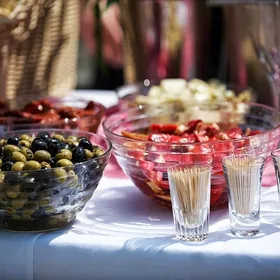
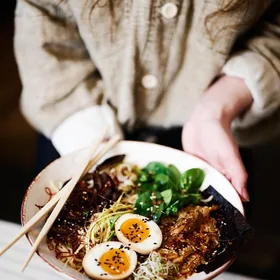
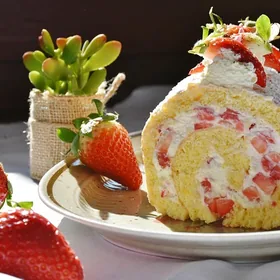
Food Culture: The Luoyang Water Banquet, with its twenty-four soup dishes, is one of China's oldest banquets. A morning bowl of beef soup with shredded flatbread warms and opens the appetite, bufan soup is tangy and refreshing, and peony cakes are delicately sweet with a floral fragrance — taste and memory echo the thousand-year imperial capital.

Attractions

More >
Longmen Grottoes

Longmen Grottoes

Recommend 4.7 / 5

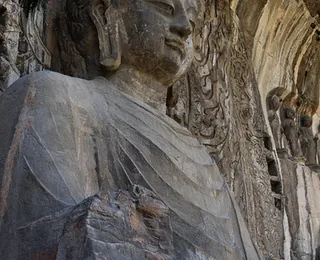
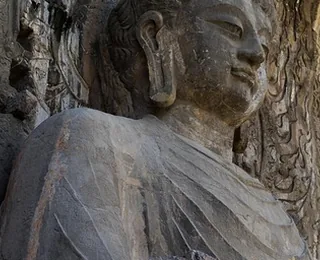
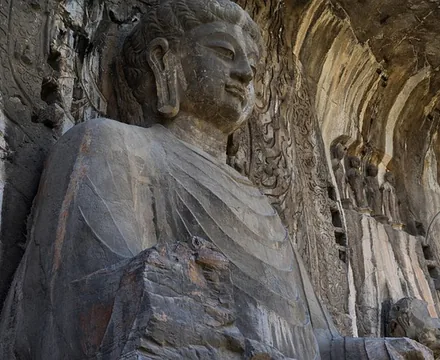
Two hills stand like gates at Longmen with the Yi River flowing between them; the place was anciently called Yique, and it took the name "Dragon's Gate" after the Sui built their eastern capital, whose principal southern gate faced the opening directly. Carving began when Emperor Xiaowen of Northern Wei moved the capital to Luoyang (493 AD) and continued for more than four centuries through the Eastern Wei, Western Wei, Northern Qi, Sui and Tang. Today 2,345 numbered caves and niches, nearly 110,000 statues and more than 2,800 stelae and inscriptions survive. On the west cliff, the Great Vairocana Niche of Fengxian Temple was begun in the third year of the Xianheng era of Tang Gaozong (672 AD), and Wu Zetian contributed "twenty thousand strings of cosmetic money"; nine figures are grouped around the Vairocana Buddha, which stands 17.14 meters tall, and the stele recording the niche's construction, the Record of the Great Vairocana Niche, still remains — a meeting of imperial will and supreme stonework. The Ten Thousand Buddha Cave on the east cliff packs more than ten thousand small Buddhas across its walls, while Northern Wei dedication inscriptions from Guyang Cave and elsewhere on the west cliff were later compiled as the Twenty Longmen Masterpieces, models of Wei-style stele calligraphy. The relief of the Emperor and Empress Worshiping the Buddha at the Binyang Caves was hacked out and dispersed in the 1930s, and today is divided between the Metropolitan Museum of Art in New York and the Nelson-Atkins Museum of Art in Kansas City. In November 2000 Longmen Grottoes were inscribed on the World Heritage List; Xiangshan Temple across the river and Bai Garden on Pipa Peak, where the poet Bai Juyi spent his last years and was buried, are part of the same setting.

Tip: Visit in the afternoon, when sunlight falls most beautifully on the Vairocana Buddha.
  • Address: Longmen Town, Luolong District, Luoyang, Henan
  • Ticket: ¥90
  • Opening: 08:00–18:00
Longmen Grottoes
Longmen Grottoes
Longmen Grottoes
White Horse Temple

White Horse Temple

Recommend 4.6 / 5

White Horse Temple stands about 12 kilometres east of Luoyang's old city. Tradition says that Liu Zhuang, Emperor Ming of the Eastern Han, dreamed one night of a golden figure flying past his palace hall and sent Cai Yin, Qin Jing and others west in search of the Dharma. In the Yongping era they brought back the Indian monks Kashyapa Matanga and Dharmaratna, whose images and scriptures were carried east on a white horse, and in the eleventh year of Yongping (68 AD) an imperial monastery was built, taking its name from the white horse carrying the scriptures; Chinese Buddhism honors it as the "ancestral court" and "source of the Teaching." The two monks translated texts at the Cooling Terrace inside the temple, and the Sutra of Forty-two Chapters, the earliest Buddhist scripture rendered into Chinese, is said to have been produced there. The surviving courtyards are a Ming and Qing reconstruction on the central axis, five courts deepening in sequence from the Hall of Heavenly Kings, the Great Buddha Hall, the Mahavira Hall and the Reception Hall to the Vairocana Pavilion. East of the temple stands the Qiyun Pagoda, formally the Pagoda of Shakyamuni's Relics, a Jin-dynasty brick multi-eaved pagoda more than twenty meters tall and the oldest surviving structure on the site. White Horse Temple was listed in the first batch of national key cultural relics in 1961, and in recent years Indian, Thai and Burmese style halls have been built to the west, so that Buddhist architecture from several countries stands side by side in one temple — a rarity in China.

Tip: Visit early in the morning, when the ancient cypresses and morning bells create the most Zen atmosphere.

  • Address: Baima Town, Luolong District, Luoyang, Henan
  • Ticket: ¥35
  • Opening: 07:30–18:00
White Horse Temple
White Horse Temple
White Horse Temple
Sui-Tang Luoyang City Yingtianmen Site Museum

Sui-Tang Luoyang City Yingtianmen Site Museum

Recommend 4.8 / 5

Yingtianmen was the southern gate of the Sui-Tang Luoyang palace city, first built in the first year of the Sui Daye era (605), and was the place where emperors held ceremonies for enthronement, changing the era name and granting amnesties. The site museum protects and displays the gate platform, passages and gate-tower foundations in situ. The reconstructed gate towers rise about 35 meters and use the double three-projection form, the highest rank among ancient Chinese capital gates. At night there are light shows and 3D projections, and visitors can climb the towers to look over Luoyang. Highlights include the Yingtianmen remains, the night view of the gate towers and the 3D light projections. Tip: enter in the late afternoon, see the remains and exhibitions first, then watch the lights after dark; it is on the same route as the Mingtang-Tiantang site and Luoyi Ancient City, at Yingtianmen station on Metro Line 1. Practical info: located at Dingding South Road at Kaixuan Road, Laocheng District, Luoyang; ticket about ¥60 (subject to official notices); opening hours 09:00–22:00 (last entry 21:00).

Tip: Enter in the late afternoon, see the remains and exhibitions first, then watch the lights after dark; it is on…

  • Address: Dingding South Road at Kaixuan Road, Laocheng District, Luoyang
  • Ticket: About ¥60 (subject to official notices)
  • Opening: 09:00–22:00 (last entry 21:00)
Sui-Tang Luoyang City Yingtianmen Site Museum

Local Food

Luoyang Water Banquet
¥50–80/person
Twenty-four soup dishes served in sequence — sour, spicy, fresh and savory, with carefully chosen ingredients.
★ 4.8
Beef Soup
Beef Soup
¥10–18/person
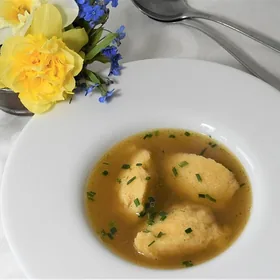
A bowl of rich broth with shredded flatbread in the early morning — Luoyang people's taste of home.
★ 4.6
Bufan Soup
Bufan Soup
¥8–15/person
A thin mung-bean crepe in rich broth — sour, spicy and warming.
★ 4.5
Peony Cake
Peony Cake
¥5–10/person
A flaky pastry filled with peony petals — delicately sweet and fragrant.
★ 4.4
Jiangmian
Jiangmian
¥8–15/person
Noodles cooked in naturally fermented mung-bean liquid, pleasantly sour with a faint fermented note, served with diced celery, chilli oil and soybeans — a Luoyang home-style taste.
★ 4.5

Culture

Heluo culture is one of the important sources of Chinese civilization. As the capital of thirteen dynasties, Luoyang's cultural depth is admired by the world. The Buddhist sculpture of Longmen Grottoes combines Indian Gandhara style with Chinese aesthetics; carving continued for more than 400 years and represents the highest achievement of Chinese stone carving. Tang sancai, with its brilliant glazes and exquisite craft, became an iconic symbol of High Tang culture. The peony festival is not only a flower-viewing event but also carries Luoyang people's thousand-year aesthetic inheritance of the "national beauty and heavenly fragrance." The Luoyang Water Banquet is one of China's oldest surviving banquets; its twenty-four soup dishes echo the idea of "a stretch of Luoyang's water and land." The Hetu and Luoshu are regarded as the source of Chinese civilization, and the Erlitou site reveals the earliest capital layout of "China." Every peony festival, the thousand-year imperial capital uses flowers as a medium to show the world the cultural foundation of the Heluo land.