Attractions

Kaiyuan Temple

Kaiyuan Temple

Recommend 4.6 / 5

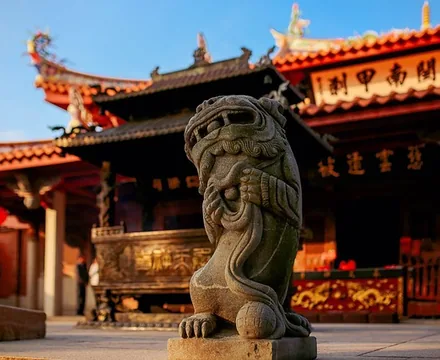
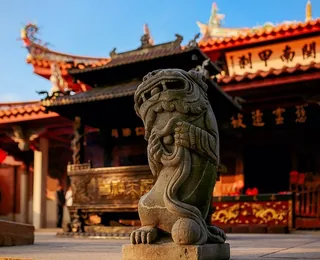
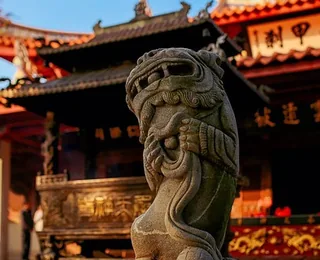
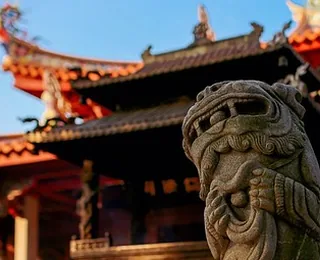
Kaiyuan Temple was founded in 686, the second year of the Tang Chuigong era, first as Lotus Temple, and received its present name in 738, the twenty-sixth year of the Kaiyuan era. Tradition holds that the wealthy Quanzhou merchant Huang Shougong gave up his residence to build the temple after a mulberry tree bore white lotuses, and the plaque reading 'Mulberry-Lotus Dharma Realm' still hangs there. The twin pagodas in front of the temple define the old city skyline: the eastern Zhenguo Pagoda was first built in 865, the sixth year of the Tang Xiantong era, and the western Renshou Pagoda in 916, the second year of the Later Liang Zhenming era. Both began as timber and brick towers and were rebuilt in stone during the Southern Song, the west pagoda from 1228 to 1237 and the east from 1238 to 1250. Each is an octagonal, five-storey pavilion-style stone pagoda, the east 48.27 metres tall and the west 45.06 metres, the tallest surviving pair of stone pagodas in China. Every face carries reliefs of Buddhas, arhats, heavenly kings and vajra guardians, more than eighty figures across the two towers, and the doors and niches are offset storey by storey both to steady the structure and to guide worshippers circling the images. The main Mahavira Hall, popularly called the Hall of a Hundred Columns, is nine bays wide and six deep but stands on 86 stone columns; its beams and bracket sets carry 24 carved miaoyin birds holding musical instruments, the flying apsara musicians. Dozens of Song and Yuan Hindu mythological carvings are set into the temple walls, and the sutra library preserves a surviving fascicle of the Northern Song printed Vairocana Canon. In the 1930s the Vinaya master Hongyi, Li Shutong, stayed at Quanzhou repeatedly; in his last years he lived at the Wenling Nursing Home beside the temple and died there.

Tip: Visit in the morning to avoid the crowds.
  • Address: 176 West Street, Licheng District, Quanzhou, Fujian
  • Ticket: Free
  • Opening: 08:00–17:30
Kaiyuan Temple
Kaiyuan Temple
Kaiyuan Temple
Qingyuan Mountain

Qingyuan Mountain

Recommend 4.7 / 5

Qingyuan Mountain lies north of Quanzhou, its main peak 498 metres above sea level, and serves as the city's green lung and a famous Taoist mountain. Its best-known image is the Song-dynasty Laojun Rock statue, 5.63 metres high and 8.01 metres wide, carved from a single natural granite boulder — the largest surviving Song-dynasty Taoist stone carving in China. Trails lead to Mituo Rock, Bixiao Rock, Ruixiang Rock, Master Hongyi's reliquary stupa and cliff inscriptions from many dynasties, and the summit looks over Quanzhou and the Luoyang River. A national 5A scenic area north of Quanzhou, it is known for the Song Laojun Rock statue, cliff inscriptions and forest trails. Laojun Rock is China's largest surviving Song Taoist stone carving, and the mountain also holds Mituo Rock, Bixiao Rock and Master Hongyi's reliquary stupa; half a day is enough for the climb. Tip: enter at the main gate, see Laojun Rock first, then follow the trail to Mituo Rock; wear trainers and allow half a day. Practical info: the scenic area is at Qingyuan Mountain, Fengze District, Quanzhou; ticket ¥70 (subject to official notice); opening hours 07:00–17:30.

Tip: Enter at the main gate, see Laojun Rock first, then follow the trail to Mituo Rock.

  • Address: Qingyuan Mountain Scenic Area, Fengze District, Quanzhou
  • Ticket: ¥70 (subject to official notice)
  • Opening: 07:00–17:30
Qingyuan Mountain
Qingyuan Mountain
Qingyuan Mountain
Qingjing Mosque

Qingjing Mosque

Recommend 4.5 / 5

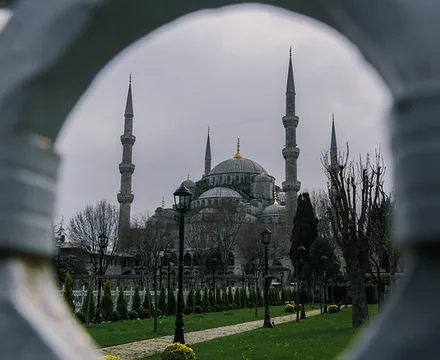
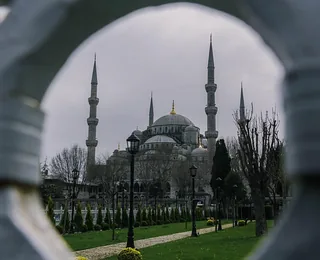
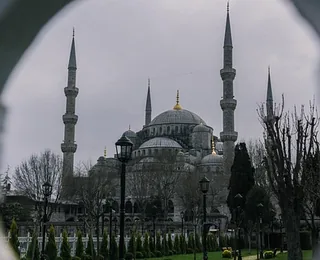
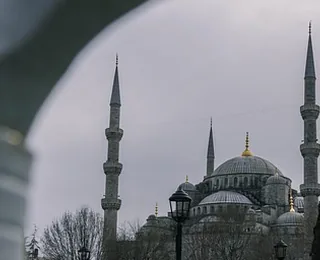
Qingjing Mosque was founded in 1009, the second year of the Northern Song Daxiangfu era and the year 400 of the Islamic calendar, funded by Arab and Persian merchants who came to Quanzhou. It was originally called the Ashab Mosque, also known as the Mosque of the Holy Companions, and its present name reflects the Islamic idea of purity and freedom from defilement. The surviving gatehouse is built of alternating diabase and granite without a single timber, its tall portal rising through stacked Arab-style vaults and arches; a round dome once crowned it, and Qur'anic inscriptions in Arabic remain on its inner and outer walls. A great earthquake in 1607, the thirty-fifth year of the Ming Wanli era, brought down the main prayer hall, the Fengtian Altar, leaving only broken walls and a niche, so the mosque now presents the remarkable sight of a sanctuary without a roof. The Mingshan Hall in the courtyard, rebuilt in the Ming as a Chinese timber hall, has served for centuries as the local Muslim congregation's place of worship. The mosque preserves an Arabic inscription recording its restoration in 1350, the tenth year of the Yuan Zhizheng era, and a Chinese inscription of 1609; both are primary stone documents for the study of Quanzhou's Islamic community in the Song and Yuan. Qingjing Mosque was listed in 1961 among the first batch of National Key Cultural Relics Protection Units and in 2021 became a component of the World Heritage Site 'Quanzhou: Emporium of the World in Song–Yuan China'. The nearby Tumen and Jubao streets were the fanfang, the quarter where foreign merchants lived in the Song and Yuan, and tradition holds that Tang-dynasty Islamic saints are buried on Ling Mountain east of the city.

Tip: Keep quiet inside and respect religious customs. A guide can explain the historical background.

  • Address: Tumen Street, Licheng District, Quanzhou, Fujian
  • Ticket: ¥3
  • Opening: 08:00–17:00
Qingjing Mosque
Qingjing Mosque
Qingjing Mosque
Luoyang Bridge

Luoyang Bridge

Recommend 4.5 / 5

Luoyang Bridge crosses the mouth of the Luoyang River. Legend says that after the Yongjia upheaval of the Western Jin, families from the Central Plains moved south and settled here, naming the river Luoyang after their lost homeland. Construction began in 1053, the fifth year of the Northern Song Huangyou era, and was completed in 1059, the fourth year of the Jiayou era, supervised by Cai Xiang during his two terms as prefect of Quanzhou, a project that took six years. The bridge is 834 metres long and 7 metres wide. In a bay with a large tidal range and swift currents it introduced three innovations: boulders were dumped along the central axis of the bridge line to form a low, dike-like 'raft foundation'; the piers were built in the shape of boats to split the current; and oysters were cultivated around the foundations so that their prolific shells cemented the rubble together — 'planting oysters to secure the base', regarded as the earliest instance in world bridge history of strengthening a foundation by biological means. The huge stone girders were floated in on the tide and set in place as it ebbed. Over the centuries pavilions, stone pagodas, shrines and numerous inscriptions were added. In the Cai Xiang Shrine at the southern end stands the stele of the Wan'an Bridge Record, composed and written by Cai Xiang, celebrated for both its prose and its calligraphy; the Zhaohui Temple on the bridge and the stone generals at the bridgeheads remain living sites of southern Fujian folk worship. Luoyang Bridge, together with the Zhaozhou Anji Bridge, Lugou Bridge and Guangji Bridge, is known as one of China's four great ancient bridges, and in 2021 it was inscribed as part of the World Heritage Site 'Quanzhou: Emporium of the World in Song–Yuan China'.

Tip: Go towards evening to see the old bridge in the setting sun. It is windy on the bridge, so dress warmly.

  • Address: Mouth of the Luoyang River, Luojiang District, Quanzhou, Fujian
  • Ticket: Free
  • Opening: Open all day
Luoyang Bridge
Luoyang Bridge
Luoyang Bridge
Chongwu Ancient City

Chongwu Ancient City

Recommend 4.4 / 5

Chongwu Ancient City stands on the Chongwu Peninsula at the southern tip of Hui'an County, with the sea on three sides. In 1387, the twentieth year of the Ming Hongwu era, Zhu Yuanzhang sent the Marquess of Jiangxia, Zhou Dexing, to Fujian to reorganise coastal defence and build walled garrisons against Japanese pirates, and the Chongwu Thousand-Household Guard was established. The walls are built entirely of local granite, 2,567 metres in circumference, 6.3 metres high and 4.5 metres wide at the base, with east, west, south and north gates; semicircular barbicans outside the east, west and north gates strengthened the defences. The ramparts once carried 26 guard shelters, 987 soldiers' quarters, 1,304 battlements and 1,300 arrow windows, enclosing nearly 370,000 square metres — one of the most completely preserved stone-walled garrison towns in the Ming coastal defence system of Fujian. Inside, the cross-shaped street layout, the City God Temple and the Mazu Temple survive; houses are built of stone blocks with stone-slab paving, and Hui'an women in yellow bamboo hats and floral headscarves still walk the lanes, making this a living fishing village. Chongwu has long been known as a home of stone carving: the Stone Carving Expo Park outside the walls gathers large works by local craftsmen, while the curved beach and offshore reefs of Half-Moon Bay east of the town are places to watch the sunrise and listen to the waves.

Tip: You can rent Hui'an women's dress for photos and experience the local culture.

  • Address: Chongwu Town, Hui'an County, Quanzhou, Fujian
  • Ticket: ¥45
  • Opening: 07:30–18:00
Chongwu Ancient City