City Intro

History & Culture: Xi'an was called Chang'an in antiquity. It was the capital of thirteen dynasties and the eastern starting point of the Silk Road, and the Zhou, Qin, Han and Tang laid the foundations of Chinese civilization here. The Terracotta Army of Qin Shi Huang amazed the world, the Giant Wild Goose Pagoda commemorates Xuanzang's journey west, the city wall has stood for a thousand years, and the Bell and Drum Towers echo with the old rhythm of morning bells and evening drums. Xi'an's culture is deep and grand. Qinqiang is one of China's oldest operas, and its high, intense singing is called 'the ancestor of a hundred operas'. The amateur Qinqiang groups of elderly people at the foot of the city wall are part of everyday civic life. Han and Tang ritual, Buddhist sutra translation and Silk Road trade shaped Chang'an's open and inclusive character. The halal food culture of the Muslim Quarter continues a thousand years of ethnic fusion. The Forest of Stone Steles Museum holds famous calligraphy steles, and the Tang jinshi name inscriptions at the Giant Wild Goose Pagoda record the glory of the examination age. At every Lantern Festival the city wall lantern fair lights the night sky of the ancient capital, while Datang Everbright City brings High Tang culture into people's lives in a new way.

Geography: In the middle of the Guanzhong Plain, with the Wei River running across it, the Qinling to the south and the Loess Plateau to the north, the setting of 'eight rivers around Chang'an' has been regarded as strategically favoured since ancient times. It has a warm-temperate semi-humid monsoon climate with four distinct seasons, especially pleasant in autumn. Xi'an lies in Shaanxi, where landforms, rivers and climate have shaped the city's layout. Spring (Mar–May) and autumn (Sep–Nov) bring clear skies and light clouds, the most comfortable time in the old city. Natural and cultural sites are relatively concentrated, so a one- or two-day itinerary can be arranged by area. Light, vegetation and water levels change with the seasons; check the weather and scenic-area notices before setting out. Roads and railways are the main connections, and major sights can be linked from the city or county town.

Highlights: See the Terracotta Army formation, climb and cycle the city wall, wander Datang Everbright City at night and eat your way through the Muslim Quarter — one night carries you back to the High Tang. Core sights include the Terracotta Army, Xi'an City Wall, Shaanxi History Museum and the Giant Wild Goose Pagoda. They cover history, nature and city life and can be combined freely. Pair the core sights with nearby streets, museums or food streets for a half- or full-day route. If time allows, slow down and leave room for walking and rest. First-time visitors can start with the most representative sights, then add museums, old streets or natural areas as time allows. Local food is part of the itinerary — save a meal for a time-honoured shop or a local market.

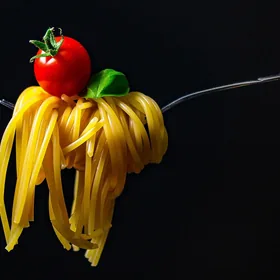
Food Culture: Northwestern flavours are bold and hearty: roujiamo is crisp outside and tender inside, lamb paomo has a rich, full-flavoured broth, liangpi is tangy and refreshing, and biangbiang noodles are as wide as a belt — its name as a carbohydrate paradise is well deserved.

Attractions

More >
Terracotta Army

Terracotta Army

Recommend 4.8 / 5

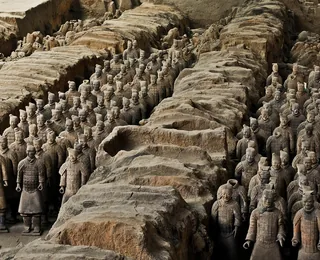
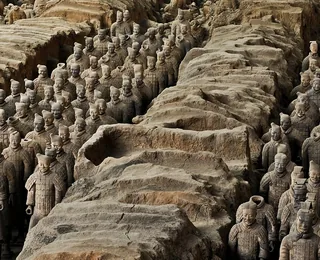
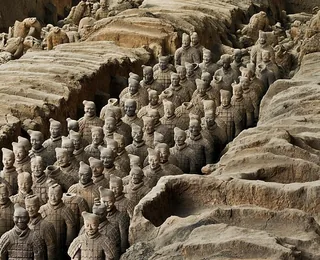
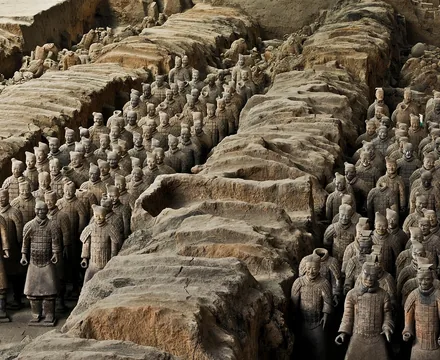
The pits came to light in March 1974, when farmers digging a well at Xiyang Village in Lintong struck pottery shards; subsequent excavation has yielded about 8,000 pottery warriors and horses. Pit 1 is by far the largest — 230 m long east to west and 62 m wide, roughly 14,200 square metres, with more than 6,000 figures: a vanguard rank lines the eastern end, behind it a dense formation of chariots and infantry. Pit 2 covers some 6,000 square metres and interleaves crossbowmen, cavalry and chariots; the Kneeling Archer and the senior officer figures (popularly 'generals') come from it, while the tiny Pit 3 — 520 square metres with only 68 figures — is generally read as the army's command post. The warriors average about 1.8 m in height and were originally fully polychrome, pigments such as cinnabar and malachite laid over a raw-lacquer ground; once exposed the lacquer dries, curls and sheds its colour, so conserving the paint remains the hardest part of any excavation. The bronze chariots and horses from the satellite pit west of the mound were cast at exactly half the size of real vehicles and teams. In 1987 the Mausoleum of the First Qin Emperor and its terracotta army pits were inscribed together on the World Heritage List.

Tip: Hire a guide or rent an audio device — otherwise the historical value is hard to grasp. Allow 2–3 hours.

  • Address: East of the Mausoleum of Qin Shi Huang, Lintong District, Xi'an
  • Ticket: ¥120 (includes shuttle)
  • Opening: 08:30–18:00
Terracotta Army
Terracotta Army
Terracotta Army
Xi'an City Wall

Xi'an City Wall

Recommend 4.7 / 5

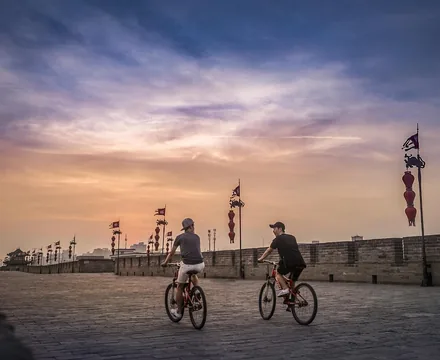
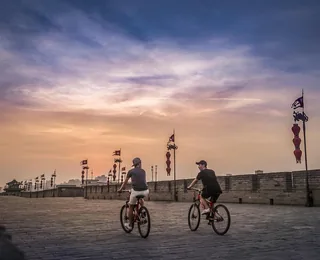
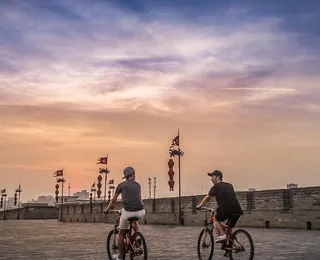
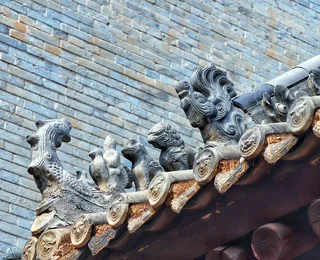
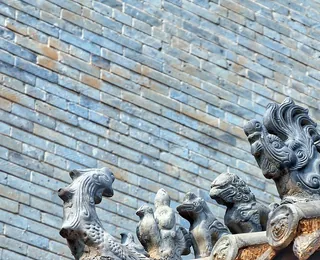
Xi'an's wall was built in the Ming Hongwu era on the foundations of the Tang imperial city: a rammed-earth core of layered loess faced with blue brick; its four cardinal gates were named Changle (Everlasting Joy) to the east, Anding (Spreading Stability) to the west, Yongning (Perpetual Calm) to the south and Anyuan (Projecting Peace Afar) to the north, the names themselves voicing the hope of lasting peace. The circuit measures about 13.74 kilometres and rises 12 metres, with a crest 12–14 m wide and a base 15–18 m wide — broad enough for horse and cart to run along the top. Some 5,984 crenellations and 98 bastions (horse-face projections) are set into the ramparts, and each of the four principal gates is defended by a triple sequence of tower, arrow tower and gatehouse with a barbican; the 18 gates counted today were mostly punctured through the wall in later centuries and especially in the modern era. Yongning, the south gate, has seen the longest continuous use and keeps the most complete layout, while inside the west wall at Hanguang Gate the rammed-earth remains of three Tang imperial-city gate passages survive as direct evidence of the Sui-Tang city plan. Major restoration began in 1983, when a ring park was laid out at the foot of the wall; since then the walkway along the crest has been continuous, which is what makes the full-cycle circuit possible. Highlights include Yongning Gate (South Gate), the Hanguang Gate ruins, cycling the wall and the night illumination. Tip: cycling the wall at dusk is recommended; the old city is especially beautiful in the setting sun. Practical info: located on South Street, Beilin District, Xi'an; ticket ¥54; opening hours 08:00–22:00.

Tip: Cycling the wall at dusk is recommended; the old city is especially beautiful in the setting sun.

  • Address: South Street, Beilin District, Xi'an
  • Ticket: ¥54
  • Opening: 08:00–22:00
Xi'an City Wall
Xi'an City Wall
Xi'an City Wall
Shaanxi History Museum

Shaanxi History Museum

Recommend 4.9 / 5

Opened in 1991, the Shaanxi History Museum was China's first large modern national museum and holds over 1.7 million objects. Its permanent galleries focus on the Zhou, Qin, Han and Tang, with Shang and Zhou bronzes, Han pottery figures, Tang gold and silver, and murals forming a complete sequence. The Hejiacun hoard, the Tang mural gallery and the Empress's Seal are highlights. The Tang mural gallery is ticketed separately. Highlights include the Zhou, Qin, Han and Tang permanent exhibition. Tip: free tickets must be booked in advance through official channels and are released quickly in peak season; the mural gallery charges separately. Practical info: located at 91 Xiaozhai East Road, Yanta District, Xi'an; free admission (reservation required, special exhibitions extra); opening hours 08:30–18:00 (closed Mondays, closing may be later in peak season).

Tip: Free tickets must be booked in advance through official channels and are released quickly in peak season; the…

  • Address: 91 Xiaozhai East Road, Yanta District, Xi'an
  • Ticket: Free (reservation required; special exhibitions charge separately)
  • Opening: 08:30–18:00 (closed Mondays; closing may be later in peak season)
Shaanxi History Museum

Local Food

Roujiamo
Roujiamo
¥8–15/person
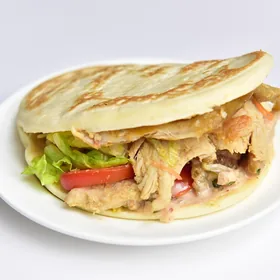
Chopped braised pork in a Baiji flatbread — crisp outside and tender inside.
★ 4.8
Lamb paomo
Lamb paomo
¥25–40/person
Flatbread crumbled by hand and cooked in lamb broth — rich broth and tender meat.
★ 4.7
Liangpi
Liangpi
¥8–12/person
Springy cold noodles dressed with chilli oil and garlic — tangy and appetising.
★ 4.5
Biangbiang noodles
Biangbiang noodles
¥12–20/person
Hand-rolled noodles as wide as a belt, topped with sizzling chilli oil.
★ 4.6
Zenggao
Zenggao
¥8–15/person
Glutinous rice, red dates and kidney beans layered in a steamer and cooked through — soft, sweet and fragrant, a classic breakfast in Xi'an's Muslim Quarter.
★ 4.6

Culture

Xi'an's culture is deep and grand. Qinqiang is one of China's oldest operas, and its high, intense singing is called 'the ancestor of a hundred operas'. The amateur Qinqiang groups of elderly people at the foot of the city wall are part of everyday civic life. Han and Tang ritual, Buddhist sutra translation and Silk Road trade shaped Chang'an's open and inclusive character. The halal food culture of the Muslim Quarter continues a thousand years of ethnic fusion. The Forest of Stone Steles Museum holds famous calligraphy steles, and the Tang jinshi name inscriptions at the Giant Wild Goose Pagoda record the glory of the examination age. At every Lantern Festival the city wall lantern fair lights the night sky of the ancient capital, while Datang Everbright City brings High Tang culture into people's lives in a new way.