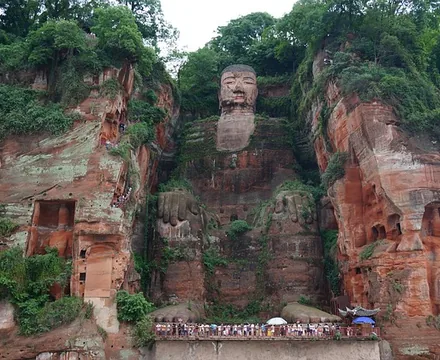
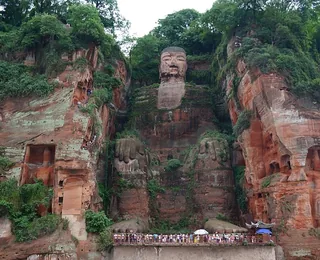
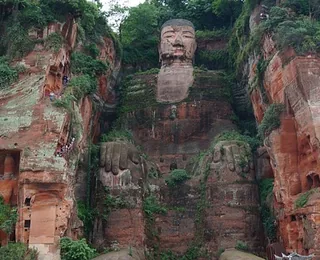
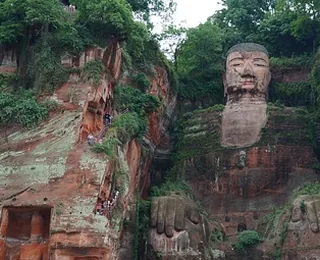
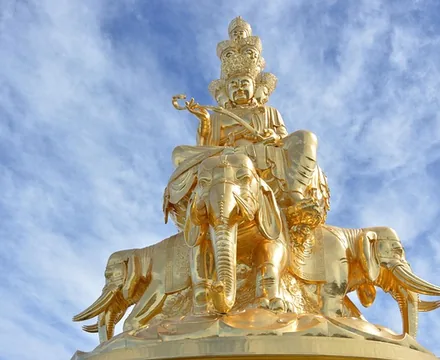
History & Culture: Leshan, known in ancient times as Jiazhou, is where the Min, Qingyi and Dadu rivers meet; the Leshan Giant Buddha, carved in the Tang dynasty, and Emei Shan together form a World Heritage Site. The Leshan Giant Buddha was begun in the first year of the Kaiyuan era of the Tang (713) and took 90 years to complete; Emei Shan is Samantabhadra's sacred mountain, where Buddhist culture and mountain ecology coexist. Leshan lies in Sichuan and has developed a distinct urban memory through regional history and cultural exchange. From ancient settlements to the modern city, walls, lanes, temples and guild halls remain as historical layers from different periods. Museums, historic districts and local festivals still make the city's history legible today. History is written not only in sites and museums but also in dialect, food, festivals and the details of everyday life.
Geography: The meeting of the three rivers has carved the Lingyun Mountain cliff, where the Buddha sits against the rock; Emei Shan rises straight from the plain, its Golden Summit at 3,079 metres. Leshan lies in Sichuan, where landforms, rivers and climate together shape the city's layout. Best March–June and September–November; Emei Shan is cool in summer, and the Golden Summit has snow in winter. Natural and cultural sites are relatively concentrated, so a one- or two-day itinerary can be arranged by area. Light, vegetation and water levels change with the seasons, so check the weather and official notices before setting out. Roads and railways are the main connections, and the major sights can be linked from the city or the county town.
Highlights: See the Leshan Giant Buddha, climb to the Golden Summit of Emei Mountain, ride the Jiayang Steam Train, then spend a day eating snacks. Core sights include the Leshan Giant Buddha, Emei Mountain, Dongfang Fodu and the Jiayang Steam Train. These sights cover different sides of history, nature and city life, and can be combined freely according to interest. Pair the core sights with nearby streets, museums or food streets for a half- or full-day itinerary. If time allows, slow down and leave time for walking and rest for a fuller experience. First-time visitors can start with the most representative core sights, then add museums, old streets or natural scenery as time allows. Local food is part of the itinerary too; save mealtimes for time-honoured shops or local markets.
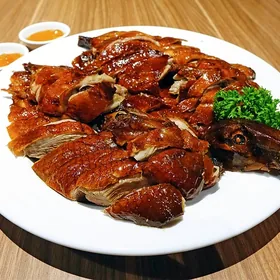
Food Culture: Bobo chicken, sweet-skin duck, qiaojiao beef and doufunao: Leshan is recognised as Sichuan's city of snacks.