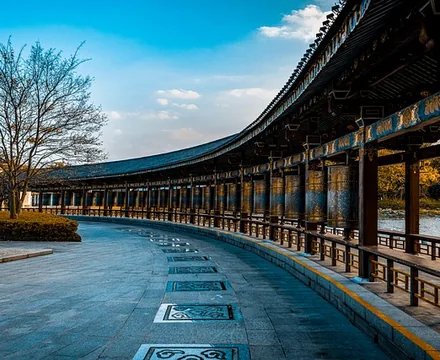
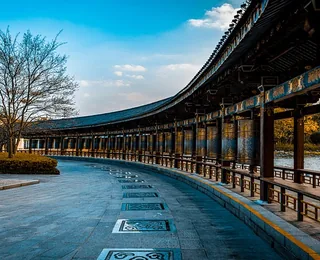
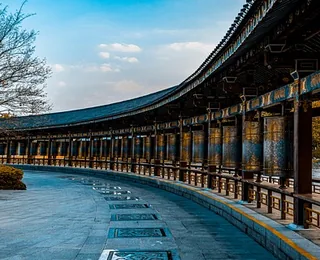
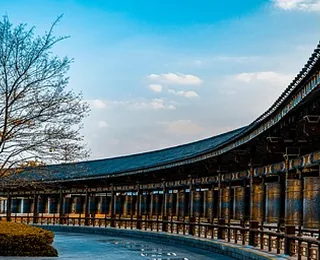
History & Culture: Wuxi has more than 3,000 years of city history and is one of the birthplaces of Wu culture; it was known in antiquity as Liangxi and Jinkui. From the Ming and Qing it prospered in industry and commerce, and the Rong family's enterprises made it famous for a time as 'Little Shanghai'. The old song 'On Tin Hill in Wuxi there is no tin' is still sung, and the city has a deep cultural heritage. Wuxi's culture is deep and diverse. Wu culture originated here, and the Taibo Temple Fair continues ancient sacrificial traditions. Huishan clay figurines are Wuxi's most representative intangible cultural heritage craft; the chubby Da Afu is loved as Wuxi's calling card. Events such as the Taihu Art Festival and the Huishan Temple Fair keep the city culturally alive. Wuxi is also an important birthplace of modern national industry and commerce, and the former residences of industrialists such as the Rong family witness the commercial glory of 'Little Shanghai'.
Geography: Wuxi lies in southern Jiangsu on the shore of Taihu Lake, backed by the Yangtze to the north and facing Taihu to the south; the land is mostly Taihu plain, cut by waterways. It has a subtropical humid monsoon climate with four distinct seasons and abundant rain. Wuxi lies in Jiangsu Province, where landforms, rivers and climate have shaped the city's layout. Spring (Mar–May) brings cherry blossoms to Yuantouzhu; autumn (Sep–Nov) brings fat Taihu crabs and golden chrysanthemums. Natural and cultural sites are relatively concentrated, so a one- or two-day itinerary can be arranged by area. Light, vegetation and water levels change with the seasons; check the weather and scenic-area notices before setting out. Roads and railways are the main connections, and major sights can be linked from the city or county town.
Highlights: Enjoy Taihu's cherry blossoms, visit the Lingshan Grand Buddha, wander Huishan Ancient Town and taste braised spare ribs — feel the Jiangnan charm of the Pearl of Taihu. Core sights include Yuantouzhu, Nianhua Bay, Lingshan Scenic Area and Huishan Ancient Town. They cover history, nature and city life and can be combined freely. Pair the core sights with nearby streets, museums or food streets for a half- or full-day route. If time allows, slow down and leave room for walking and rest. First-time visitors can start with the most representative sights, then add museums, old streets or natural areas as time allows. Local food is part of the itinerary — save a meal for a time-honoured shop or a local market.
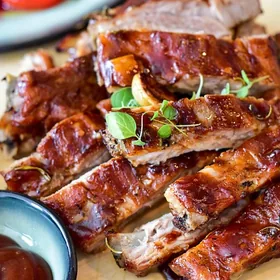
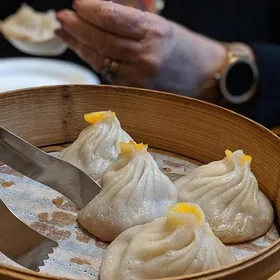
Food Culture: Wuxi cuisine belongs to the Huaiyang tradition and is known for being sweet and soft. Braised spare ribs are deep mahogany and sweet-savoury; soup dumplings have thin skins, plenty of broth and a sweet filling; the 'three whites' of Taihu (white fish, white shrimp and silverfish) are tender and true to their flavour — the essence of lake food.