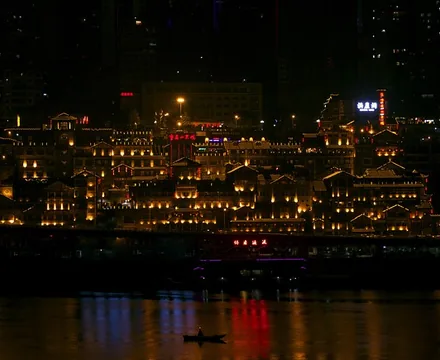
Hongyadong
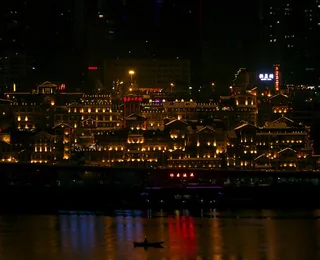
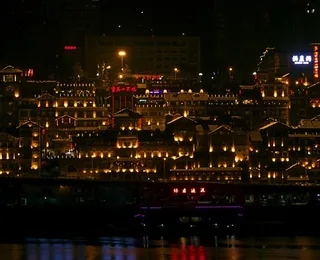
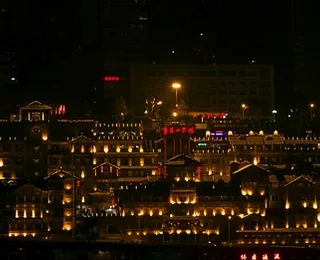
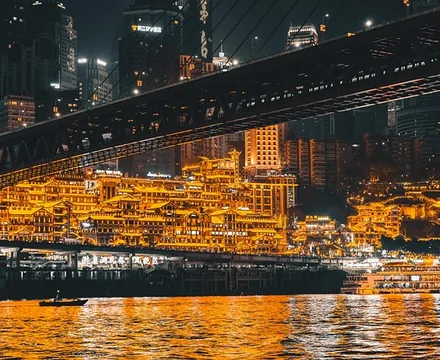
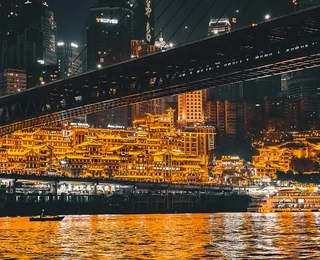
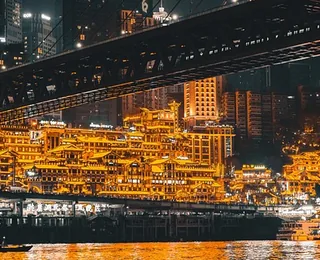
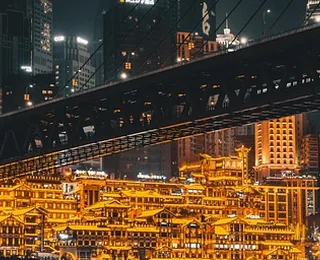
The cliff where Hongyadong stands was a key point on the city's northwest approach since ancient times: military works stood here as early as the Warring States period, and cave temples cut into the hillside appeared in the Song dynasty. From the Ming and Qing onward, stilted houses crowded the riverbank and boats filled the wharves, and 'Dripping Green at Hongya' was one of the old Twelve Scenes of Ba-Yu. When the Ming commander Dai Ding rebuilt Chongqing's stone walls, he established seventeen gates — nine open and eight closed — and Hongya Gate was one of the closed ones, a name the place still carries. The district was rebuilt as a whole at the start of the 21st century and opened in 2006, covering about 31,500 square metres; the buildings climb eleven storeys along the cliff to a total height of 79 metres, with about 75 metres between Cangbai Road at the top and the Jialing riverside road at the bottom — hence the wonder of 'the top floor opens onto a road and the ground floor opens onto a road too'. Now a 4A scenic area, it is brightly lit after dark, and the opposite riverbank and Qiansimen Bridge are the traditional vantage points for a full view. Highlights include the stilted houses at night, the Ba-Yu Folk Street, the viewpoint over the meeting of the two rivers and the Hongyadong snack street. Tip: Go towards evening and wait for the moment the lights come on — the most spectacular sight. Practical info: located on Jiabin Road, Yuzhong District, Chongqing; admission free; open all day.